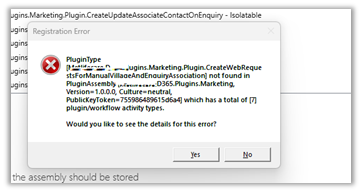
In one of our environments, the ActivityPointBase table was occupying nearly 20 GB. It was earlier 40 GB, and we then deleted email records to bring it down to 20 GB.
On downloading the table details, we did not get a clear idea of what activity-type table was occupying that much space.
So we raised the Microsoft Support ticket, and they shared with us the breakdown of records occupied by different activity type tables.
Then we configured our Bulk Deletion Job to delete the corresponding activity type records.
This helped us to bring down the ActivityPointerBase from 20 GB to 15 GB.
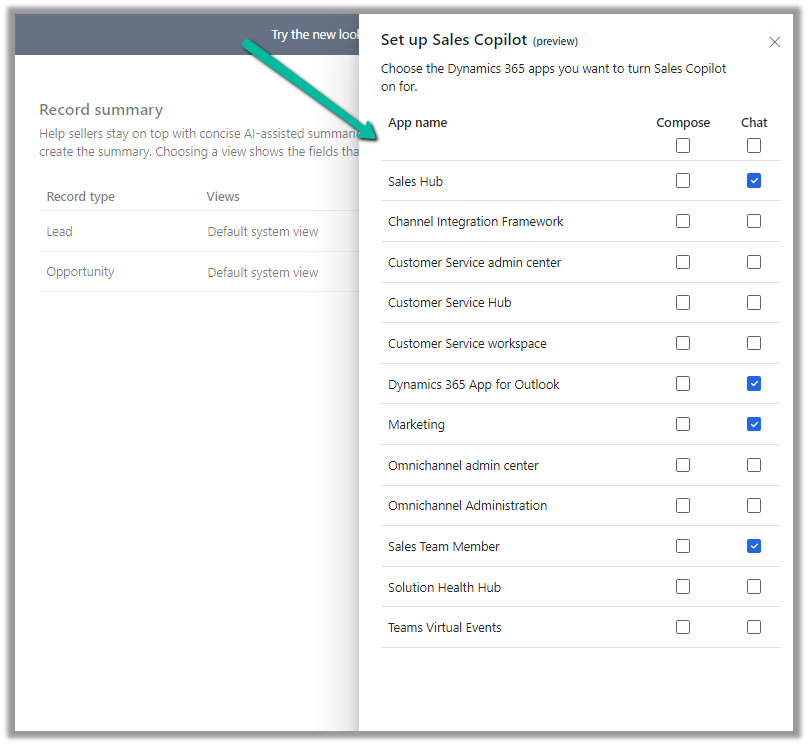
Sales Hub >> App Settings >> Sales Copilot (preview) >> Set up Sales Copilot
Or if we have already enabled it, we can manage the features provided along with the different apps we want to apply the Sales Copilot using the Manage apps option.
Here we can specify to which apps we want to enable the Compose and Chat feature.
For the Record catch-up feature, the first 10 fields of the view are considered. We can see “Default System View” selected by default.
However, we have the option to select a different view, and then the fields of the selected view will be used for generating the catchup content.
Below if we select the Open Opportunities view, we can see its corresponding fields that will be considered for the catchup.
We can open an existing lead or opportunity record or from the Chat tab of Sales Copilot can use catchup with opportunity prompt as shown below to get the updates.
We can see the catch-up details generated.
Also, we see another prompt – “Catch up since my last login (16 hours ago)”, along with “catchup with lead or opportunity” prompt
If there are no updates to a record in the last 16 hours, we get the below message.
The conversation form in Omnichannel is now updated to allow agents to view and edit customer and case information more efficiently.
To enable it, Inside Customer Service Admin Center app – navigate to Workspaces >> Active Conversation form settings (Manage)
Before we enable it let us have a look at the exiting conversation form.
Now let us enable and compare it with the enhanced one.
We can see the form displaying a Customer 360 Card for Customer (Contact or Account), which also allows for inline editing of details from within the Conversation form, and a similar card showing case details and allowing for inline editing. The fields that are displayed are configurable.
Another change is the color-coded priority and case status field for easy discoverability for the agents.
Sales Copilot can generate and suggest email content while composing or replying to an email in Dynamics 365 in the context of a Lead or Opportunity record.
Sales Hub >> App Settings >> Sales Copilot (preview) >> Set up Sales Copilot
Or if we have already enabled it, we can manage the features provided along with the different apps we want to apply the Sales Copilot using the Manage apps option.
Here we can specify to which apps we want to enable the Compose and Chat feature
The Compose refers to the AI-driven email insights here.
Let us create a new Email from the timeline of the lead record.
We can see the Sales Copilot Compose in the inactive state right now. It becomes active when opening an email record or creating a new email record with either lead or opportunity in the Regarding field.
On the new email record, we can see the Compose tab enabled, and the option Describe the email you want.
We get the option to specify the statement, for which the content should be generated.
Below we can see the suggested content
We also get the option to Add content to the Email, Copy it
Adust tone and add more details
Also, Restore the last version, Try again, Start Over
Similarly, in the case of replying to an email we get the below options to start with along with an Email Conversation Summary.
Selecting the Address a Concern option generates the following content.