How to – improve data migration performance – SSIS & Azure Data Factory (Dataverse / Dynamics 365)


In one of our projects, we were executing SSIS Packages (KingswaySoft’s Dynamics 365 SSIS Integration Toolkit) under Azure-SSIS Integration Runtime in Azure Data Factory.

Check out –

Deploy and run SSIS Package in Azure Data Factory

Deploy and run SSIS Packages that use KingswaySoft’s SSIS Integration Toolkit on Azure Data Factory.

After trying out different combinations, we eventually settled with batch size as 10 and thread as 15.

https://nishantrana.me/2021/06/08/data-migration-optimum-batch-size-and-threads-for-maximum-throughput-microsoft-dataverse-dynamics-365/

Also, we used multiplexing – running the CRM Destination Component under different application users.

To be precise, 4 in our case and we can increase it get further  improvement in the throughput.

And also based on the recommendation of our Microsoft’s Fast Track Architect we raised a Microsoft ticket to increase the number of web servers allocated from 2 to 3.

Below were our findings,

the earlier run was using batch size as 100 and thread as 20 with the number of servers as 2.

On updating the batch size to 10 and thread as 15 and with the number of servers allocated increased to 3, there was a huge performance gain.

Check the table below – 

The above table is sample run in the sandbox environment, during the final run in production we got the number of servers allocated, increased to 6, gaining further improvement.

Also, check out the below blog post to understand about the affinity cookie and its affect on performance, in case if we doing migration using custom code –

https://markcarrington.dev/2021/05/26/improving-bulk-dataverse-performance-with-enableaffinitycookie/

Hope it helps..

Advertisements

Modern Model App designer (preview) – Dataverse (Dynamics 365)


A new Model App designer (preview) was added to the platform recently.

It follows a page-based authoring approach and resembles the new UCI.

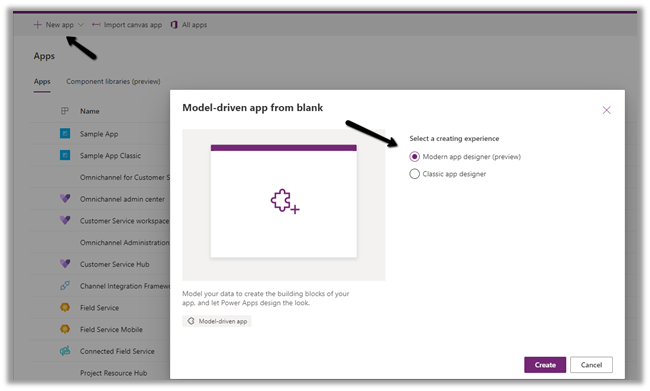
Within the Maker Portal, while create an new Model-Driven App, we can select Modern App designer (preview)

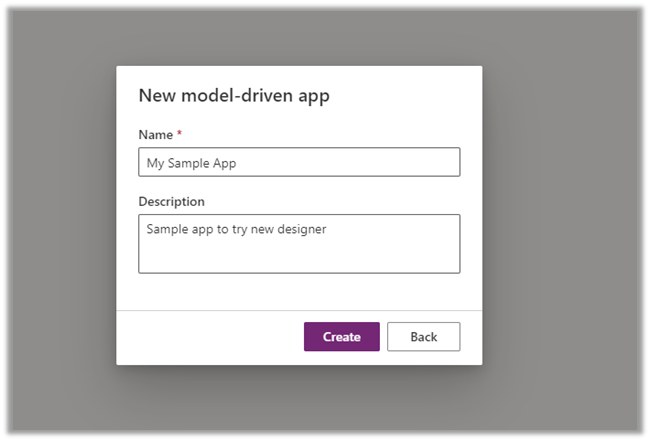
Provide the name and description to the app and click Create.

Click on Play to see how the default app looks like

Now let us add the lead and contact entity and some dashboards to it.

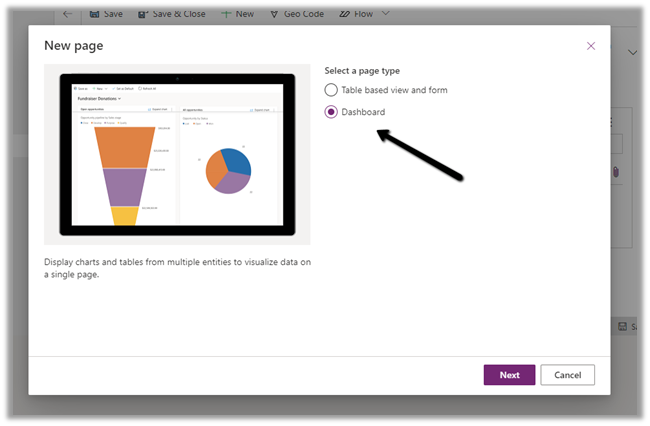
Click on New Page

Select Table based view and form. The other option is Dashboard.

Search and select Lead and Contact and leave it checked – Show in navigation option

This adds the form(s) and view(s) for the table selected.


We can click on form and view and can either let all the forms and views selected by default or can specify specific views and forms.

“No forms have been explicitly selected. All forms will be available by default.”

Similarly, we can add a Dashboard

Here we have selected 2 dashboards and kept the option – Show in navigation checked.

We can update the title of the Dashboards added.

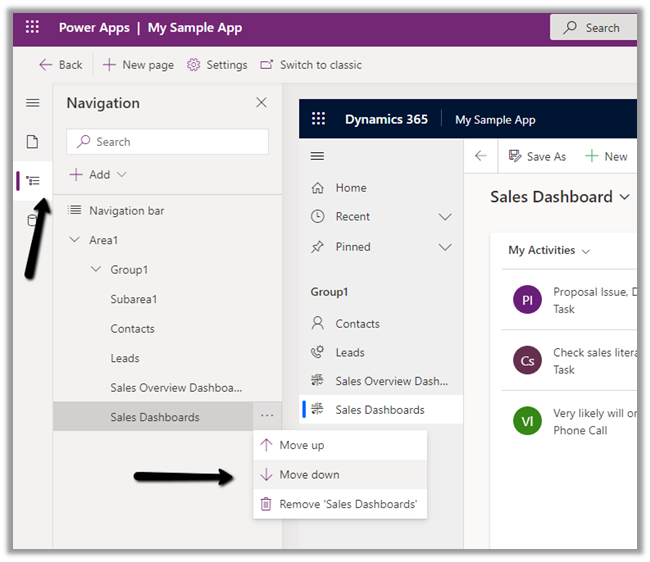
From the navigation menu, we can arrange the components added -i.e. move them up and down and as well remove them.

We can also add new Group and also the Subarea of type either Table or Dashboard.


Save and Publish the change and click on Play.

Our App is ready.

Similarly, we can edit an existing App in the new preview designer.

We can also Switch to classic 

Our Classic App Designer à

Lastly, the Data section in the new designer allows us to edit our entity/ table.

DataSection

Hope it helps..

Advertisements

How to – Enable Notification in Model-Driven App (Dynamics 365)


By making use of appsetting and settingdefinition table, we can enable notifications in the Model-Driven App. (not sure if it is documented somewhere / or supported way) – so try in a trial environment.

I think the supported way is through customization.xml 

https://docs.microsoft.com/en-us/powerapps/developer/model-driven-apps/clientapi/reference/events/form-onsave#enable-async-onsave-using-app-setting

Thanks to the below post and tweets by Mehdi EL Amri, which describes the steps to be followed.

https://xrmtricks.com/2021/05/26/a-glance-of-the-onload-event-on-a-model-driven-app-form-async-onload-event/

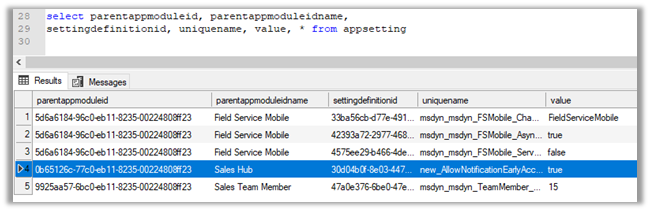
Basically, we need to add a new record inside appsetting table which will have reference to the settingdefinitionid of that particular setting (Alert notification early access) inside settingdefinition table along with id of the app to which we want it to be associated.

  • Let us get the settingdefinitionid for Allow notification early access.

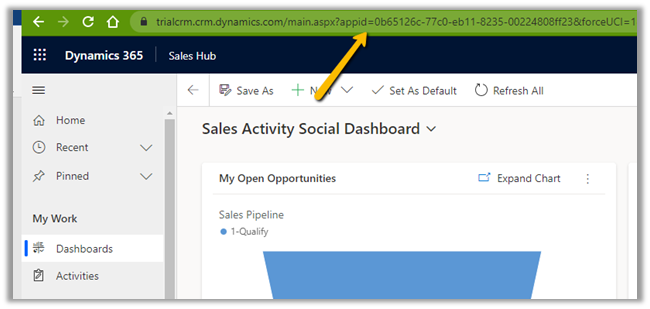
  • App Id for the Sales Hub.

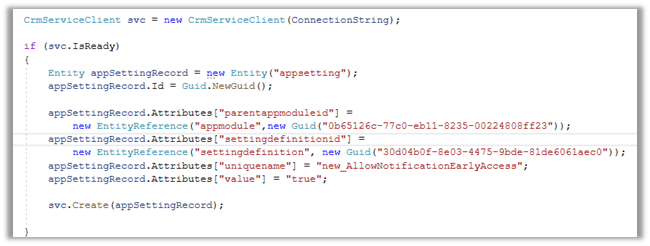
  • Here we are creating a new record through a console application

  • parentappmoduleid – appid of the model driven app
  • settingdefinitionid – id of the specific setting
  • uniquename – name
  • value – set as true

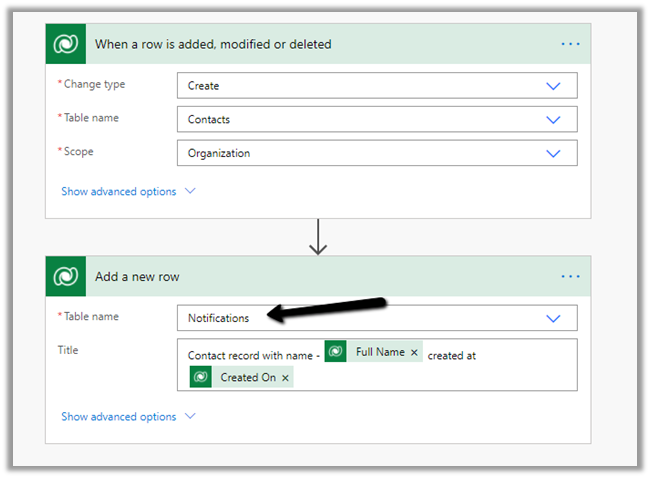
Now let us create a flow on the creation of contact which will send the notification. (create the notification record)

On creating the contact record, we can see the notification inside our Sales Hub.

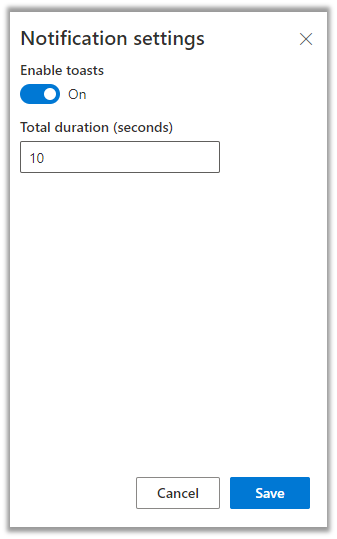
Settings allow us to enable/disable toasts and set the toast duration as shown below

Hope it helps..


Advertisements

Azure Synapse Link / Export to Data Lake Service – Performance (initial sync)


Recently we configured the Export to Data Lake service for one of our projects.

Just sharing the performance, we got during the initial sync.

Entity

Count

Contact

2,36,2581

Custom entity

1,61,3554

The sync started at 11:47 A.M and was completed around 4:50 P.M. – around 5 hours i.e. 300 minutes

Let us consider total records synced as 3975000 – 1613446 + 2362581 + 2 = 3976029.

So the performance here comes down to

  • 795000 records per hour
  • 13250 records per minutes
  • 220 records per second.

Of course, it will vary depending on the specific environment, table / entity type, attributes in it etc. it gives us a rough idea.

Hope it helps..

Advertisements

Advanced configuration settings – Azure Synapse Link / Export to Data Lake service (Dataverse/ Dynamics 365)


The Export to Data Lake service now has some Advanced configuration settings available.

To learn more on Export to Data Lake service

https://nishantrana.me/2020/12/10/posts-on-azure-data-lake/

The new settings allow us to configure how the DataVerse / CRM table data is written to Azure Data Lake.

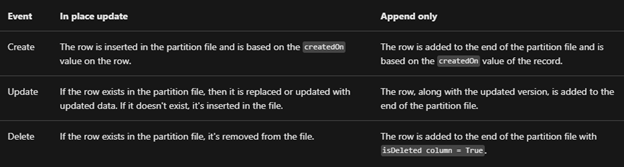
  • In-Place update or upsert (default)
  • Append Only

With the in-place update, the default setting, the file will contain the full data set, and any update in the source will update the same in the synced CSV file or the data partition, similarly, any record deleted will delete the row from the data partition, unlike Append Only where a new row will be added in case of both update and delete.

For huge volume of data, Microsoft recommends opting for Append only mode. This mode is also preferable when an organization wants to incrementally review the changed data.
The other option is to define the data partition strategy.

  • By Month (default)
  • By Year

With this option, files generated are partitioned by either year or more granular month-wise, which can be specified per-table basis.

Microsoft recommends Monthly partition if data volume is high.

Now, let us see it in action.

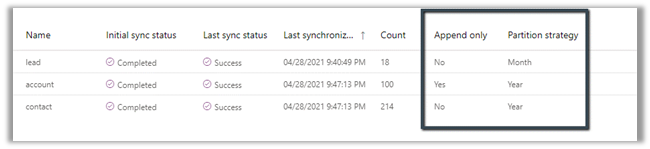
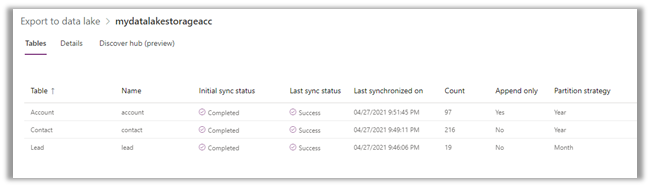
For the Lead table, we haven’t selected the option for advanced configuration settings and are going by default.
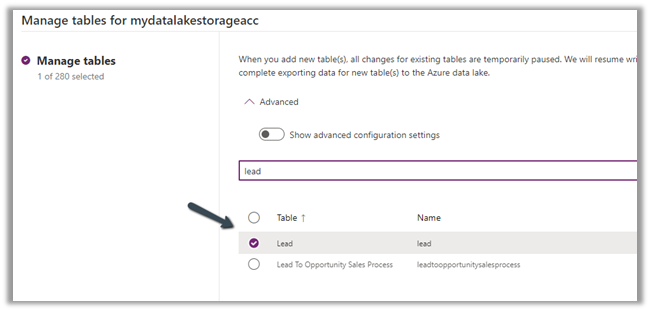
  • Append Only – No
  • Partition Strategy – Month

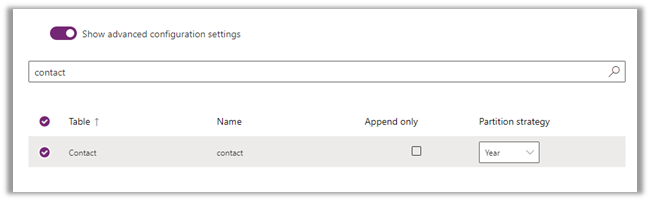
For contact, we have enabled the advanced configuration settings and opted for Partition Strategy as Year.

For Account , we have opted for Append Only as true, for which the Partition strategy option is disabled and set as Year.


The final configuration à
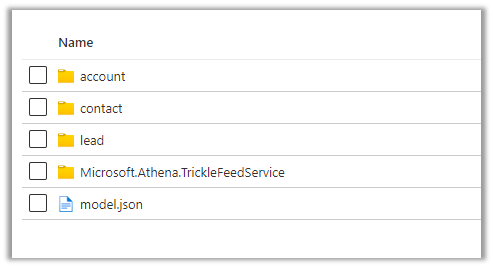
Within the container inside the Storage Account, we can see corresponding folders created per table/entity along with model.json as shown below.
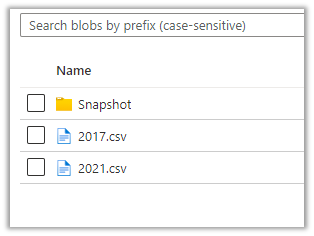
Let us explore the Lead folder –

We can see 2 CSV created with format YYYY-MM.csv i.e. having the month part in it because we had specified Partition Strategy as Month i.e. the default value.

For Contact and Account, the Pattern Strategy was Year, so we have files generated in format YYYY.csv
Let us update one of the lead records by appending ‘Updated’ in the last name field.

After the successful sync,
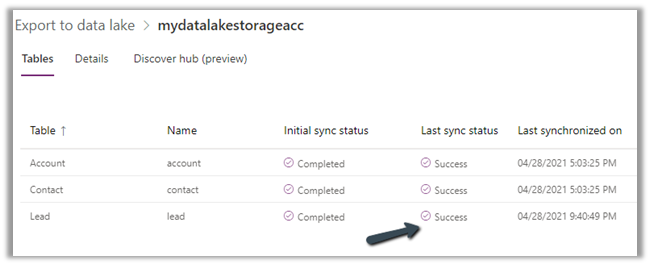
we can see the record updated in the .csv / partition.
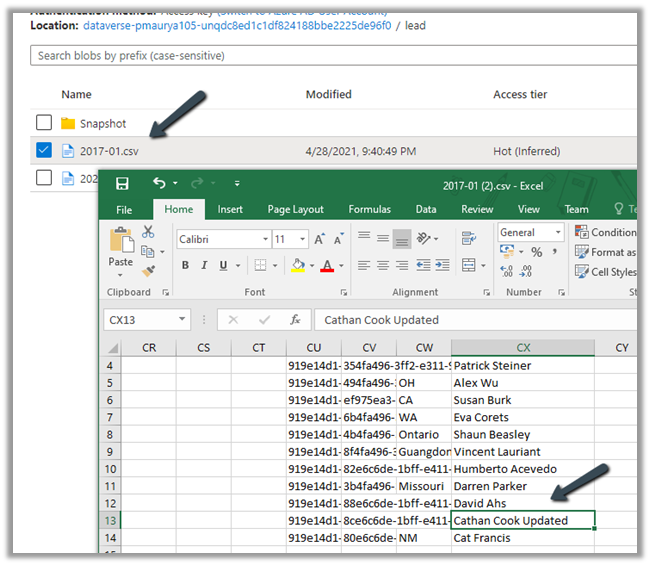
The same is the case with the contact record.

Now let us update an account record, it had Append Only specified as Yes.

Here we update the Account Name field from Litware to Litware Updated.
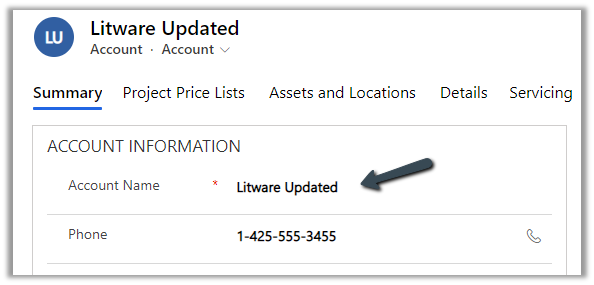
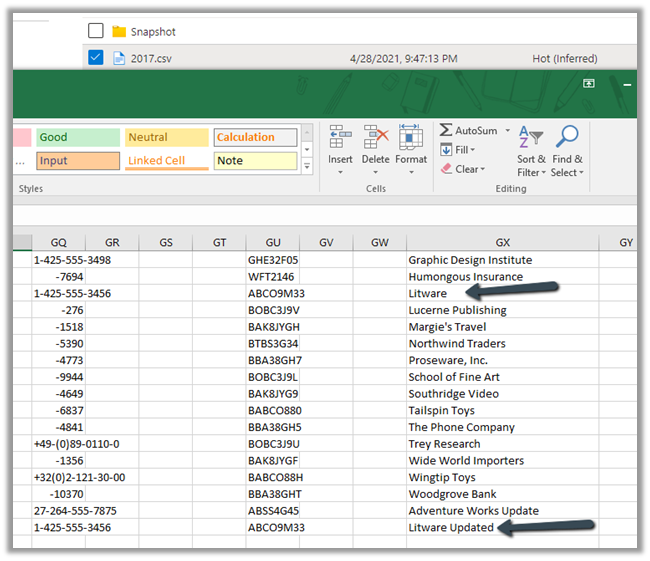
After the sync

We can see a new row appended with the updated record along with the original record.
Let us delete the same account record
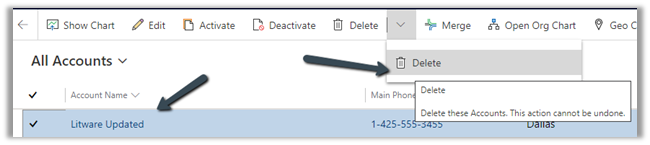
As expected, being Append Only mode, we can see a new row added for the Litware record.
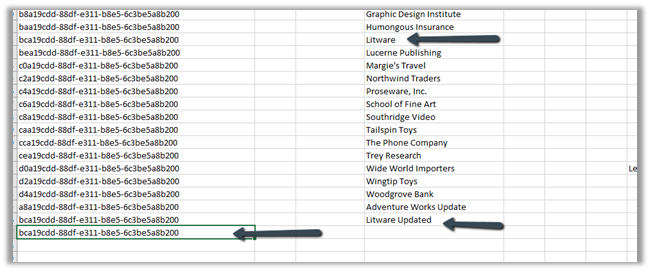
We have 2 additional rows apart from the original row, one created for update and the other for delete action.

Export to Data Lake service is Microsoft’s recommended way of synchronizing Dataverse Data with external storage, and we can see them continuously investing and adding enhancements to it.

Get all the details here –

https://docs.microsoft.com/en-us/powerapps/maker/data-platform/export-to-data-lake#data-partition-strategy

Hope it helps..

Fixed – Initial sync status – Not Started – Azure Synapse Link / Export to Data Lake


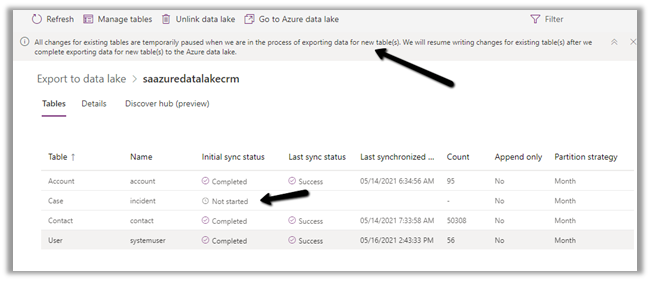
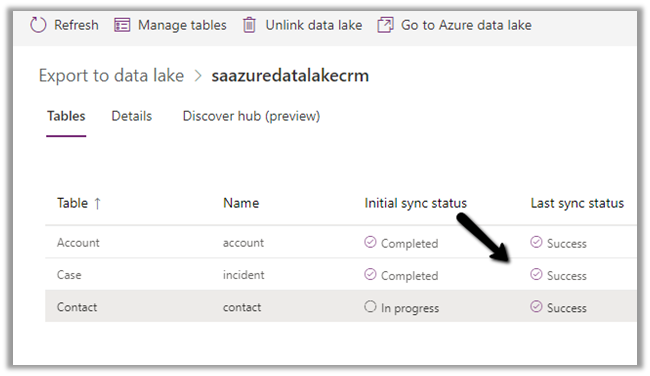
Recently while configuring the Export to Data Lake service, we observed the initial sync status being stuck for one of the tables at Not started.

Manage tables option also was not working

All changes for existing tables are temporarily paused when we are in the process of exporting data for new table(s). We will resume writing changes for existing table(s) after we complete exporting data for new table(s) to the Azure data lake.

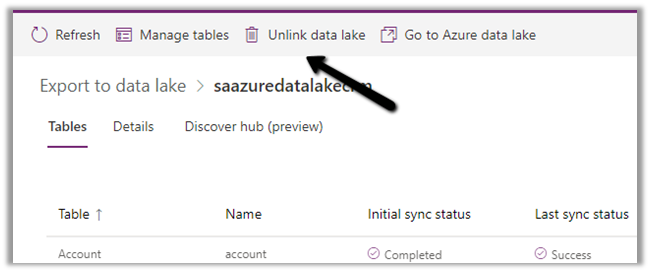
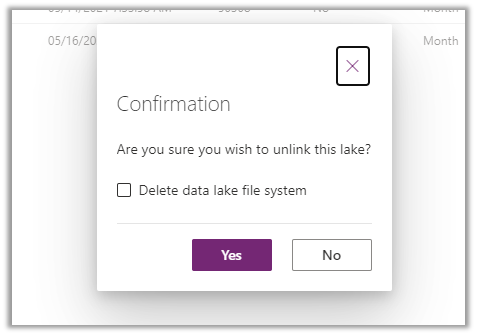
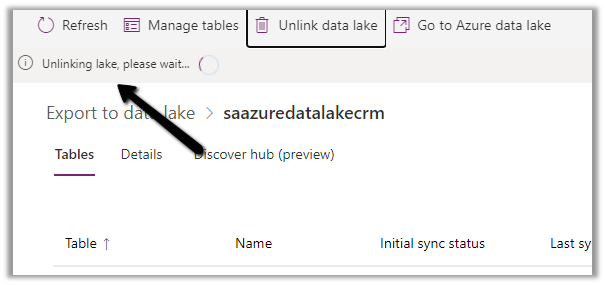
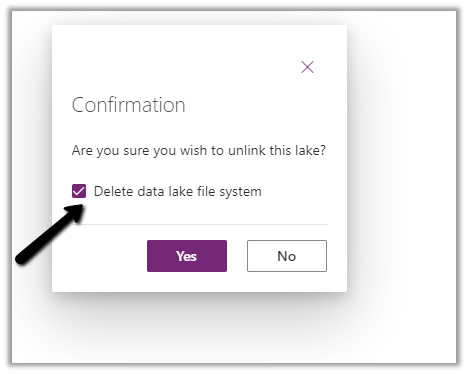
As it was seemed to be stuck forever, we tried Unlinking the data lake and linking it back.

Select Yes

We left the Delete data lake file system unchecked.

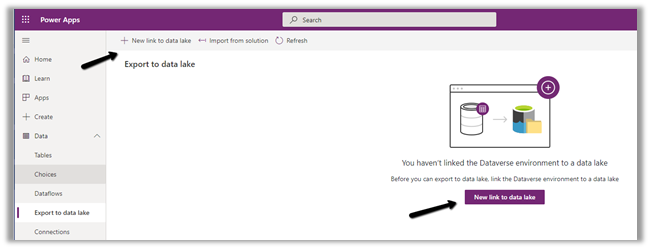
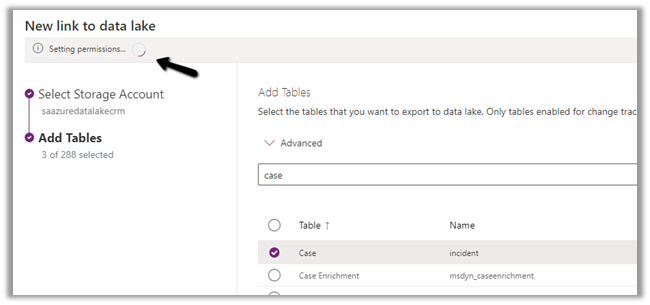
Created a New link to data lake with the same storage account.

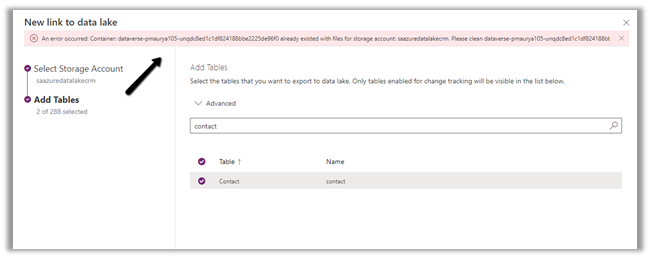
We would get the below error à

An error occurred: Container: dataverse-pmaurya105-unqdc8ed1c1df824188bbe2225de96f0 already existed with files for storage account: saazuredatalakecrm. Please clean dataverse-pmaurya105-unqdc8ed1c1df824188bbe2225de96f0

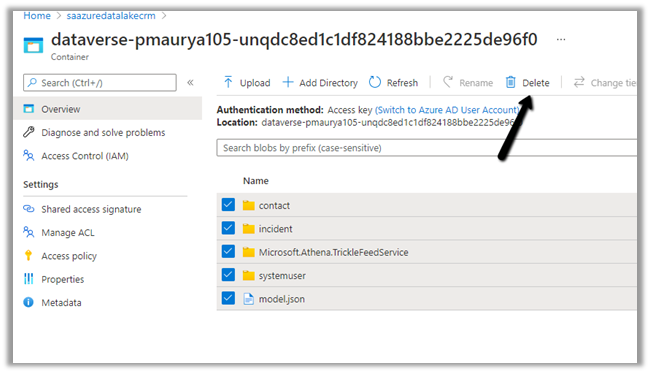
Basically, if we are using the same storage account for linking, we need to first delete or clean the container.

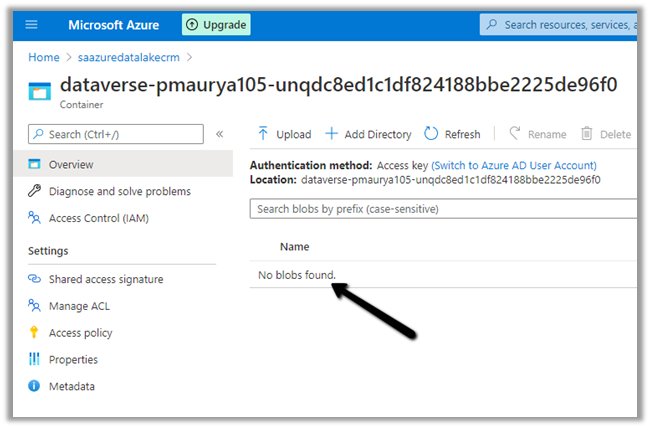
We cleaned the container.

And tried again.

This time it worked

Here we can check the Delete data lake file system option while Unlinking the data lake

This will perform the same step – deleting the files within the container.

If that doesn’t work or is not feasible, we should raise Microsoft Support Ticket.

https://powerusers.microsoft.com/t5/Microsoft-Dataverse/Added-new-Table-to-Export-to-Data-Lake-Now-Sync-is-blocked/m-p/924560#M11400

Check other posts on Azure Data Lake and Dynamics 365 – 

https://nishantrana.me/2020/12/10/posts-on-azure-data-lake/

Hope it helps..
Advertisements