How to – embed marketing form on an external page


In the previous posts, we learned about website tracking and how to authenticate the domain for external hosting of the form as well as email marketing.

Here we will explore the option of hosting the form on an external page.

Let us start by creating a simple marketing form having a first name, last name, and email fields in it.

Click on Check for errors, if everything is fine then select Go Live.

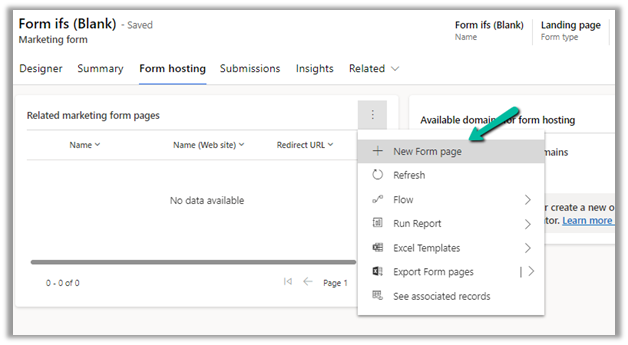
This shows up in the form hosting tab in the Marketing form.

There we need to first create a new marketing form page record.

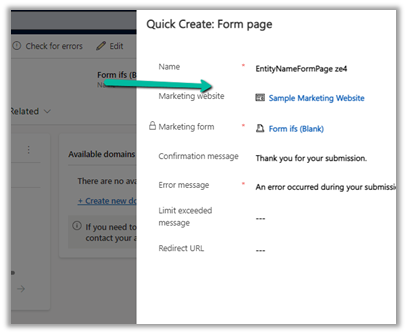
Here while creating a new form page, we have associated it with the marketing website we had created earlier.

Just refresh the marketing form page, and it will start showing the already authenticated domains.

Open the form page record created. There we can see a few other options to be configured along with an external hosting format.

If we choose the option of iframe, the style of the form will remain isolated from the rest of the page it cannot take the styling element of the page it is hosted on, and website tracking will not work.

Let us start by hosting it as an iframe option.

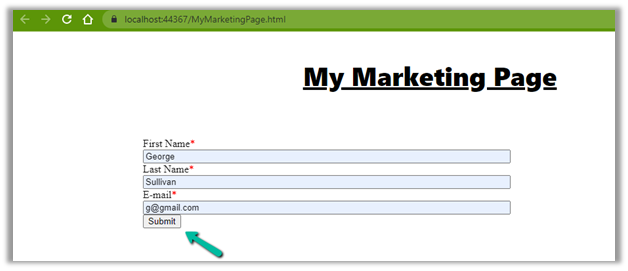
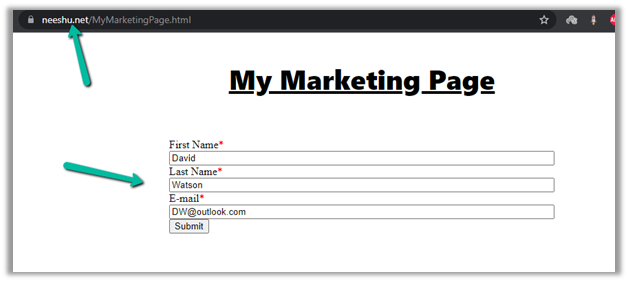
Let us run it locally first before deploying the page to our authenticated domain.

Submit the form

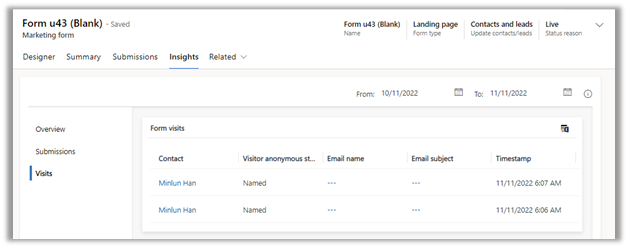
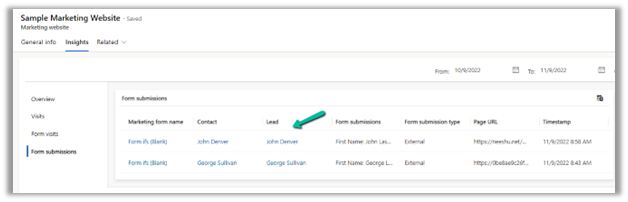
Open the Marketing Website record or the Form , we can see the details added to the Visits and  Submissions section of Insights.

Now let us submit it once more from the authenticated domain.

We can see the details in the Form submissions.

Now let us now check the option of hosting it as a script.

Copy and paste the code

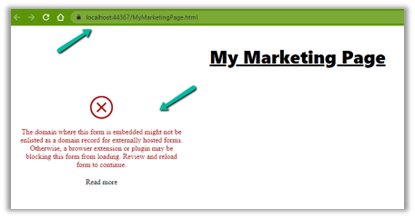
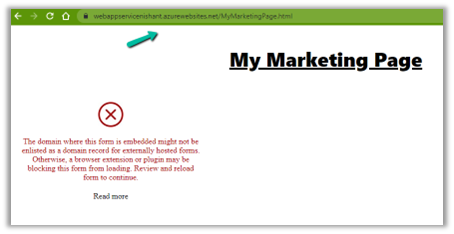
If we embed it in the unauthenticated domain, we will get the below error.

Hosting it inside the authenticated domain we get the form loaded correctly.

Submit the details.

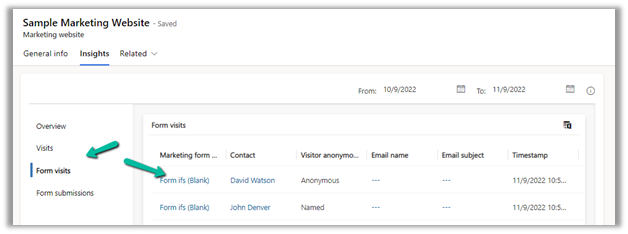
Let us again check the Insights tab in the marketing website record or the marketing form. We can see it being tracked in Visits, Form Visits as well as Form Submissions.

Insights tab in the Marketing form – 

Get all the details here – Embed forms on external websites

To learn more about Dynamics 365 marketing – https://meganvwalker.com/category/dynamics-marketing/

Hope it helps..

Advertisements

Marketing forms comparison – Marketo and Dynamics 365 Marketing


Marketo

Dynamics 365 Marketing

We can create forms in Marketo to be used on the landing pages.

There are 4 types of Marketing forms – Landing page, Subscription Center, Forward to a friend, and Event Registration.

Add fields to form

Fields are mapped to the contact and/or the lead table in Dynamics 365 and can be added to the form.


We can define input fields that can be used in the form.

The form must be approved before being used on the landing pages.

A form must me made go live before it can be used on the marketing page or embedded on the external site.

Fields labels can be edited, fields can be made required.

Fields labels can be defined, along with default value, field requirement, error message, etc.

Forms can be previewed

Forms can be previewed as shown below.

Select a form theme/edit CSS of the form theme

Inside HTML Designer we can specify the CSS and layout of the form.

Pre-fill – Marketo forms will pre-fill fields with the web visitor information using the cookie.

Form Pre-fill doesn’t work when embedding a form on your page. It only works on the Marketo landing page.


Enable pre-filling for forms. Prefilling works when the form is a subscription center form or when the landing page form has a remember me option available when filling in the form.

At form level –

At field level –

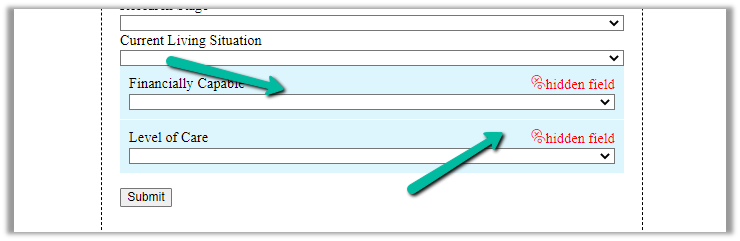
Hidden form fields and auto populating the hidden form field

Hidden fields can be auto-populated with different parameter types – Default value, URL, Cookie Value and Referrer parameter

Form fields can be hidden and can provide a default value

Pass hidden data or pre-populate marketing form fields

Setup lookup fields via API

Enable Captcha in Marketo forms.


Add a Captcha element to the form.

Embed form on an external website.

Embed code can be generated for the Approved form.


Form Prefill does not work when using the form embed code on your pages or a Marketo landing page. Form Prefill is only meant to work when the form is used in a Marketo landing page via the Insert Element option.

Once the code is embedded on your website, any changes to the form in Marketo will be pushed to your site upon the form approval. You do not need to make more changes to the code.

Embed the form on an external website.

We can

  • Embed a Dynamics 365 Marketing form on an external page.
  • Use form capture to integrate Dynamics 365 Marketing with a form created externally in your (CMS)

along with the option of publishing a native marketing form on a native marketing page on the Power Apps Portal configured.


After designing the marketing form, save it and go live. Open the form hosting tab, and create a new Form page, where we can define additional configuration settings for the forms that will be embedded externally. We will also have to authenticate the domain where the form will be used.

Copy the embed code and paste it on your website page.

We can Enable prefilling on embedded marketing forms on an external website.

Prefilling allows fetching contact information from the dynamic’s database because of which additional security measures are in place for protecting user privacy.

For pre-filling to work below are the requirements –

  1. Domain authentication for the external domain of the website, where the form will be hosted.

  1. The contact record inside Dynamics should have an allow-prefill flag as allow.

The core functionality of the Marketo web form can be extended using Form 2.0 JavaScript API

We can extend marketing form capability using JavaScript API


We can also use Form capture to integrate a form created externally.

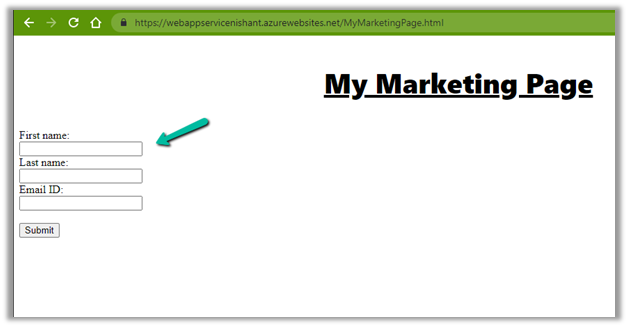
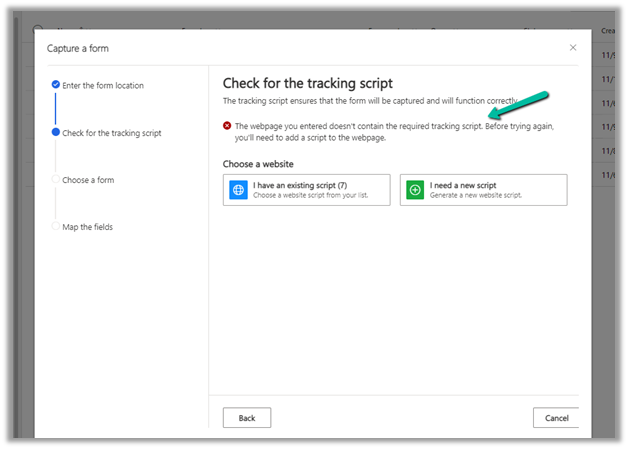
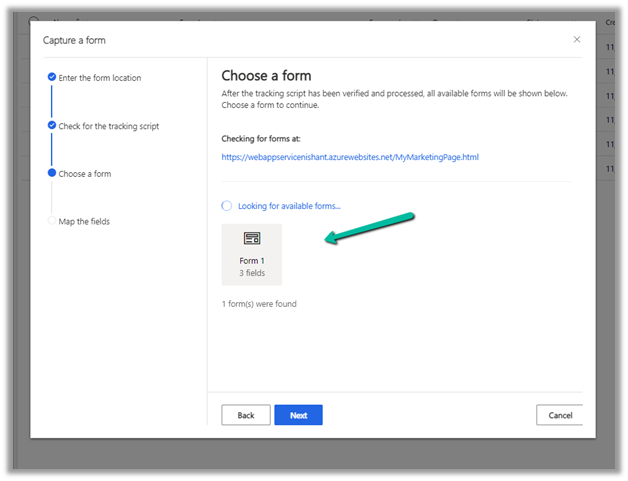
Select Capture form in Marketing forms, in the dialog specify the URL of the web page, where the tracking script is set up and the form is available for mapping.

Next, it will check for the script / or script can be generated and can be copied to the external webpage.

Followed by selecting the external form on the web page and providing mapping for each of the fields.

Select Go live for the marketing form and it can begin to accept data from the external form.

Prefilling doesn’t work in the case of the form capture option.


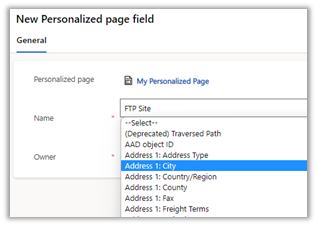
Additionally – Marketing provides Personalized Page Content

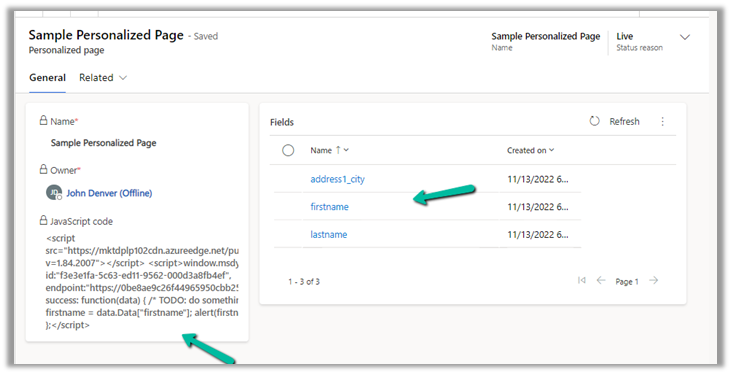
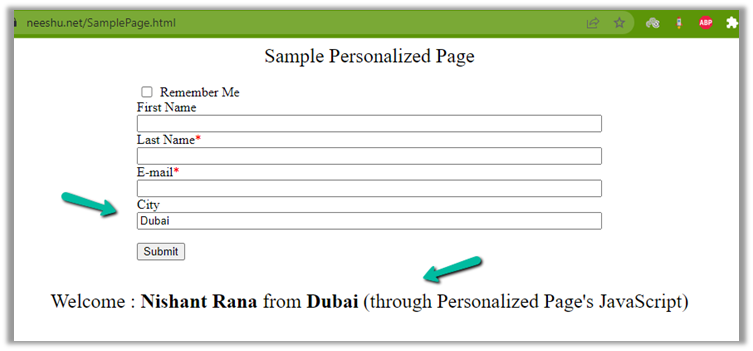
Specify the fields to be used for personalization and select Go Live to generate the JavaScript code.

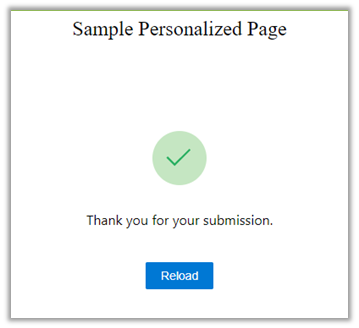
Copy/Use the JavaScript code in the external web page to access the fields specified.


Prerequisite –

  1. The external domain (website) needs to be authenticated.
  2. The page should have the marketing form with a remember-me design element in it. This element is mapped to prefill marketing form field on the contact table.

Hope it helps..

Advertisements

How to – Authenticate Domain in Dynamics 365 Marketing


Domain authentication is required for marketing email messages and for hosting the marketing form externally. Authentication of the email domain confirms that you have been approved by the organization to send messages on their behalf, this also increases the deliverability of the email. And in the case of an externally embedded form, domain authentication establishes that you own the domain, which is also required for the pre-filling of the form to work.

Best practices for email marketing

When Marketing is installed, we can see a default pre-authenticated domain (ending in – dyn365mktg.com) already added. We can use it for testing and demo purpose.

Here using Test send we are sending an email that uses the from address using the pre-authenticated default domain.

We can see the email received from marketing.

Now let us add a new domain record and authenticate/configure it for both External Form Hosting and Email Sending.

Navigate to Settings >> Email marketing >> Domains and create a new record.

Enter the domain name and check both the enable form hosting and email options.

If we uncheck Enable email sending, we will be only presented with the option of Verify ownership.

Click on Add will take us to the next screen having the TXT type DNS record/ownership key to be added to the DNS provider’s portal.

Clicking on Next will take us to the CNAME DNS records details, to be added to the DNS Zone

In the last step, we are again presented with all the DNS records to be placed in the DNS zone, along with the option to Verify or Save and Close the record for later verification.

Let us add these DNS records in our DNS Zone (here we are using Azure DNS Zone, the process would be similar in case of another DNS provider/ Site) and click on Verify.

Similarly, add the remaining DNS records.

With all the DNS records added, let us click on Verify-in Configure Domain wizard.

Here we can also Save and close the configure domain wizard and do the verification later by opening the record created.

On successful verification –

Here we have successfully configured the domain as shown by confirmed and verified status.

Read more about it here

Authenticate your domains

Real-time marketing domain authentication

And to learn more about Dynamics 365 Marketing  – https://meganvwalker.com/category/dynamics-marketing/ 

Hope it helps..

Advertisements

How to – configure website tracking in Dynamics 365 Marketing


We can create a website record in Dynamics 365 Marketing to trace visitors to the website.

To setup Dynamics 365 Marketing (trial) – https://nishantrana.me/2021/11/13/step-by-step-configure-dynamics-365-marketing-in-a-dataverse-environment

Navigate to Outbound marketing >> Internet Marketing >> Marketing websites and create a new marketing website record.

Marketing will record closely grouped visits from a single browser as a single session. A new session will start after the timeout specified period of inactivity – 20 min is the default.

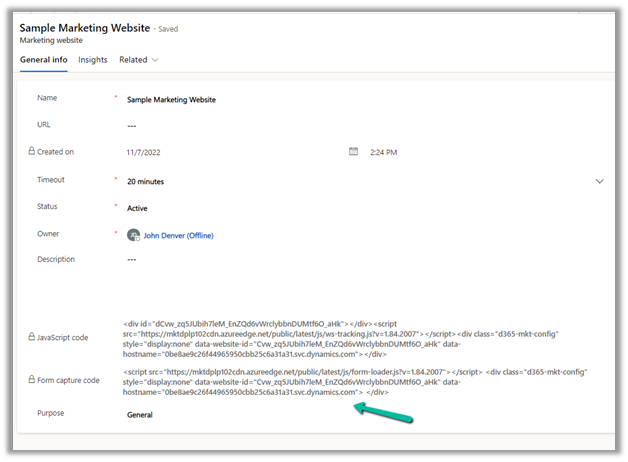
On saving the record, JavaScript Code and Form capture code is generated. The URL field and Description are for entering details for the website record for our use, it doesn’t affect the codes generated.

JavaScript code can be added to any page that we want to track. We can reuse the same code across multiple pages or can have different website records (code) for each page as per our requirements. JavaScript uses cookies for tracking, the users will remain anonymous till they register themselves through the landing page.

Form capture code is used when we want to integrate with a form created externally. We will look at it in later posts when we discuss marketing forms.

Below we have added the JavaScript code to one of the HTML pages inside Visual Studio.

Let us open the page in the browser.

Go to Insights >> Visits in the marketing website record, we can see the visits being tracked.

Now we have published the page in the Azure App Service, just to see what details are captured this time.

This time we can see it tracking the Page Address, unlike last time when we were running it locally.

If the user has registered through the landing page (through marketing form submission, which we’d cover in the next post), we will get more details about the visitor as shown below.

Within the overview section, we can get a few more details as shown below.

Hope it helps..

Advertisements

How to – configure Outbound Calling – Dynamics 365 Omnichannel for Customer Service


For setting up Outbound calling we need to first set up a phone number that will be used for outbound calling.

This would help – https://nishantrana.me/2022/10/17/how-to-set-up-omnichannel-voice-using-azure-communication-service-acs/

In a nutshell below are the steps we are going to perform –

  1. Configure Phone Number for outbound calling.
  2. Define a queue of type voice for outbound calling or use an existing queue.
  3. Configure outbound capacity profile and add users.
  4. Create an outbound profile using the phone number, queue, and outbound capacity profile.

Next click on Edit for the phone number added.

Select Make calls for the phone number and save the changes (if not already done) for enabling outbound calling.

Next select Setup for the phone number.

Select Create a profile to create an outbound profile. For agents to make an outbound call they must be assigned or added to an outbound capacity profile.

https://learn.microsoft.com/en-gb/dynamics365/customer-service/configure-outbound-inbound-profiles

For each phone number, we need to define an outbound profile.

Clicking on Create profile will take us to the page for creating the new outbound profile. We can also navigate there directly through – Advanced Settings >> Agent Experience >> Outbound and Inbound Profile >> Manage


Before we can create a
new outbound profile, we need to have Queue and Capacity Profile in place.

Here we have a Queue named Default Voice Queue of type Voice created and a user added to it.


For creating a Capacity profile, navigate to User Attributes >> Capacity Profile >> Manage


Here we have a capacity profile named – Default voice outbound with the users added to it.


With the Phone Number, Voice Type – Queue, and Capacity Profile defined, let us now create the new outbound profile.

Navigate to – Advanced Settings >> Agent Experience >> Outbound and Inbound Profile >> Manage

Select + New profile

Specify the Profile name and Profile type as Outbound.

Add the phone number and specify the Outbound
info required.

Specify Outbound behaviours

Click on Next and check the details in the summary and Save and close to create the outbound profile record.

Now with the configuration done, agents can make calls by clicking the Launch
Dialer.

Or from the Mobile Phone field, they can click on the Phone icon.

It launches the Dialer, with the phone number populated.

Lastly, we can also assign a Phone Number to a user, which allows him to make calls using that number. (toll-free numbers cannot be assigned)

https://learn.microsoft.com/en-us/dynamics365/customer-service/voice-channel-outbound-calling?tabs=omnichanneladmincenter#assign-personal-phone-numbers-to-agents

https://learn.microsoft.com/en-us/dynamics365/customer-service/voice-channel-outbound-calling?tabs=omnichanneladmincenter

With all the proper configurations in place, we were able to make an outbound call using the phone number configured as shown below.

Please check – https://neilparkhurst.com/2022/04/05/omnichannel-for-customer-service-outbound-voice-calling/

https://learn.microsoft.com/en-us/dynamics365/customer-service/voice-channel-outbound-calling?tabs=customerserviceadmincenter

Hope it helps..

Advertisements

How to – quickly find Tenant Id https://www.whatismytenantid.com/


Recently we had to find the tenant id, usually, we will log in to Azure Portal and within Azure Active Directory we will get the tenant id.

However, in this case, we only had the user’s email address.

So we had https://www.whatismytenantid.com/ to help us here.

Just enter the domain name, and click on Find my tenant ID.

The result –

The corresponding PowerShell script – https://craigporteous.com/azure-tenant-id-powershell/

Hope it helps..

Advertisements