How to – configure website tracking in Dynamics 365 Marketing


We can create a website record in Dynamics 365 Marketing to trace visitors to the website.

To setup Dynamics 365 Marketing (trial) – https://nishantrana.me/2021/11/13/step-by-step-configure-dynamics-365-marketing-in-a-dataverse-environment

Navigate to Outbound marketing >> Internet Marketing >> Marketing websites and create a new marketing website record.

Marketing will record closely grouped visits from a single browser as a single session. A new session will start after the timeout specified period of inactivity – 20 min is the default.

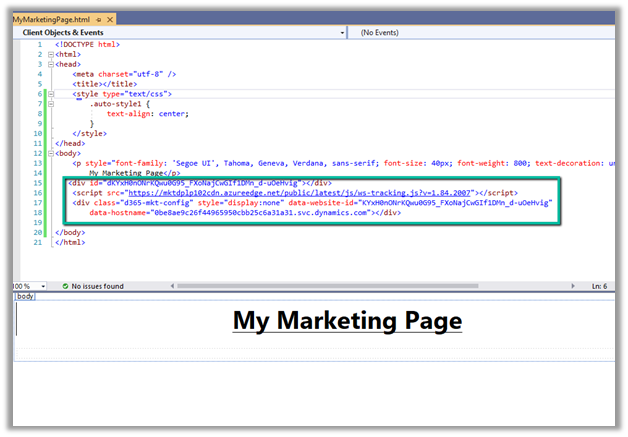
On saving the record, JavaScript Code and Form capture code is generated. The URL field and Description are for entering details for the website record for our use, it doesn’t affect the codes generated.

JavaScript code can be added to any page that we want to track. We can reuse the same code across multiple pages or can have different website records (code) for each page as per our requirements. JavaScript uses cookies for tracking, the users will remain anonymous till they register themselves through the landing page.

Form capture code is used when we want to integrate with a form created externally. We will look at it in later posts when we discuss marketing forms.

Below we have added the JavaScript code to one of the HTML pages inside Visual Studio.
Let us open the page in the browser.

Go to Insights >> Visits in the marketing website record, we can see the visits being tracked.

Now we have published the page in the Azure App Service, just to see what details are captured this time.

This time we can see it tracking the Page Address, unlike last time when we were running it locally.

If the user has registered through the landing page (through marketing form submission, which we’d cover in the next post), we will get more details about the visitor as shown below.
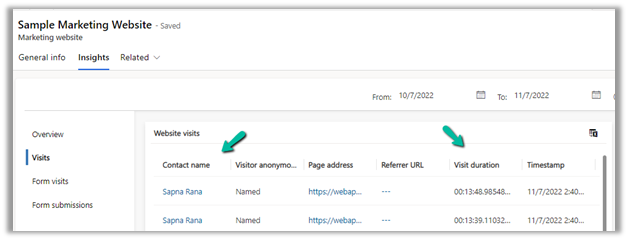
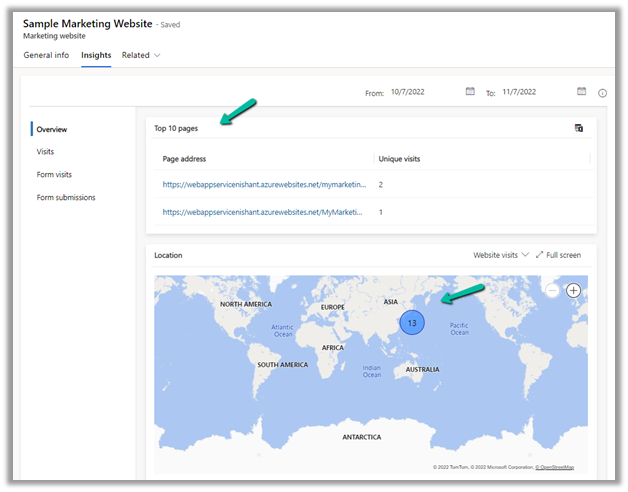
Within the overview section, we can get a few more details as shown below.
Hope it helps..


Advertisements

Key points – Copying environment in Dynamics 365 Marketing


Few key points for quick reference, if we plan to copy Dynamics 365 Marketing environment.

You could find all the details here –

https://learn.microsoft.com/en-us/dynamics365/marketing/manage-marketing-environments

Copy procedure will –

  • Delete the target environment
  • Uninstall the Dynamics 365 Marketing on the target environment (if the target environment already has the marketing license it will take over the same license).
  • Delete all the interactions records – email clicks, website visits, etc. and images used in Email and Marketing Pages (they need to be backed up in separate storage, the marketing environment backup will not have that data as it is managed separately / differently by Marketing Service including Marketing Insight Service).

After Copy –

  • We need to re-run the Marketing Setup as the email sending and insights services will not work.
  • The marketing setup will create a new set of marketing services, therefore new interaction data will be created.
  • We need to again Authenticate Domain and update the DNS records.
  • Images used in Email and Marketing pages in Source Environment will have to be uploaded again in the Target Environment, else they will keep referring to the images hosted in the source environment.
  • All the emails, customer journeys, lead-score records, and more will be in the draft stage after copy, they need to be updated to the go-live status in the target environment.
  • All real-time journeys will be in the stopped stage, to restart them the journey must be duplicated before it can be executed.
  • In case Power App portals are being used, they need to reset first in the target environment to release the license and need to be configured again after copy

Also,

We can use the Configuration Migration Utility to move data between environments – marketing pages, journeys, emails, etc.

Interaction data cannot be to transferred to the target environment.

Solution export and import procedure can be used to move the customizations between different environments.

For extracting marketing interactions – https://community.dynamics.com/365/dynamics-365-fasttrack/b/dynamics-365-fasttrack-blog/posts/extracting-marketing-interactions-in-dynamics-365-marketing

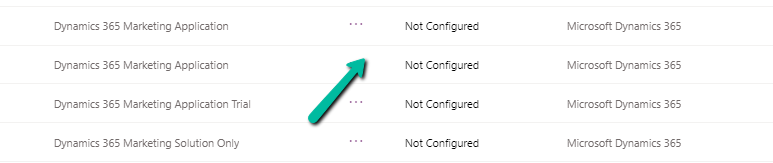
Below is our marketing app showing configured before copy –

and after copying the environment, as expected, shows Not configured.

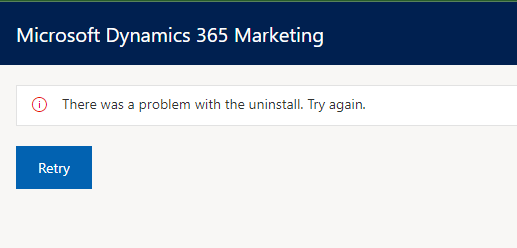
On trying to re-run the marketing setup we got the below error –

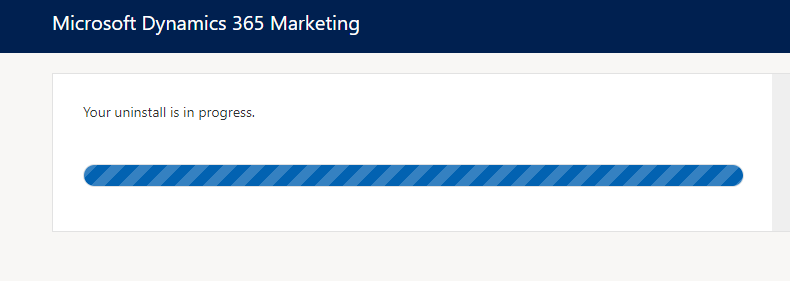
Click on Retry starts the uninstall process

We had to raise the Microsoft Support which eventually fixed the issue at their end with the help of Product Group team.

Hope it helps..

Advertisements

Few key points – Dynamics 365 Marketing Licensing / Apps


Below are a few key points and links for quick reference –

Core Marketing License

Dynamics 365 Marketing – For organizations without any other Dynamics 365 Application.

Dynamics 365 Marketing Attach – For organizations with qualifying Dynamics 365 Applications (minimum 10 users of the following apps – Dynamics 365 Sales, Customer Service, Field Service, Supply Chain Management, Finance or Commerce)

Additional Marketing Licenses – that can be purchased apart from the core license –

Production License – Used for the production environment. Fully functional and includes both solutions and services. It is licensed per tenant and includes a default capacity allotment of 10K Marketing contacts (contact, lead, account, customer insights B2C profile, etc) and 100K marketing interactions (email, SMS, push notifications) per month.

Non-Production License – Used for the test environment to try out new features or customizations. Fully functional and includes both solutions and services but has strict quotas and cannot be used to run production campaigns.

Solution Only License – Used for development or test environment for customizations, importing or exporting solutions, non-functional testing, other development, etc. Only includes solutions and entities and doesn’t include any services. Included with Paid Licenses. To convert a solution-only environment to production or non-production, we will need to purchase either production or non-production license and do the configuration using the marketing setup wizard.


Another Tenant example –

Picture1

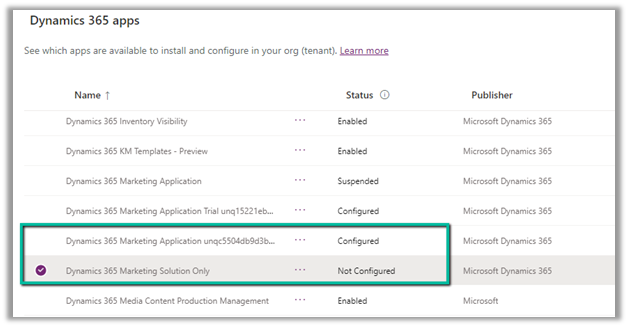
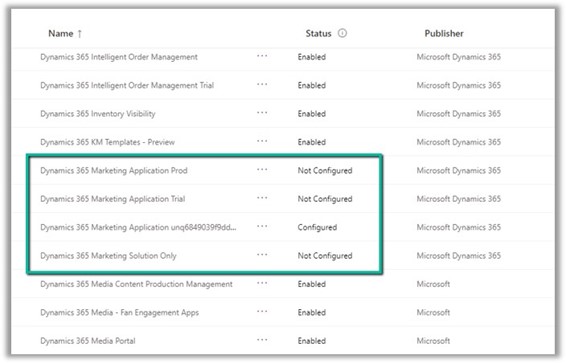
A configured Marketing Application app will have the unique id of the organization / env. appended to it, on which it has been configured as shown above.

Dynamics 365 Marketing Application App: This is a fully functional Dynamics 365 Marketing application, including both solutions and services. Mainly for production but can be used for another environment for testing the functionalities.

Dynamics 365 Marketing Solution Only App: This application includes all the marketing solutions/entities but doesn’t include any services. It can be installed on as many test or development environments as needed for no additional charge.

Other points –

We can only have one Dynamics 365 marketing app per environment i.e. each Dynamics 365 Marketing App can be tied to only one environment.

To add more marketing apps to the tenant, we need to purchase an additional license. On purchase of the license, we can see an unconfigured Dynamics 365 Marketing app added in the tenant.

We can have n number of marketing apps available in the tenant, which can be assigned to any of the Dynamics 365 environments not being used for marketing earlier.

We can also set up a marketing trial – https://learn.microsoft.com/en-us/dynamics365/marketing/trial-signup which can be later purchased – https://learn.microsoft.com/en-us/dynamics365/marketing/direct-purchase#purchase-a-license-within-a-trial

Adding Marketing capacities – We can buy additional marketing contacts and interactions as below

Dynamics 365 Marketing Pricinghttps://dynamics.microsoft.com/en-us/marketing/pricing/

Step by step – Configure Dynamics 365 Marketing in a Dataverse Environment

Hope it helps..
Advertisements

Personalization Comparison –Marketo and Dynamics 365 Marketing


Marketo

Dynamics 365 Marketing

In Marketo, a token is a variable that can be used in email, landing pages, snippets, web campaigns.

{{lead.First Name}}

With default value: {{lead.First Name : default :earthling}}

In Dynamics 365 Marketing, we can add Dynamic or Static Content,

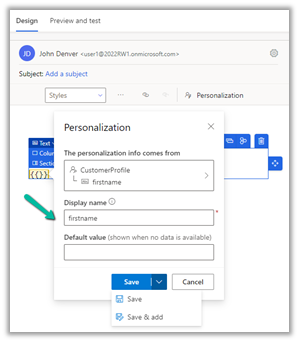
Dynamic Text –

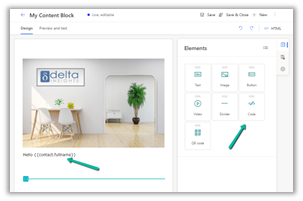
e.g. {{contact.firstname}}

Different types of Tokens: –

  • Person Tokens – {{lead.Salutation}}
  • Company Tokens – {{Company.Company Name}}
  • Campaign Tokens – {{campaign.name}}
  • System Tokens – {{system.dateTime}}
  • Trigger Tokens – {{trigger.Trigger Name}}
  • Program Tokens – {{program.Name}}
  • Member Token – {{member.webinar url}}
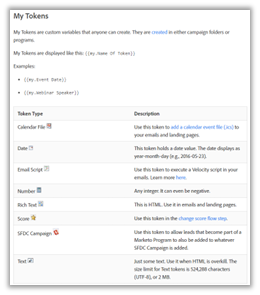
  • My Tokens – are custom variables that users can create for adding content quickly.


Pre-defined dynamic text (Token) (Real time marketing) –

Users can create and share pre-defined dynamic text, making it easy for users to personalize emails without knowing the underlying structure required for using dynamic text.

Accessing existing pre-defined dynamics text in email –

Creating and adding a new Pre-defined dynamic text.

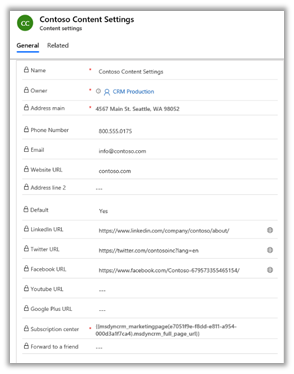
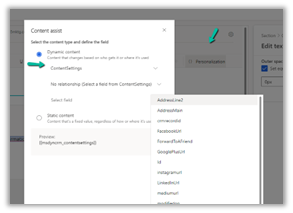
Content Settings – Set of standard and required values for use in marketing email messages like subscription centre link, social media links, address etc.

To use the Content Settings fields inside Email – Personalization >> Dynamic Content >> Content Settings.

Snippet – dynamics content blocks that can be used in email and landing pages.

Content Block – premade reusable pieces of content that can be used while designing emails, forms, and pages.

Can be used for boilerplate texts – terms and conditions, introduction.

For generic sections like Headers and Footers. It can include Dynamic Text as well as code, which can be used to create reusable content, which the team can use without knowing the dynamics text or data model of CRM. Outbound marketing and Real-Time Marketing use their own content blocks.

Select Content blocks while designing email to add them.

   
Advertisements

Fixed – We couldn’t load your user roles from the selected Dynamics 365 Organization error while trying to set up Microsoft Dynamics 365 Marketing


Recently while trying to set up Microsoft Dynamics 365 Marketing on an existing Dataverse environment, we got the below error.

“We couldn’t load you user roles from the selected Dynamics 365 Organization. Please try again”

The user had the system administrator role, which is good enough to set up marketing.

We tried replicating the same in other trial environments but were not able to replicate the above error.

Eventually, we tried the setup with the same user but in a different VDI (Virtual Desktop Infrastructure), and the setup worked properly without any error. One probable reason could be, that the appropriate URLs being accessed during setup were already whitelisted in the other VDI, which wasn’t the case in the first VDI where we were trying earlier.

Hope it helps..

Advertisements

Step by step – Configure Dynamics 365 Marketing in a Dataverse Environment


To configure Dynamics 365 Marketing in an existing Dataverse Environment –

  • Login to Power Platform Admin Center

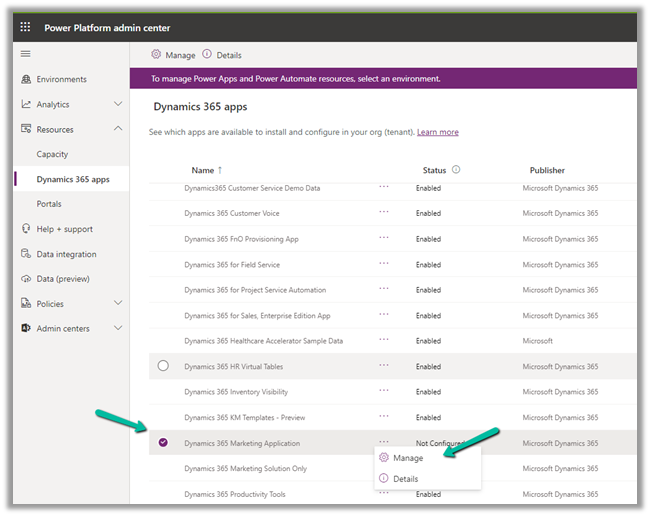
  • Click on Dynamics 365 apps inside Resources

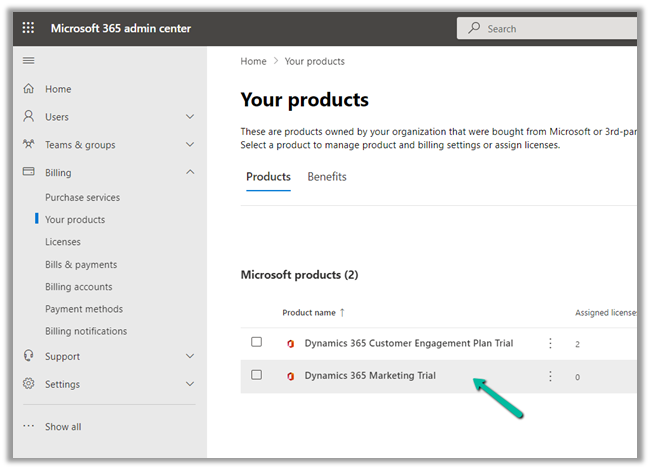
If Dynamics 365 Marketing is not listed there, log in to Microsoft Admin Center and start the trial.

We can see the product listed within Admin Center.

Back in Power Platform Admin Center we can see the Marketing application listed in the resources.

  • We can either install the Dynamics 365 Marketing Application with complete features or the Dynamics 365 Marketing Solution only, which only installs the solution.

Note – you don’t need a Global Admin role, the System Administrator role is enough to finish the setup.

  • It asks for the address to continue. In the case of multiple organizations, it would give the option of selecting the organization against which we want to configure the marketing app.

  • The installation starts, usually it takes somewhere around 2 hours or so.

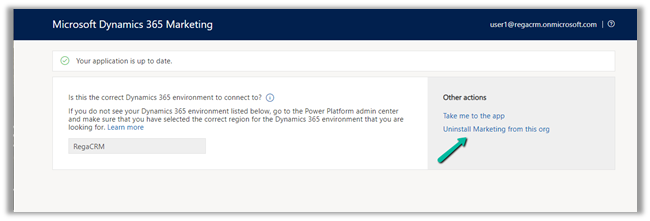
  • After installation finishes, we can navigate to the app or uninstall the marketing app from the org.

  • Take me to the app, opens the app.

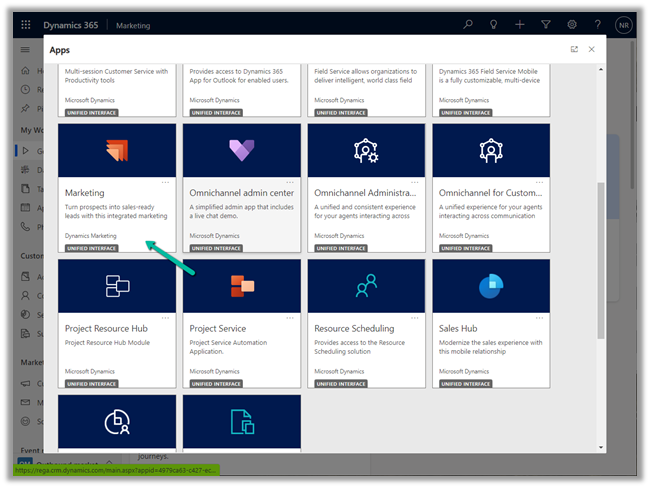
  • We can all see the Marketing app listed in the Apps section.

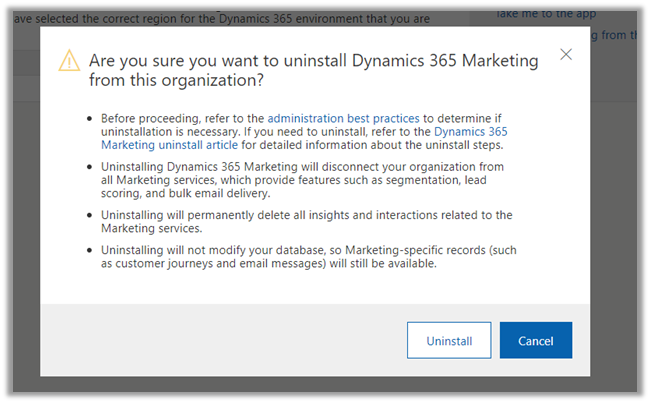
  • Similarly to Uninstall Dynamics 365 Marketing Application, we use the same option – navigate to Resources >> Dynamics 365 Apps – select Manage for the app.

  • It takes to the Marketing Admin Page, from where we can Uninstall the App

  • Read the details before continuing with the uninstall.

  • Apart from configuring Dynamics 365 Marketing over an existing organization, we can also set up a separate trial of the Marketing app.

https://dynamics.microsoft.com/en-gb/marketing/overview/#

  • Specify the work email id and launch the trial.

  • We can see the trial environment listed separately within Power Platform Admin Center

Hope it helps..

Advertisements