New Lead Qualification Experience – Dynamics 365 Sales


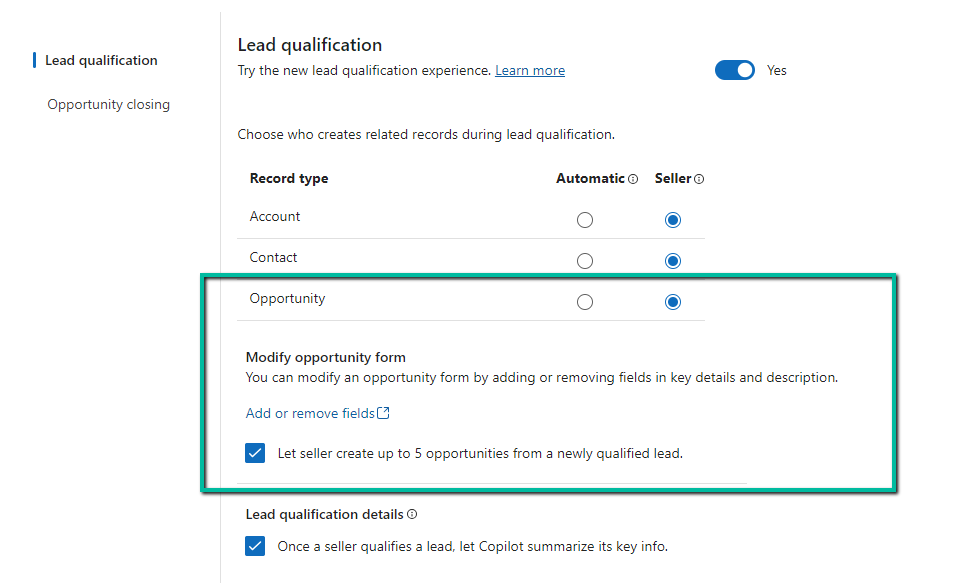
To enable the new lead experience, navigate to App Settings >> Lead + opportunity management in the Sales Hub App.

A screenshot of a computer

Description automatically generated

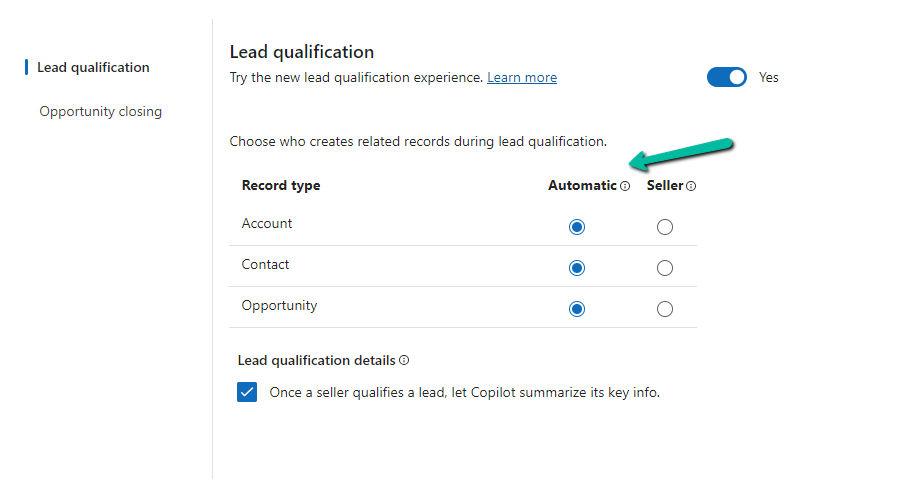
On enabling it, we get the option to specify whether the Account, Contact, and Opportunity records are created automatically or the user (seller) has the option to specify which record to create.

We also see the option to Copilot summarizing the case once a lead is qualified.

For opportunity, if we select Seller, we get an additional option to modify the Opportunity form by adding or removing fields and also the option to allow a maximum of 5 new opportunities during lead qualification.

A screenshot of a computer

Description automatically generated

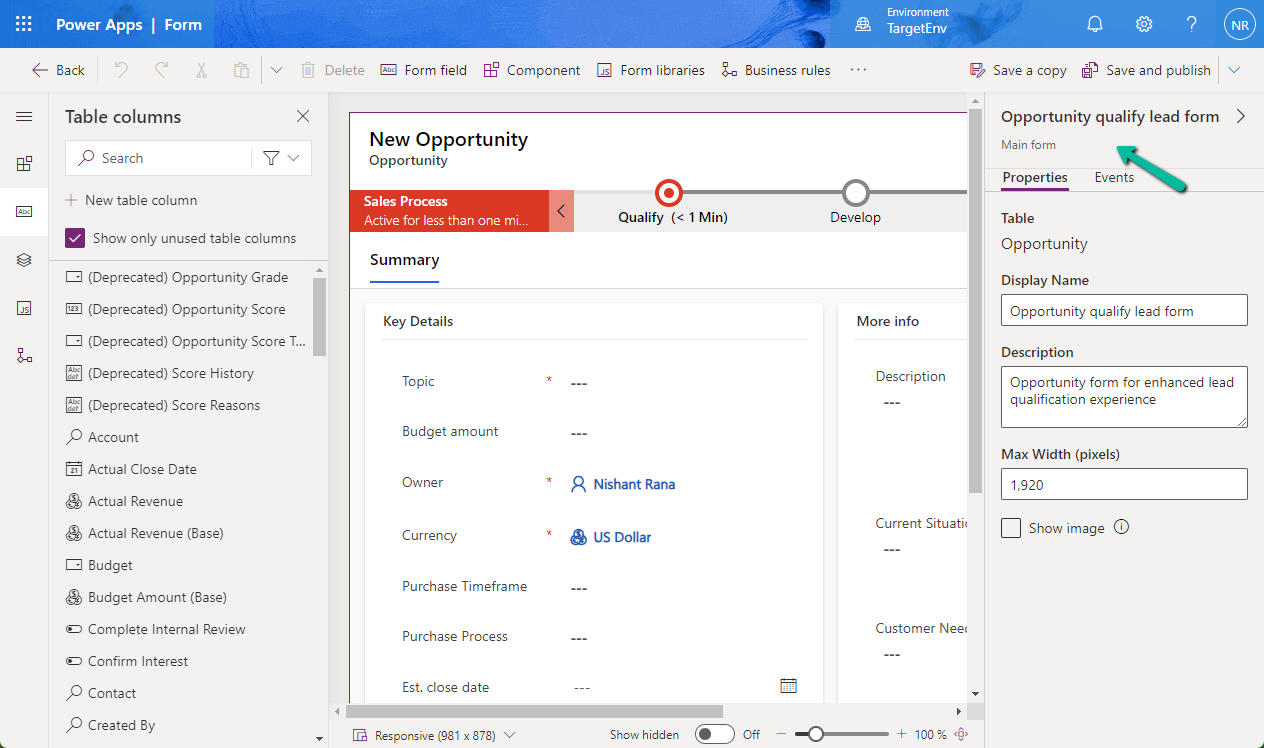
Clicking on the Add or remove fields link opens the Opportunity qualify lead form for customization.

A screenshot of a computer

Description automatically generated

Let us see it in action.

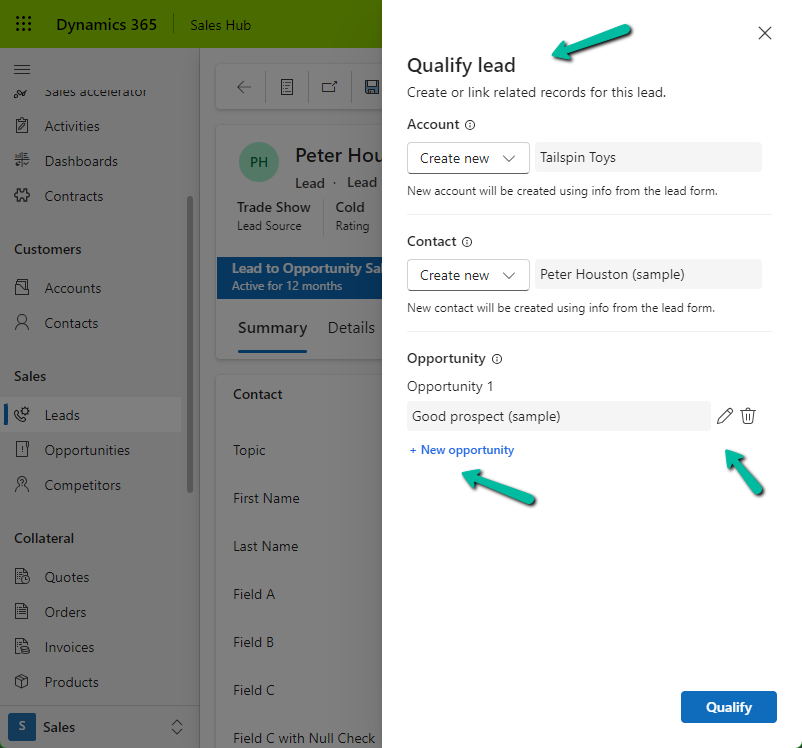
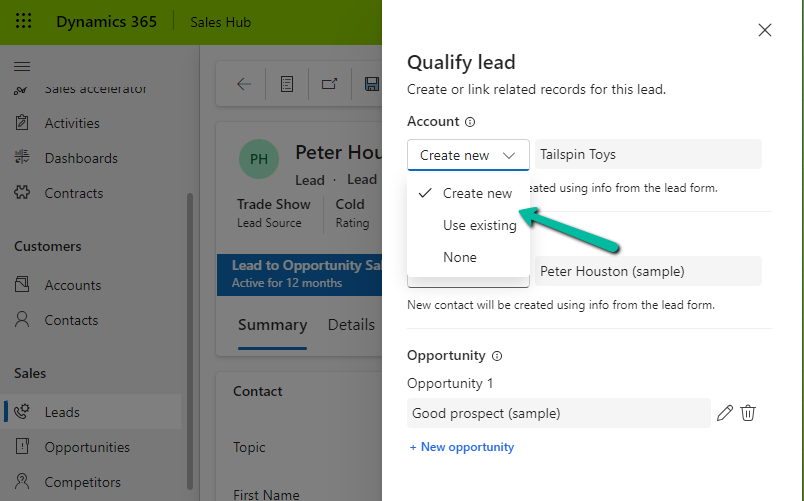
On clicking the Qualify command, we can see the new Qualify lead dialog opened in the side pane.

It gives us the option to create a new Account, Contact, and/or Opportunity record.

A screenshot of a computer

Description automatically generated

For Account and Contact, we can specify an existing record or select none if we do not want the Account and Contact record to be created.

A screenshot of a computer

Description automatically generated

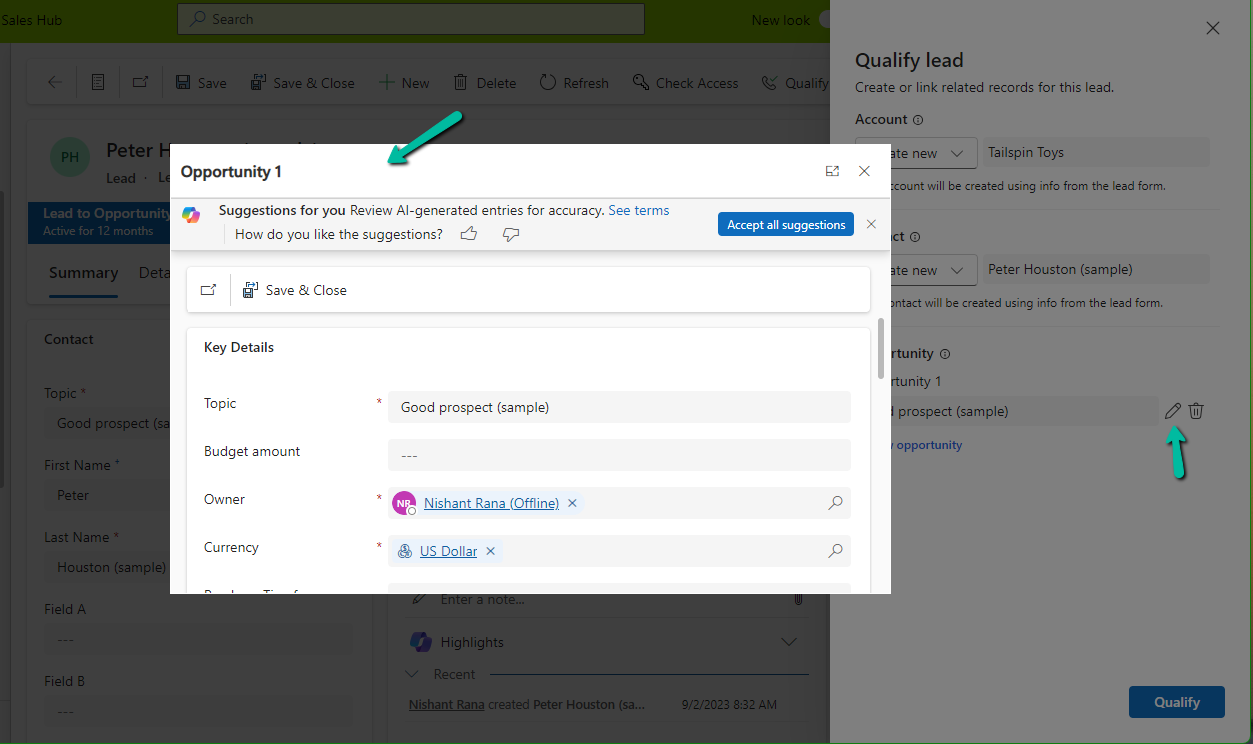
For opportunity, we can click on edit icon to update the details of the opportunity record to be created. It will open the Opportunity qualify lead form.

A screenshot of a computer

Description automatically generated

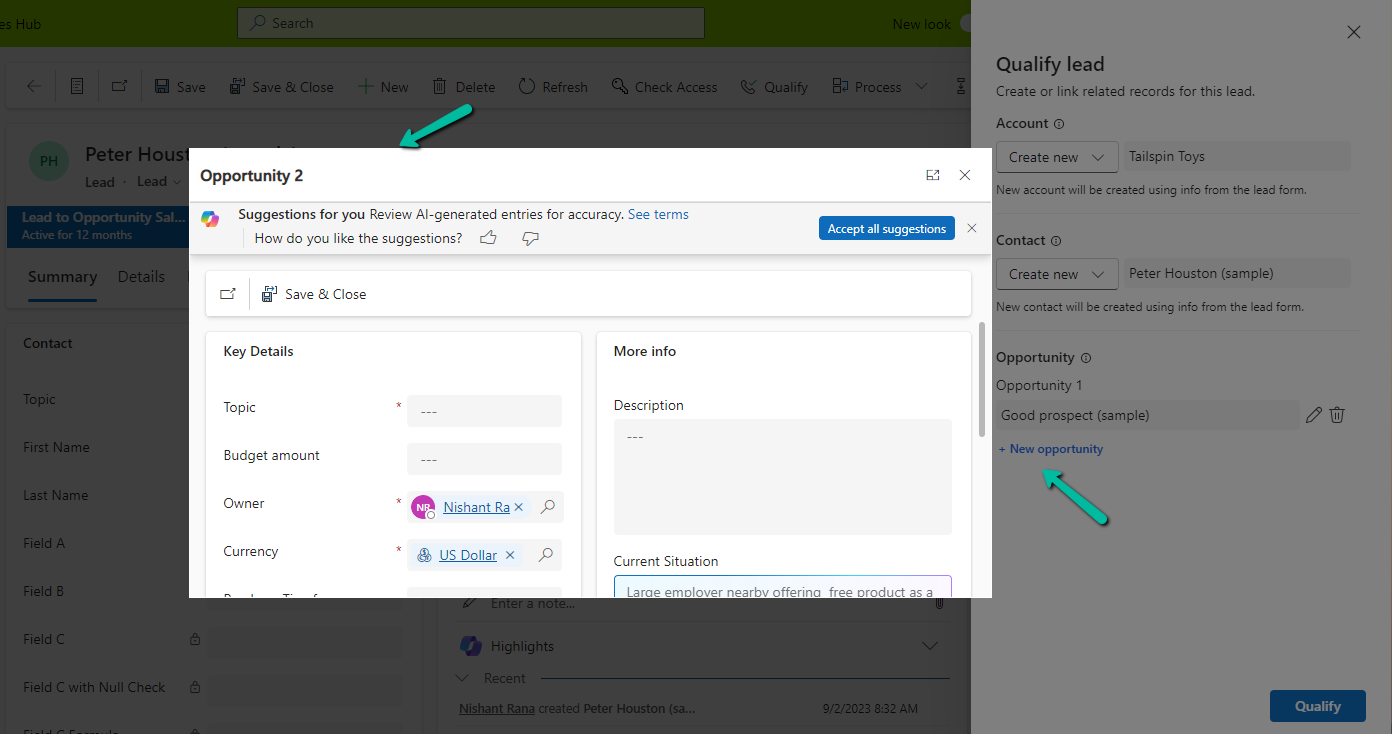
Similarly clicking on + New opportunity allows us to specify a value for the new opportunity record.

A screenshot of a computer

Description automatically generated

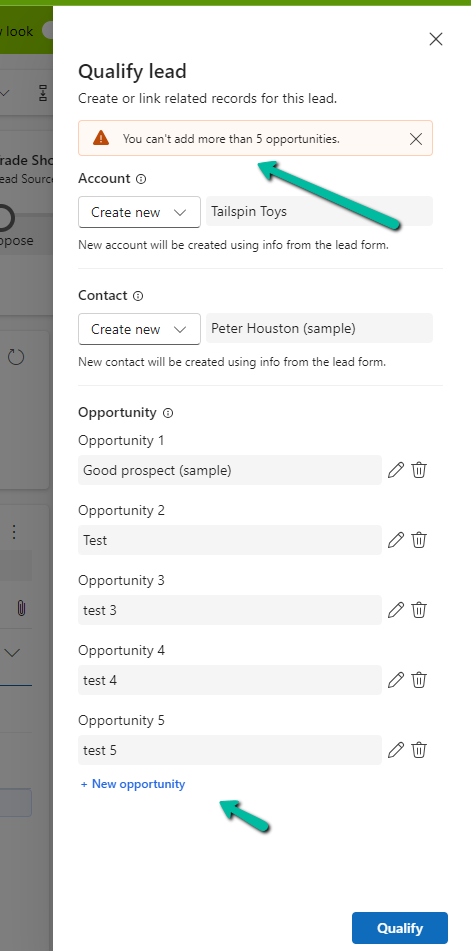
As we had selected the option of a maximum of 5 opportunities, we got the below message on trying to specify the 6th opportunity record.

“You can’t add more than 5 opportunities.”

A screenshot of a computer

Description automatically generated

Let us click on Qualify.

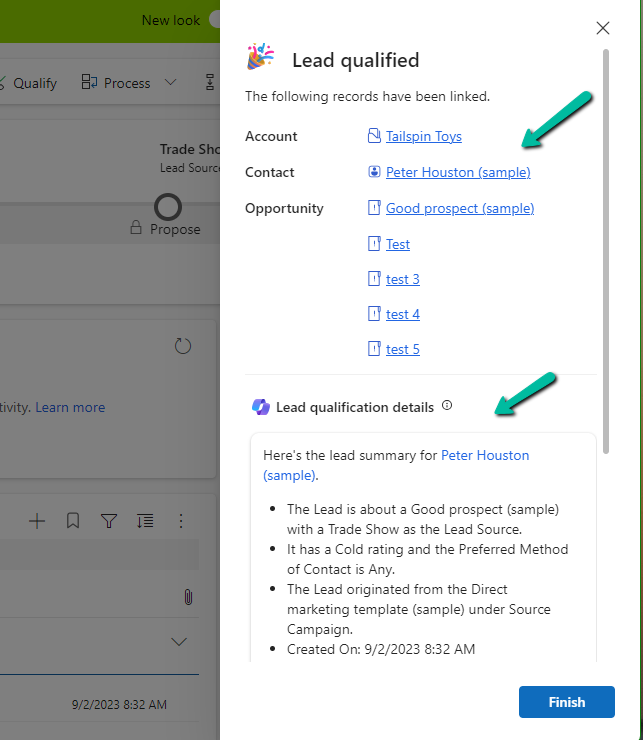
We can see below details, the link to the records generated, and the summary.

A screenshot of a computer screen

Description automatically generated

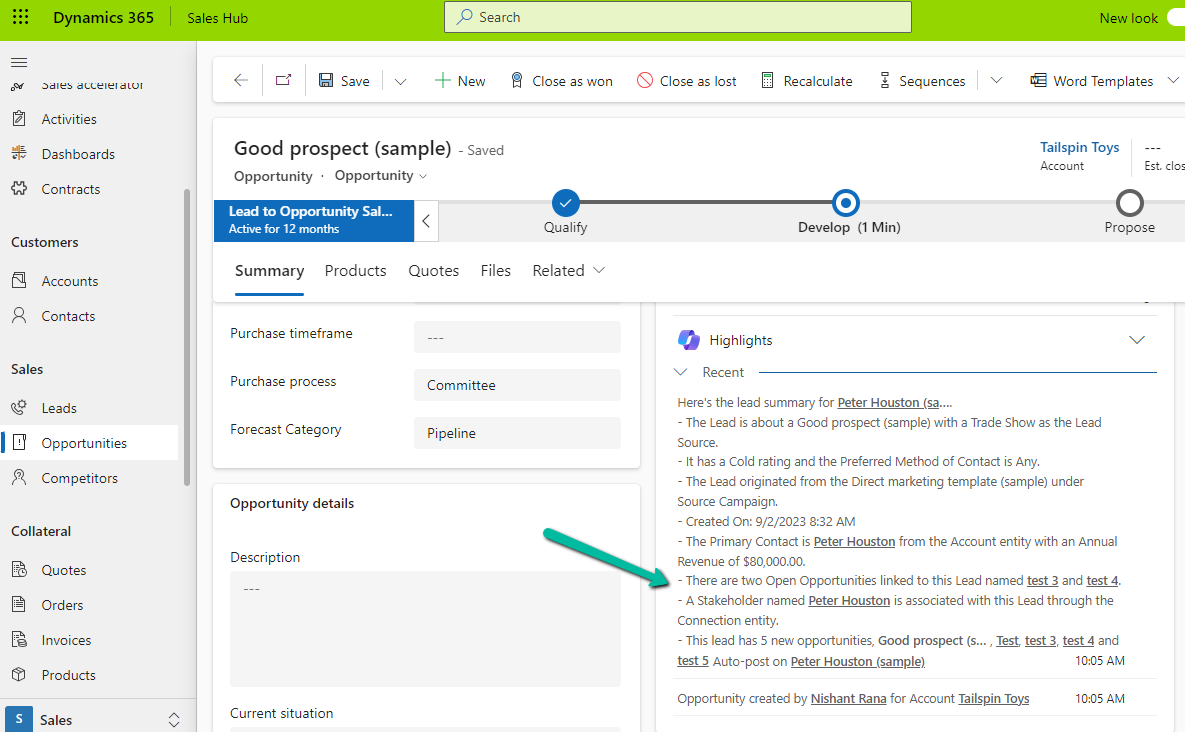
Clicking on Finish opens the 1st opportunity record. We can also see the summary added to it.

A screenshot of a computer

Description automatically generated

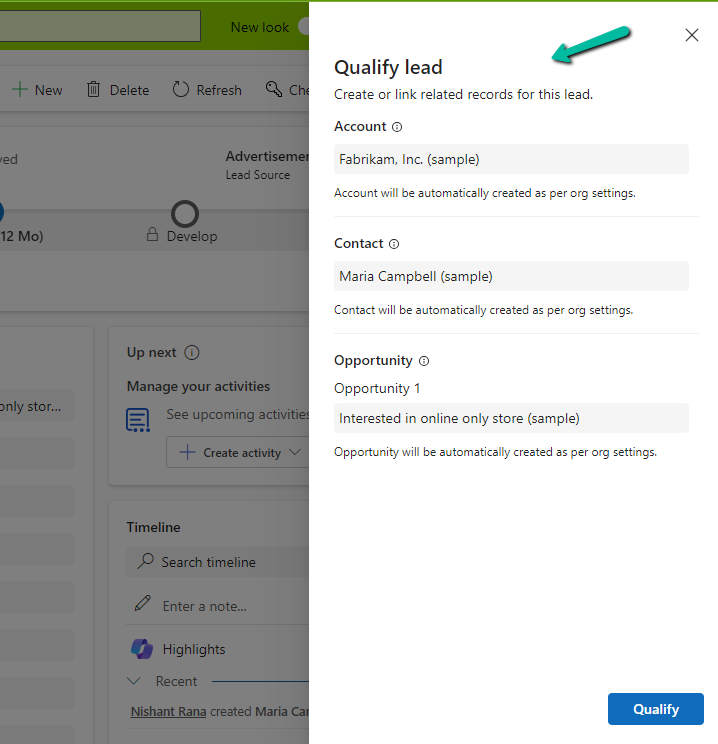
On setting all the options to Automatic,

A screenshot of a computer

Description automatically generated

we can see the below details in the Qualify lead dialog, all as read-only information.

Get all the details here

Hope it helps..
Advertisements

Bypass Power Automate Flows using SuppressCallbackRegistrationExpanderJob optional parameter – Dataverse / Dynamics 365


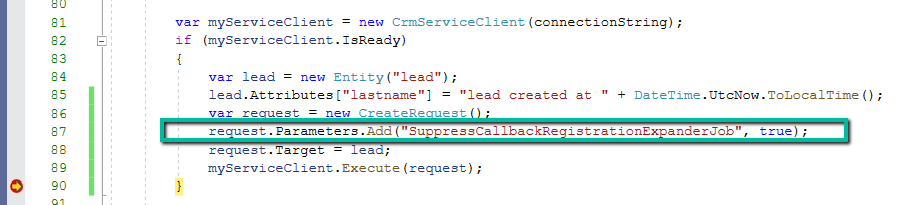
Using the SuppressCallbackRegistrationExpanderJob optional parameter in our Request object, we can bypass the execution of the flows registered against that particular event/trigger.

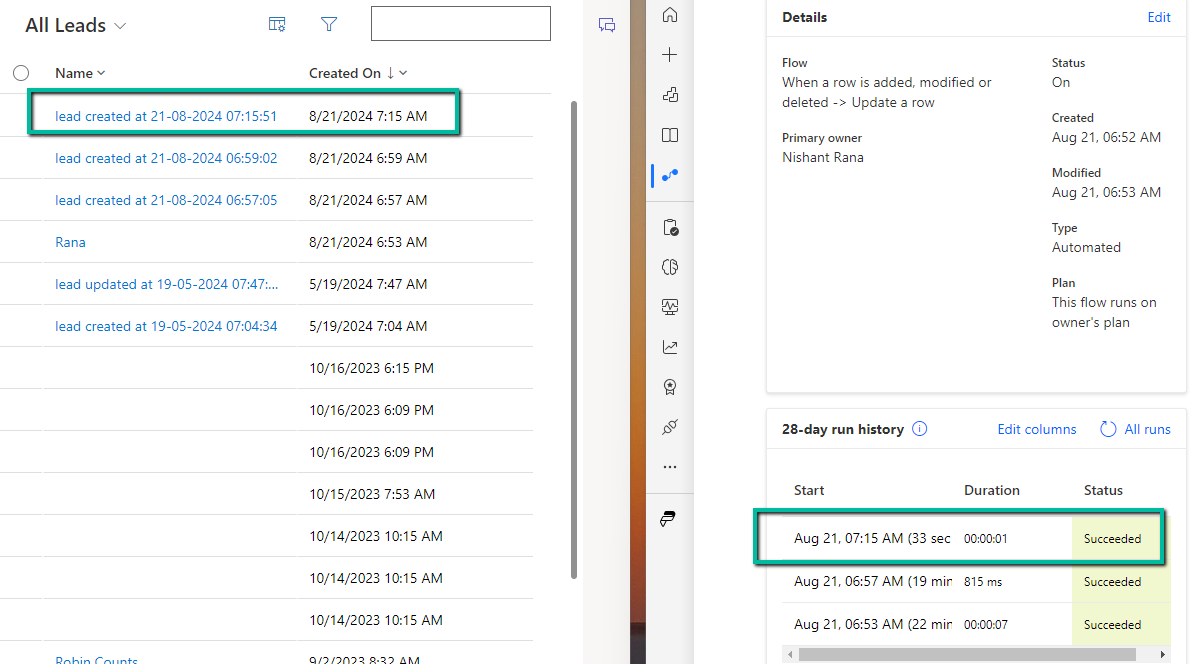
We have a flow registered on the update event of the lead record.

Now let us create a lead record through SDK.

A screen shot of a computer code

Description automatically generated

We can see our flow triggered.

A screenshot of a computer

Description automatically generated

Now let us add the optional parameter SuppressCallbackRegistrationExpanderJob and check

A screen shot of a computer code

Description automatically generated

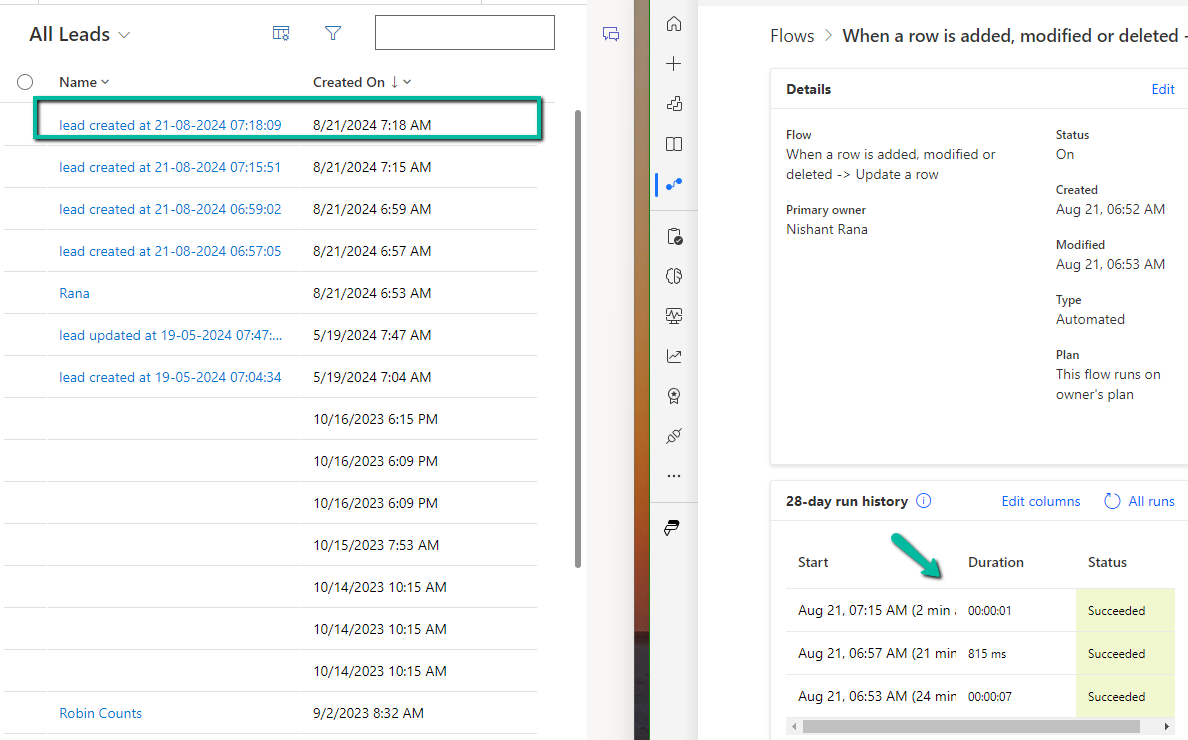
This time as expected our lead record was created but the flow was not triggered.

A screenshot of a computer

Description automatically generated

Also check –

Using BypassBusinessLogicExecution Parameter (Preview) to bypass Custom Sync and Async Logic (Plugin and Workflow)

Bypass execution of specific plugin (step) using BypassBusinessLogicExecutionStepIds parameter

Hope it helps..

Advertisements

Sample Code to create and associate Folder / SharePoint Document Location (Dataverse /Dynamics 365 / SharePoint Online)


Below is our sample record for a custom table custom_contract for which we will be creating the folder in SharePoint and associated it with this record using the SharePoint Document Location record. We’d use the same naming pattern that CRM uses i.e. Name + ”_” + ”GUID”

A screenshot of a chat

Description automatically generated

Below we have passed the details of the record along with CrmServiceClient and SharePoint’s client context.

A screenshot of a computer code

Description automatically generated

The below code will first check if there is already a SharePoint Document Location created by CRM using ends with GUID condition. If it doesn’t exist, we are using the name field plus GUID of the record to create the folder in SharePoint and then associate using SharePoint Document Location record. Also we have used Regex to make sure we replace the special characters with “-“ similar to what CRM does. We are also checking if the Folder exists with that name in SharePoint before creating one.

Below is the GUID / record we have specified while creating the SharePoint Document Location record, the SharePoint Document location configured for that particular table.

A screenshot of a computer

Description automatically generated

The sample code –

  var authManager = new AuthenticationManager(applicationId, certPath, password, domain);
            ClientContext clientContext = authManager.GetContext(siteUrl);

            var serviceClient = new CrmServiceClient(connection);
            if (serviceClient.IsReady == true)
            {
                var myCRMRecord = serviceClient.Retrieve("custom_contract", 
                    new Guid("f655304e-045b-ef11-bfe2-000d3a9b4e06"), new ColumnSet("custom_name"));
                CheckIfShareDocLocationExistElseCreateandAssociate(myCRMRecord, serviceClient, clientContext);
            }

 private static void CheckIfShareDocLocationExistElseCreateandAssociate(Entity myCrmRecord, CrmServiceClient serviceClient, ClientContext clientContext)
        {
            var querySharePointDocumentLocation = new QueryExpression("sharepointdocumentlocation");
            querySharePointDocumentLocation.ColumnSet.AddColumns("name", "relativeurl", "parentsiteorlocation", "regardingobjectid");
            querySharePointDocumentLocation.Criteria.AddCondition("regardingobjectid", ConditionOperator.Equal, myCrmRecord.Id);
            querySharePointDocumentLocation.Criteria.AddCondition("relativeurl", ConditionOperator.EndsWith, myCrmRecord.Id);
            var result = serviceClient.RetrieveMultiple(querySharePointDocumentLocation);
            if (result.Entities.Count == 0)
            {                
                var folderName = myCrmRecord.Attributes["custom_name"].ToString();
                // this makes sure we replace the special characters with - similar to what CRM does when autocreating the record.
                string regexPattern = @"[~#%&*:<>?/\\{|}.""-]";
                string replacement = "-";
                folderName = Regex.Replace(folderName, regexPattern, replacement) + "_" + myCrmRecord.Id.ToString().ToUpper();
                var folderRelativeURL = "custom_contract/" + folderName;

                Web currentWeb = clientContext.Web;
                var folderExists = currentWeb.DoesFolderExists(folderRelativeURL);
                if (!folderExists)
                {
                    var list = clientContext.Web.Lists.GetByTitle("Documents");
                    list.RootFolder.Folders.Add(folderRelativeURL);
                    clientContext.ExecuteQuery();
                }

                var documentLocation = new Entity("sharepointdocumentlocation");
                documentLocation["name"] = "Documents on Default Site 1";
                documentLocation["relativeurl"] = folderName;
                // specifying the GUID of the SharePoint Document Location configured for that table
                documentLocation["parentsiteorlocation"] = new EntityReference("sharepointdocumentlocation", new Guid("cf97e6d8-0b4e-ef11-a317-6045bdd74f46"));
                documentLocation["regardingobjectid"] = new EntityReference("custom_contract", myCrmRecord.Id);
                serviceClient.Create(documentLocation);
            }
        }

The result –

A screenshot of a computer

Description automatically generated

Also refer –

Hope it helps..
Advertisements

Fixed – “The relative url contains invalid characters. Please use a different name. Valid relative url names cannot ends with the following strings: .aspx, .ashx, .asmx, .svc , cannot begin or end with a dot, cannot contain consecutive dots and cannot contain any of the following characters: ~ ” # % & * : ? / \ { | }. “ error while creating SharePoint Document Location – Dynamics 365 / Dataverse


We were using the below code to create a sharepointdoucmentlocation record through a C# Console App.

        private void CreateAssociateSharePointDocumentLocation(string folderName, Guid recordGuid, ServiceClient serviceClient)
        {            
            var documentLocation = new Entity("sharepointdocumentlocation");
            documentLocation["name"] = "Documents on Default Site 1";
            documentLocation["relativeurl"] = folderName;
            documentLocation["parentsiteorlocation"] = new EntityReference("sharepointdocumentlocation", new Guid(parentSiteorLocation));
            documentLocation["regardingobjectid"] = new EntityReference("schemanametable", recordGuid);
            serviceClient.Create(documentLocation);
        }

For folderName we were using the below format, similar to what CRM does, when someone opens the document tab for the record, to create the sharepointdocument location record.

{name} + “_” + {GUID}

However, while creating one particular record we got the below error which was because the name field had “&” in it.

The relative URL contains invalid characters. Please use a different name. Valid relative url names cannot end with the following strings: .aspx, .ashx, .asmx, .svc, cannot begin or end with a dot, cannot contain consecutive dots, and cannot contain any of the following characters: ~ ” # % & * : ? / \ { | }.

A screenshot of a computer

Description automatically generated

As the error message suggests we need to either remove/replace the special characters in the name field before creating the folder in SharePoint and associating it with the SharePoint Document Location record in the CRM.

Sample code to check if a Folder exists else create it (SharePoint Online / PnP Framework / C#)

Say for e.g. we have the following record having the name as

..N ” I & S * H : A | N T.aspx .ashx..

CRM / Dynamics 365 will create the corresponding folder and SharePoint document location record for it.

A screenshot of a computer

Description automatically generated

The folder created will have all the special characters replaced with ““ and suffixed with GUID of the record.

–N – I – S – H – A – N T-aspx -ashx–_03DED211E259EF11BFE2000D3A9B4E06

So if we are creating the folder / SharePoint document location record through code (C#), we can use the below Regular Expression to do the same.

 string myNameField = "..N \" I & S * H : A | N T.aspx.ashx..";
            string regexPattern = @"[~#%&*:<>?/\\{|}.""-]";
            string replacement = "-";
            string result = Regex.Replace(myNameField, regexPattern, replacement);

            Console.WriteLine("Original: " + myNameField);
            Console.WriteLine("Modified: " + result);
            Console.ReadLine();

Hope it helps..

Advertisements

Data Migration of Quote and Quote Product – few key points (Dataverse/Dynamics 365/ SSIS)


Below are the different out-of-the-box statecode and statuscode for the Quote table.

Status (statecode)

Status Reason (statuscode)

0 (Draft)

1 (Inprogress)

1 (Active)

2 (Inprogress)

3 (Open)

2 (Won)

4 (Won)

3 (Closed)

5 (Lost)

6 (Canceled)

7 (Revised)

Now if we are trying to migrate Quote records that are in either 2(Won) or 3(Closed) status (statecode), our package will fail and we will get the below error.

{“error”:{“code”:”0x80040233″,”message”:”Quote can’t be closed because it is in Draft state. Only Active Quote can be closed. Please activate the Quote and then try to close it.”}} -batchresponse_aa072eca-fd15-4067-8f2b-41f7b3dfad1c– )System.Net.WebException

This is because we cannot directly create the Quote record with the status either Won or Closed.

It will create those records with the status Draft instead.

However we can create Quote records with either Draft or Active status, we will not get the above error.

Now another point to be considered is, if we are moving the quote product record also, is that we cannot associate the quote product to a quote if it is in Active or Closed / Won status, it has to be draft status for the quote product to be associated.

If we try adding / associate Quote Product to either an Active or Closed Quote, we will get the below error –

A screenshot of a computer

Description automatically generated

: The remote server returned an error: (400) Bad Request. (Error Type / Reason: BadRequest, Detailed Message: {“error”:{“code”:”0x80043b09″,”message”:”The detail cannot be updated because the parent is not editable.“}})System.Net.WebException (Status Reason: BadRequest): The remote server returned an error: (400) Bad Request.”

And as expected with Draft Quote we can associate quote products.

A screenshot of a computer

Description automatically generated

So basically if we are planning to migrate Quote and Quote Product to Dataverse/Dynamics 365

  • First, move all the Quote with status as Draft (i.e. do not map statecode and statuscode)
  • Then associate Quote Product to it. (also certain fields are only available for update and not create, you could run update Quote Product package to update those fields)
  • Next, we can update all the Quote as Active (along with any other fields that are available only for update and not create), and then run another update package to update the actual statecode and statuscode values as now from the Active status we could move to draft or closed status without any issues.

And also please check the CRM Migration Starter Kit for further details and guidance.

https://www.kingswaysoft.com/blog/2020/12/17/Announcing-Migration-Starter-Pack-v40-for-Microsoft-CDS-and-Dynamics-365CRM

Hope it helps..

Advertisements

Recent and Pinned options are available now for multi-session app’s sitemap (e.g. Customer Service Workspace)


As we would have observed now we have the Recent and and Pinned records option available for the Customer Service workspace app.

A screenshot of a computer

Description automatically generated

The users can see the same Recent and Pinned records while moving between the Customer Service workspace and Customer Service Hub app, giving a consistent experience.

Recent :

Pinned :

Get all the details.

Hope it helps..
Advertisements