Microsoft has always recommended managed solution(s), apart from the some of benefits that managed solutions offer over unmanaged, Microsoft is also adding features to the managed solution, making it easy for teams to adopt and transition to Managed solutions, like focusing on making the solution import faster and adding ALM-specific features to it.
Let us take a simple example to see it working –
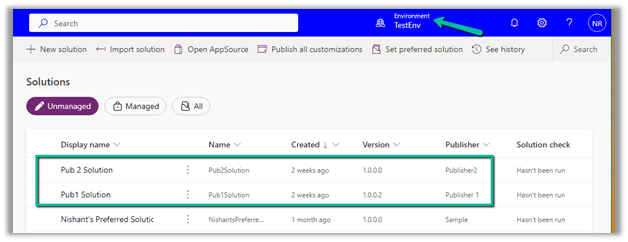
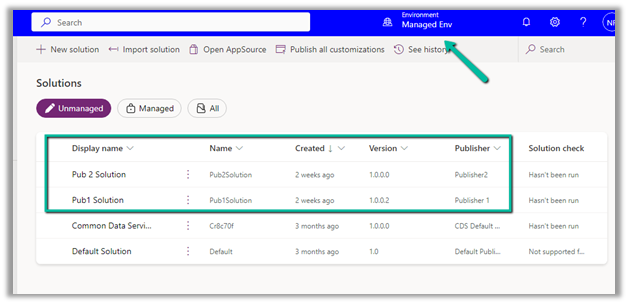
Suppose we have 2 environments, a Test and a Managed environment.
The test environment has 2 unmanaged solutions from different publisher that is already deployed to the target environment as unmanaged.
Source –
Target –
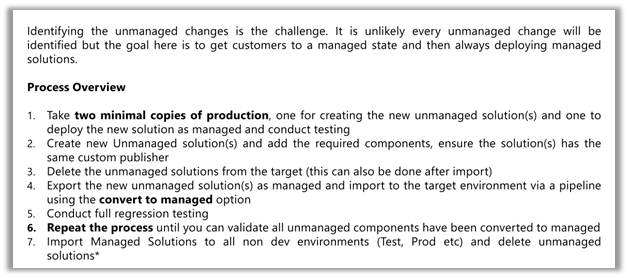
Ideally, we should be creating 2 copies of production environments, one for creating the new unmanaged solution (s) containing the components to be converted to managed and the other environment where the unmanaged solution (s) will be converted to managed and will be used for testing and validation.
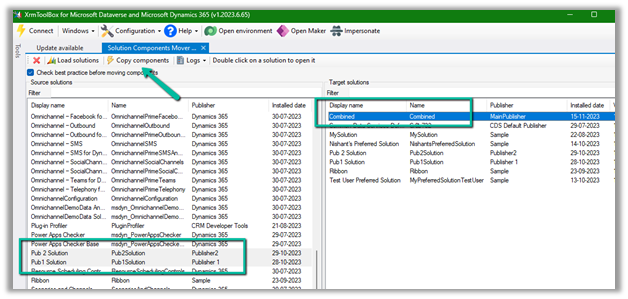
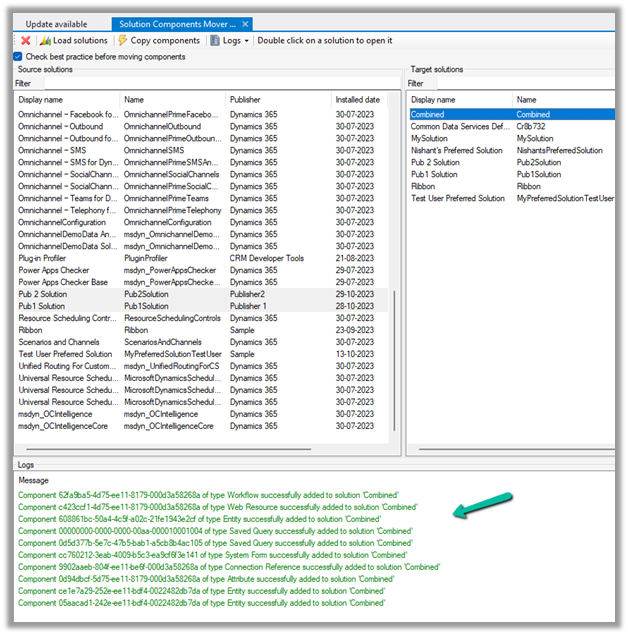
Select source solutions and the target solution (combined) in our case, and click on Copy Components.
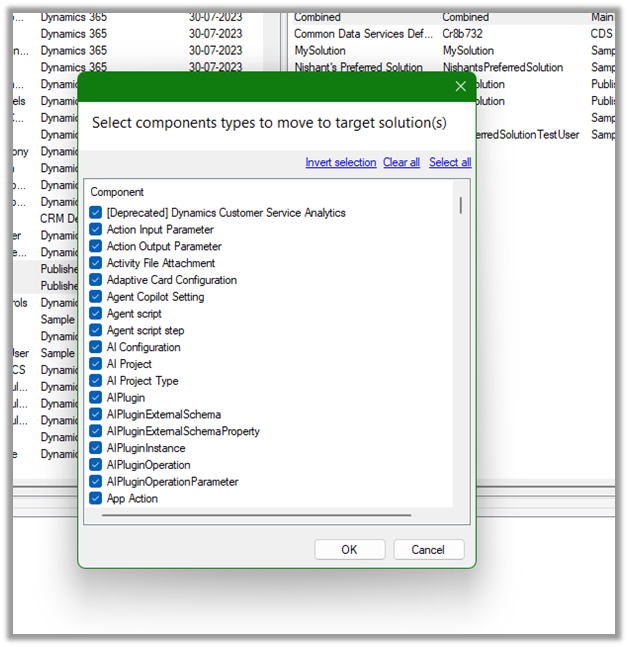
Here we have selected all the component types.
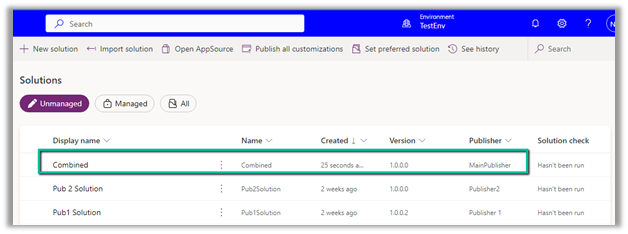
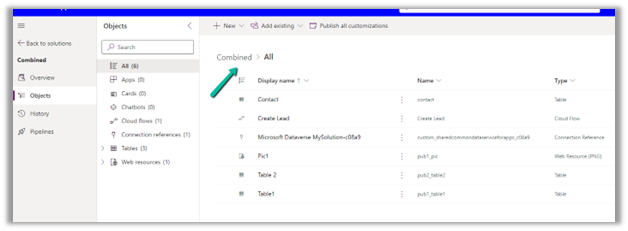
Back in our TestEnv, we can see the components of the solution added from Pub 1 and Pub 2 solutions to the combined solution.
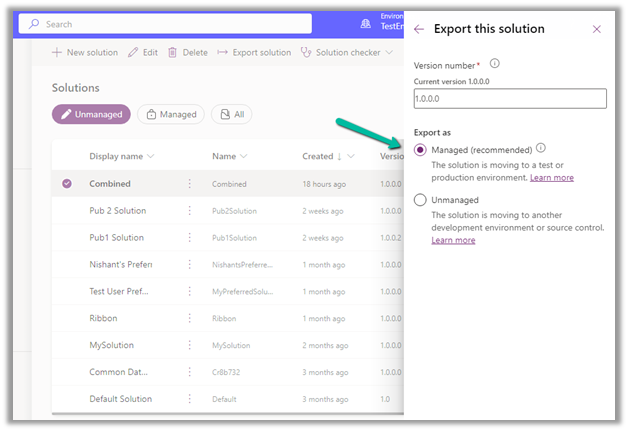
Let us export the combined solution as managed.
The other way to create the combined solution would be to “Include all objects” for unmanaged components like custom tables. For managed components, like out-of-the-box tables lead, contact, case, etc, we’d only select the components customized.
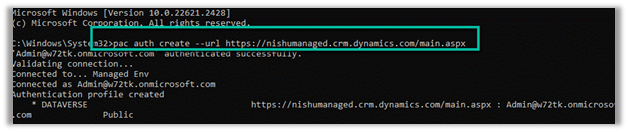
Run the below command, to connect to the destination (managedenv) environment.
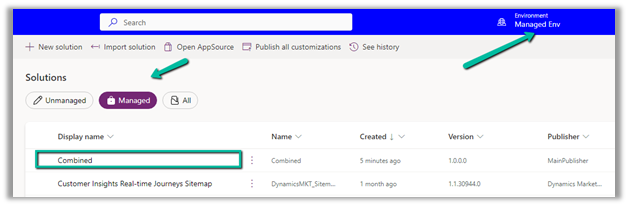
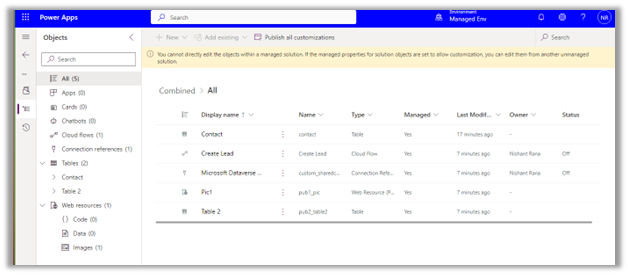
We can see the managed solution imported successfully to our target environment.
For quick reference –
Unmanaged
Managed
Unmanaged solutions are intended to be used in the development environment.
Managed solutions are intended to be distributed and installed.
Unmanaged solutions can be exported either as managed or unmanaged.
Managed solutions cannot be exported
Components can be directly edited within an unmanaged solution.
Components inside the managed solutions cannot be edited directly. Editing can only be done in the corresponding unmanaged solution or an additional unmanaged solution in dev and then exported and imported as managed in the target environment.
The unmanaged solution can be seen as the source code
A managed solution can be seen as a compiled code.
Deleting an unmanaged solution only deletes the solution container, all unmanaged customizations remain in effect and are applied to the default solution of the environment
Deleting a managed solution removes the customizations from the environment.
Benefits
Benefits
Unmanaged solutions allow for real-time customization directly within the environment.
The managed solution secures the solution components in the environment, by restricting the user from making changes or removing components from it.
Developers can make changes on the fly without the need for importing/exporting solutions
Ability to uninstall/roll back. In case of issues or undesired changes, managed solutions make it easier to roll back to a previous version. This can be crucial for maintaining system stability and ensuring minimal disruption to ongoing operations
The managed solution supports layering allowing multiple solutions to be installed simultaneously without conflicts.
Clearly defined component ownership in the case of multiple publishers/solutions.
Improved solution import performance with reduced performance impact on the environment.
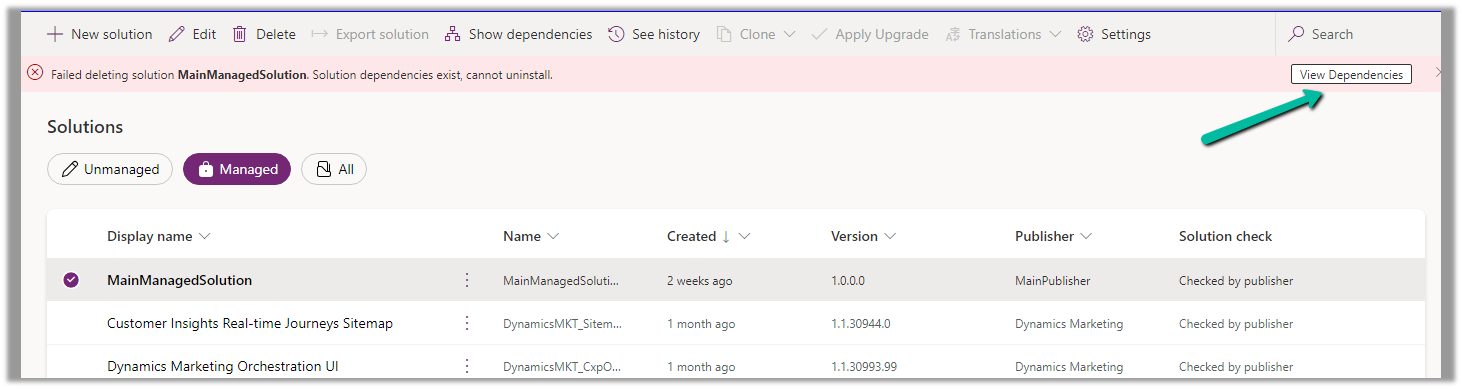
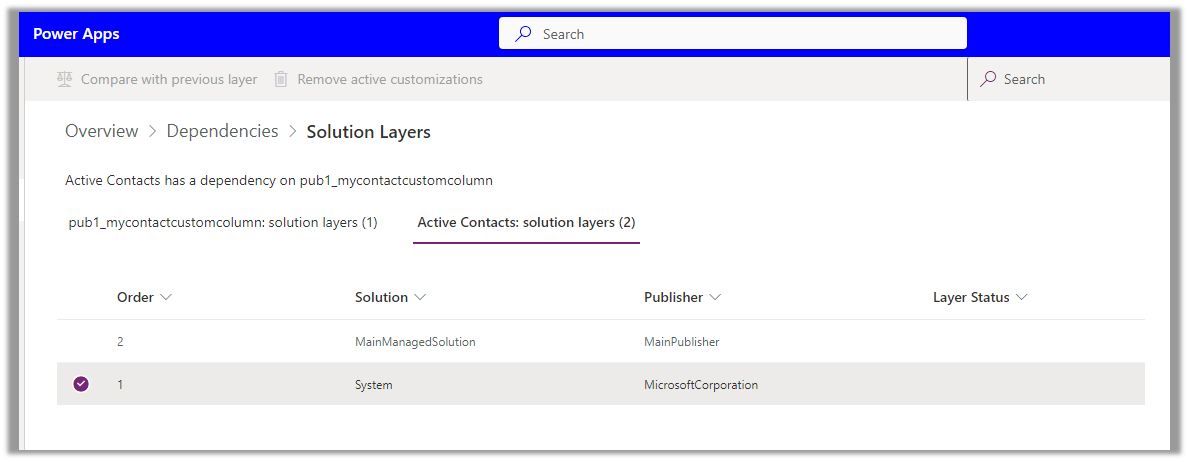
We can see Active Contacts has a dependency on the custom column, and it is part of an unmanaged layer (default solution) in this case.
Click on Remove active customizations
This will delete the unmanaged customization done in the Active Contact view in the environment. (removes the custom column from the Active Contact view)
Trying again, this time we can delete the Managed solution.
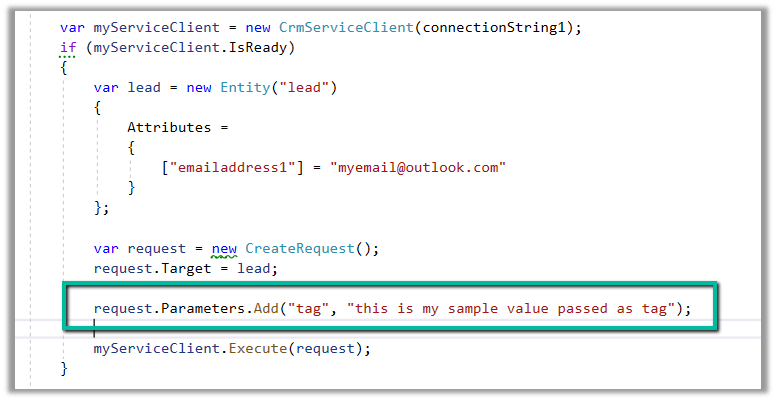
We can use the tag parameter in the request to pass any additional information to the plugin. This is added as a shared variable to the plugin execution context.
Below we are creating a lead record and passing the tag parameter in the CreateRequest
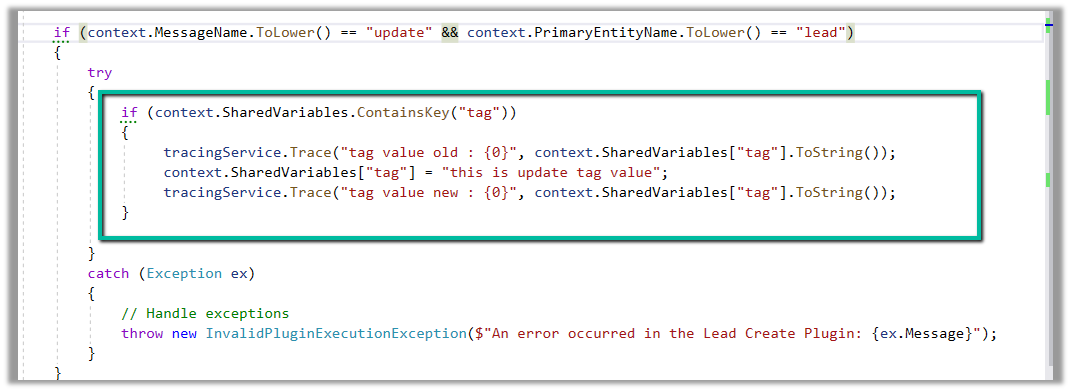
And below is our plugin, that gets the tag parameter passed from the shared variable collection.
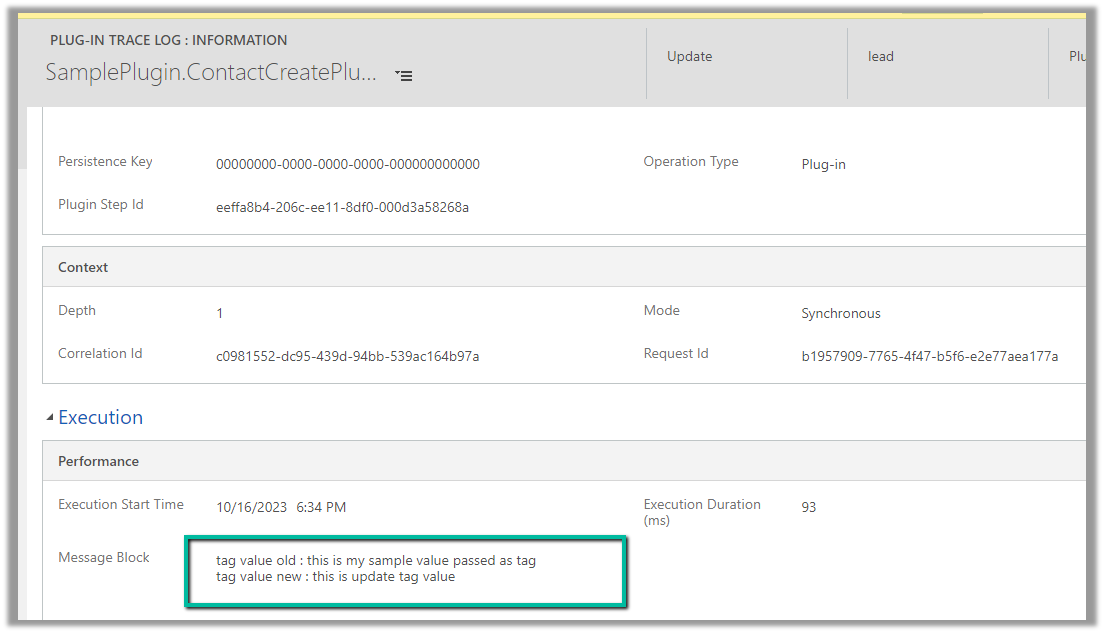
We can see the value of the tag parameter in the trace log.
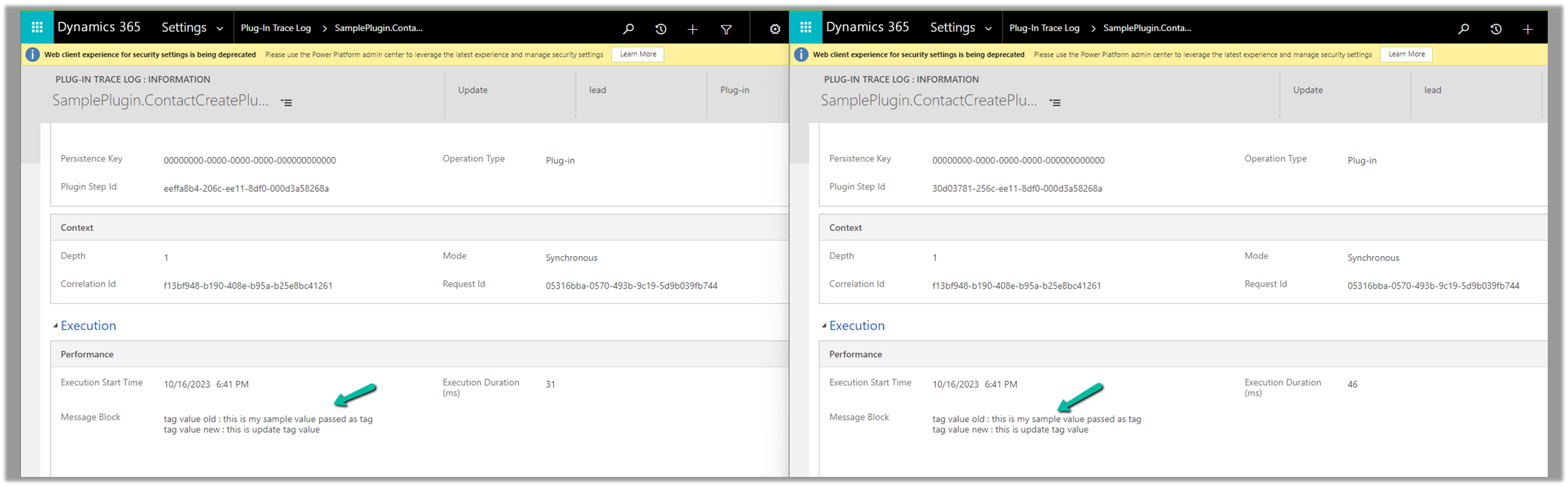
Below is an example of where we are passing it in UpdateRequest
The trace log –
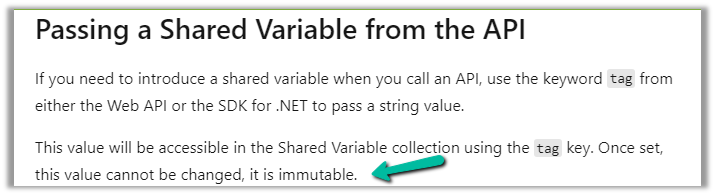
Also, the tag parameter is immutable, once set from the API, its value cannot be changed.
Below we had the same plugin registered in pre and post-operation, and we were getting the same value for the tag passed during the create request.
As per the Microsoft documentation, we can use this field to pass any additional details from the client application, that we can use to apply specific logic in the plugin.
In the previous post, we saw how we can use the SuppressDuplicateDetection parameter to throw errors in case of duplicates when creating or updating a record.
Here instead of relying on exception, we can make use of the RetrieveDuplicatesRequest message to detect the duplicates.
Let us take the “Leads with the same e-mail address” duplicate detection rule to see it in action.
We can see 3 lead records already existing in the system with the same email address.
Below is our code that is trying to create a new lead record with the same email address and using the RetrieveDuplicatesRequest to check for the duplicates.
Below we can see that not only do we get the total number of duplicates found, but we can also get the details of the duplicate records found.




























 Nishant Rana's Weblog