Happy to see my pic there. Thanks to Peter Laker and Microsoft’s Face API .
https://www.linkedin.com/pulse/thirty-two-microsofts-very-passionate-professionals-thanked-laker/
(one more reason to smile often 🙂 )


Happy to see my pic there. Thanks to Peter Laker and Microsoft’s Face API .
https://www.linkedin.com/pulse/thirty-two-microsofts-very-passionate-professionals-thanked-laker/
(one more reason to smile often 🙂 )

Last week we released the first version of the User Security Manager, you can read about its features here.
https://nishantrana.me/2018/07/16/user-security-manager-my-first-xrmtoolbox-plugin/
With the newer version, we have added the following features to it
Apart from managing the Teams and the Security Roles for the user, now the tool allows us to manage the field level security profile of the user.

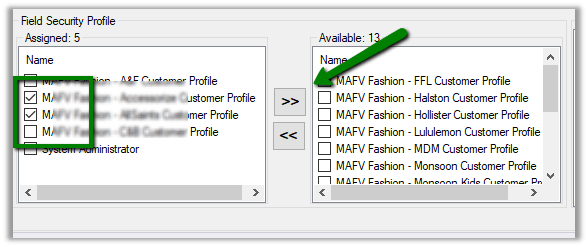
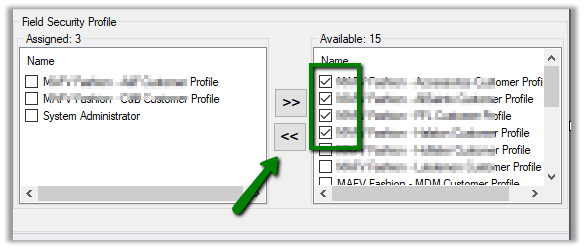

User Security Report allows us to generate reports for security roles and field security profile assigned to the user directly or through team for all the system users or the selected system users.
To navigate to User Security Report section, click on ‘User Security Report‘ button.

To generate the report for all the users, click on Generate Report button without applying Report Filter or Selecting User.

The generated report: –

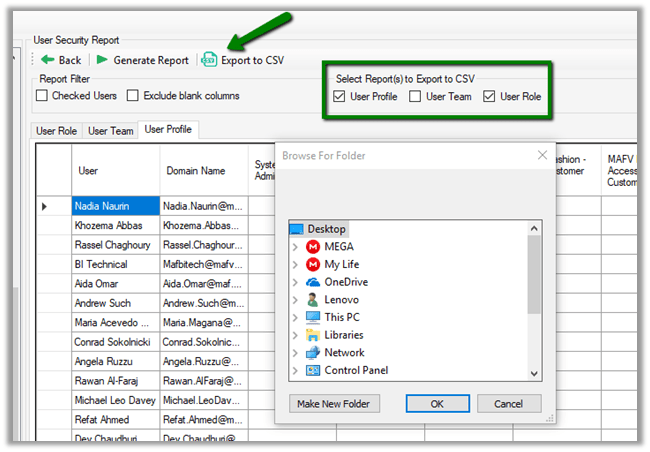
Using the tool, we can generate 3 types of reports –

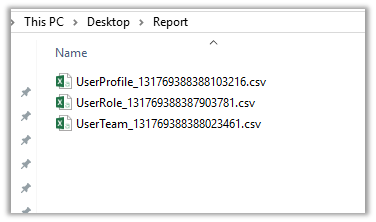
To download or export the generated report in CSV, click on Generate Report button. Based on the report type selected, the report will be exported to the corresponding CSV files.
To generate a report for a specific user or set of users :-
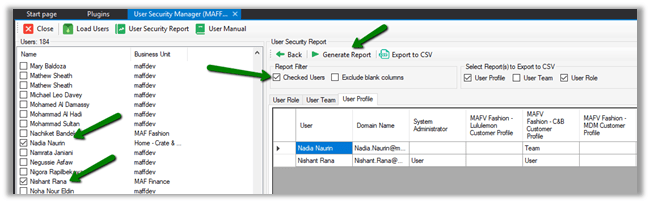
To exclude the column having blank values in it,

The generated report: –

CSV Files: –

Please download or update to the latest version of the tool and provide your valuable feedback.
Hope it helps..

Being one of the biggest fan and the most frequent daily user of XrmToolBox, always had this wish to write a plugin for it.
Thanks to Prashant Maurya (a dear friend and ex-Microsoft Employee) for making this wish come true. (Who played the major role in developing it).
The tool is called – User Security Manager.
The Plugin make it easy for the administrators to manage all the security related aspects of the system users. The tool also gives 360-degree information of the user in correspondence to business unit, security roles and teams.
In our current project we had around 180 users using the system divided into more than 50 business units, which involved frequent update of their business unit, changes in the security roles assigned, update in team assignment and also during testing we had to assign the same BU and roles to the test users in the org, which wasn’t that easy to do from the user interface.
So, the idea was to come up with a tool that will let an administrator to
User Guide: –
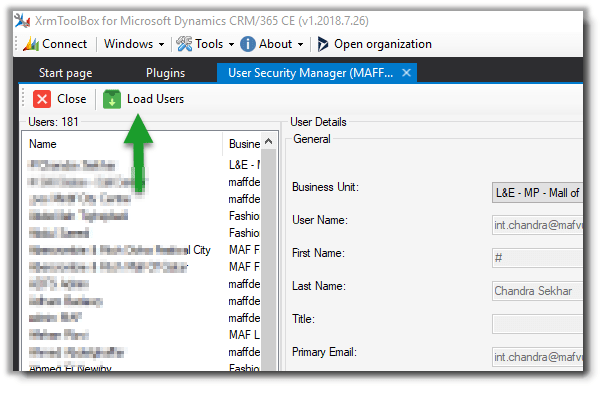
After connecting to the organization, we can click on Load Users to load all the system users of the organization.
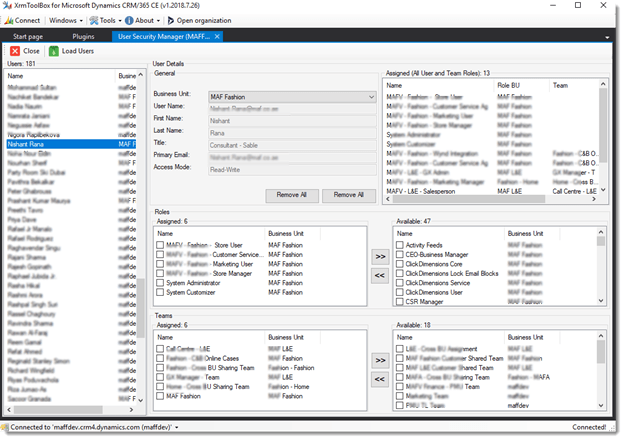
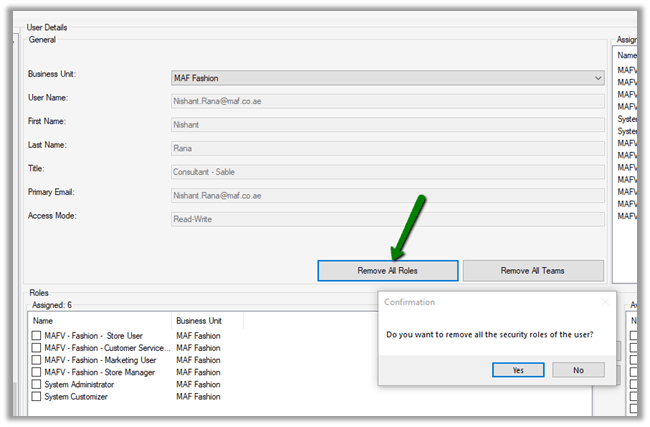
To remove all the security roles of the user, click on Remove All Roles button.
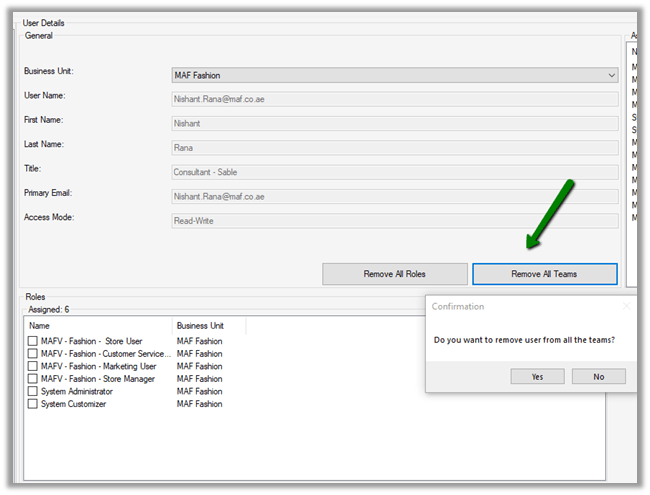
To remove the user from all the teams, click on Remove All Teams button.
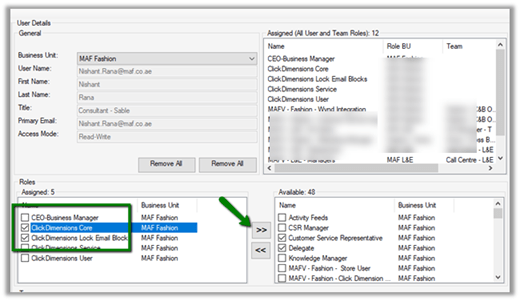
To assign security role to the user, check the security roles from the available security roles section and click on “<<” button.

To remove security roles from the user, select the roles from the Assigned section and click on “>>” button.
To assign user to team(s), select the teams from the available section and click on “<<” button.
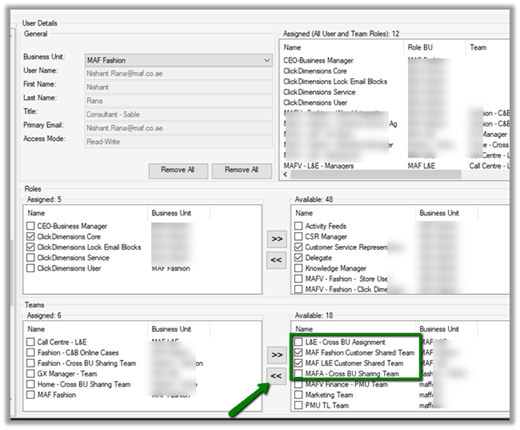
To remove user from Team(s), select the team from the Assigned Section and click on “>>” button.
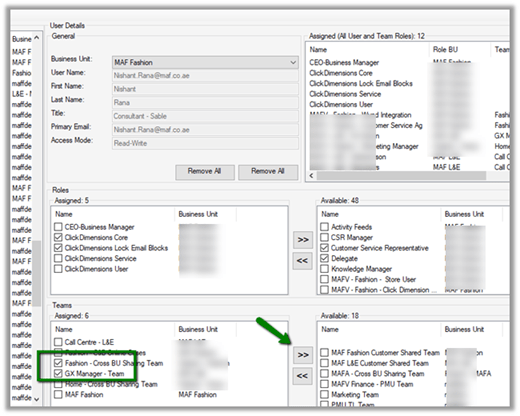
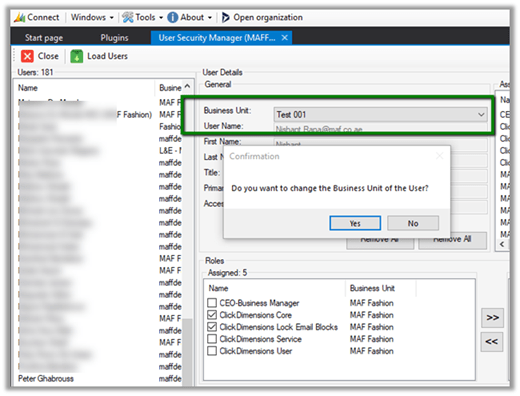
To change the business unit of the user, select the Business Unit from the Business Unit drop down in General Section of User Details.
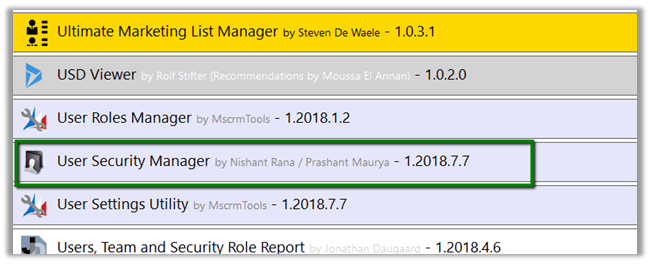
Please install it, use it and share your feedback which would help us to improve it
https://www.xrmtoolbox.com/releases/
Hope it helps..

Hi,
Recently we were writing a plugin that should fire when a record is activated.
In this kind of scenario, it is suggested\recommended to register plugin in both SetState and SetStateDynamicEntity message.
https://community.dynamics.com/crm/f/117/t/184070
https://blogs.msdn.microsoft.com/crm/2008/03/07/developing-plug-ins-for-crm-4-0/
Interestingly we had the following observations
Plugin Trace log records :-
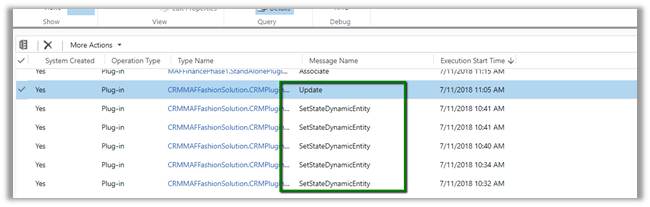
We are yet to figure out when exactly the SetState will be fired. Please share your thoughts and experience around the same.
Hope it helps..

Check out my interview at MSDynamicsWorld.com

Thanks MSDynamicsWorld.com and Linda Rosencrance.

While exporting a solution from our DEV, we got the below exception.
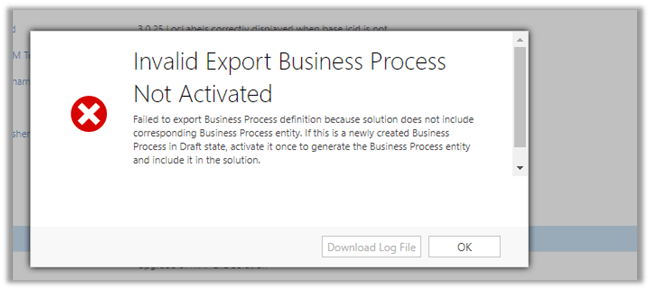
As the messages suggests to fix it we need to activate the process (which will create the corresponding entity for the BPF and add the entity in the solution). Or if already created simply add that entity if missing in the solution.
So we Activated the BPF.

Added the BPF specific entity.
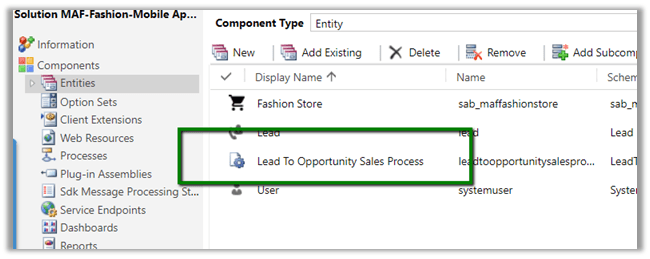
Which then allowed us to export the solution.
Hope it helps..

 Nishant Rana's Weblog