Business Rules in CRM 2013


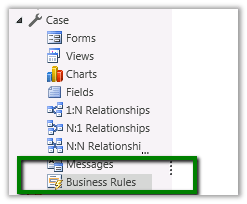
Just writing down few key points regarding the Business Rules in CRM 2013.

  • Business Rules run on client side so any custom server side code or data import will bypass it.
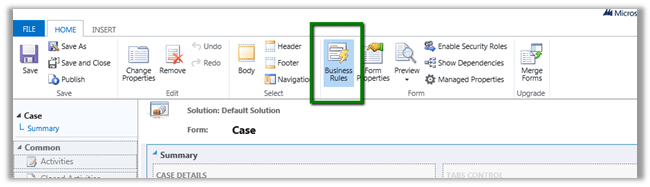
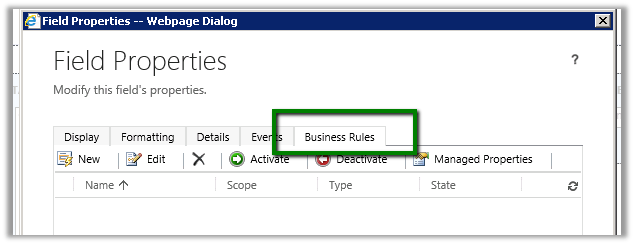
  • Business Rule can be created for a specific form or all the forms of the entity.


  • Business Rules execute offline and also for tablet client.
  • If else conditions are not supported.
  • Rule are created for a single entity.
  • No support for or conditions.
  • If there is custom JavaScript and two business rules written on same condition, the custom JavaScript will run first, followed by the order in which the business rules have been activated.


Calling a Windows Authenticated WCF Service in a Plugin in CRM


Hi,

Suppose we need to call the service created here in our plugin

https://nishantrana.me/2014/09/05/configure-a-wcf-service-for-windows-authentication/

As plugin don’t have configuration file, we need to specify binding information in Code.

The sample code to call the WCF Service by passing Network Credentials


private static void CallWCFService()
{
BasicHttpBinding binding = new BasicHttpBinding();
binding.Security.Mode = BasicHttpSecurityMode.TransportCredentialOnly;
binding.Security.Transport.ClientCredentialType = HttpClientCredentialType.Windows;

// Specify the endpointAddress
EndpointAddress endpointAddress = new EndpointAddress(new Uri("http://servername:port/Service1.svc"));

ServiceReference1.Service1Client client = new ServiceReference1.Service1Client(binding, endpointAddress);
if (client.ChannelFactory.Credentials != null)
client.ChannelFactory.Credentials.Windows.ClientCredential = new System.Net.NetworkCredential("username", "password", "domain");
if (client.ClientCredentials != null)
client.ClientCredentials.Windows.AllowedImpersonationLevel = System.Security.Principal.TokenImpersonationLevel.Delegation;
MessageBox.Show(client.GetData(1));
}

Hope it helps ..


Configure a WCF Service for Windows Authentication


Hi,

Sharing a simple example on how to enable Windows Authentication for a WCF Service using basicHttpBinding.

We will take an example of the OOB WCF Service that gets created when we create a new WCF Service Application.
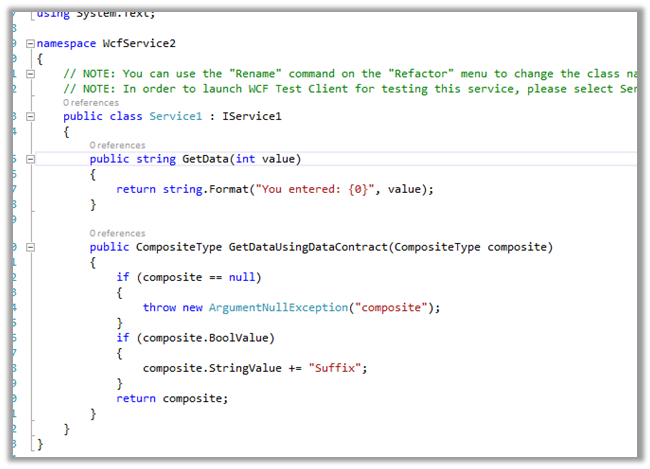
Add the following configuration in web.config


<system.serviceModel>
<services>
<service name="WcfService2.Service1">
<endpoint address="" binding="basicHttpBinding" bindingConfiguration="myBinding" contract="WcfService2.IService1"/>
</service>
</services>
<bindings>
<basicHttpBinding>
<binding name="myBinding" maxBufferSize="2147483647" maxBufferPoolSize="2147483647" maxReceivedMessageSize="2147483647">
<readerQuotas maxDepth="2147483647" maxStringContentLength="2147483647" maxArrayLength="2147483647" maxBytesPerRead="2147483647" maxNameTableCharCount="2147483647"/>
<security mode="TransportCredentialOnly">
<transport clientCredentialType="Windows"/>
</security>
</binding>
</basicHttpBinding>
</bindings>
<behaviors>
<serviceBehaviors>
<behavior>
<!-- To avoid disclosing metadata information, set the values below to false before deployment -->
<serviceMetadata httpGetEnabled="true" httpsGetEnabled="true"/>
<!-- To receive exception details in faults for debugging purposes, set the value below to true. Set to false before deployment to avoid disclosing exception information -->
<serviceDebug includeExceptionDetailInFaults="false"/>
</behavior>
</serviceBehaviors>
</behaviors>
<protocolMapping>
<add binding="basicHttpsBinding" scheme="https" />
</protocolMapping>
<serviceHostingEnvironment aspNetCompatibilityEnabled="true" multipleSiteBindingsEnabled="true" />
</system.serviceModel>

&nbsp;

And enable Windows Authentication in IIS


Hope it helps ..

Sample PowerShell script to create web application and a site collection in SharePoint 2013


Just sharing a sample script that we are using to create a web application and a site collection of type publishing in it.


# SharePoint cmdlets
Add-PsSnapin Microsoft.SharePoint.PowerShell</pre>
# Set variables
$WebAppName = "MyAppPool"
$WebAppHostHeader = "servername"
$WebAppPort = "portnumber"
$url = "http://servername"
$WebAppAppPool = "MyAppPool"
# This User has to be a Sharepoint Manager Account
$WebAppAppPoolAccount = "domain\username"
$AuthenticationMethod = "NTLM"
$ap = New-SPAuthenticationProvider -UseWindowsIntegratedAuthentication -DisableKerberos

# Create a new Sharepoint WebApplication
New-SPWebApplication -Name $WebAppName -Port $WebAppPort -HostHeader $WebAppHostHeader -URL $url -ApplicationPool $WebAppAppPool -ApplicationPoolAccount (Get-SPManagedAccount $WebAppAppPoolAccount) -AuthenticationMethod $AuthenticationMethod -AuthenticationProvider $ap

# Set variables
$SiteCollectionName = "MySiteCollection"
$SiteCollectionURL = "http://servername:portnumber/"
$SiteCollectionTemplate = "BDR#0"
$SiteCollectionLanguage = 1033
$SiteCollectionOwner = "LSS\lssspadmin"

# Create a new Sharepoint Site Collection
New-SPSite -URL $SiteCollectionURL -OwnerAlias $SiteCollectionOwner -Language $SiteCollectionLanguage -Template $SiteCollectionTemplate -Name $SiteCollectionName

Hope it helps ..

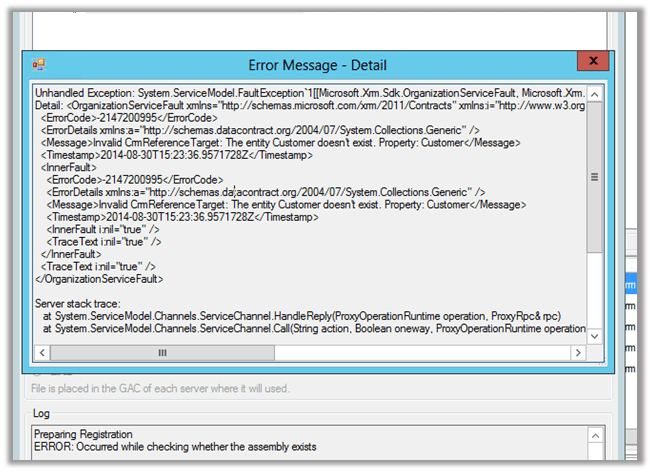
Invalid CRMReference Target: The entity Customer doesn’t exist.


Hi,

Was writing a custom workflow activity on incident entity and in which we wanted the Customer Lookup Value. And based on type of Customer i.e. either contact or account there was some logic to be executed.

So declared an input parameter or type Customer

However while registering the workflow I got the below error

The way to handle this is,

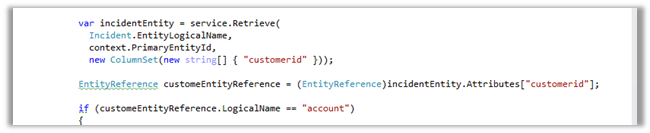
Get the guid of the record from the context and then retrieve the value of customer id attribute.

On retrieval check if the EntityReference is of type account or contact and then proceed accordingly


Hope it helps ..

Updated SOAPLogger for CRM 2013 to generate JavaScript


Hi,

We have tool called SOAPLogger (..\SDK\SampleCode\CS\Client\SOAPLogger\) that generates Soap request and response based on the C# code.

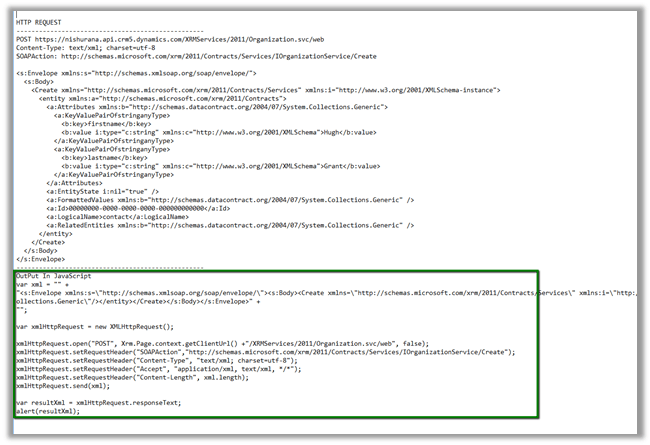
I have updated the tool to generate JavaScript that neatly wraps the Soap Request.

The output.txt and JavaScript code generated by the tool

Download the tool (convert .doc to .zip format)

https://nishantrana.me/wp-content/uploads/2014/08/soaplogger.doc


Hope it helps..

Nishant Rana's Weblog

Everything related to Microsoft .NET Technology

Skip to content ↓