Flows getting triggered multiple times / missing callbackregistration record – Power Automate / Dataverse


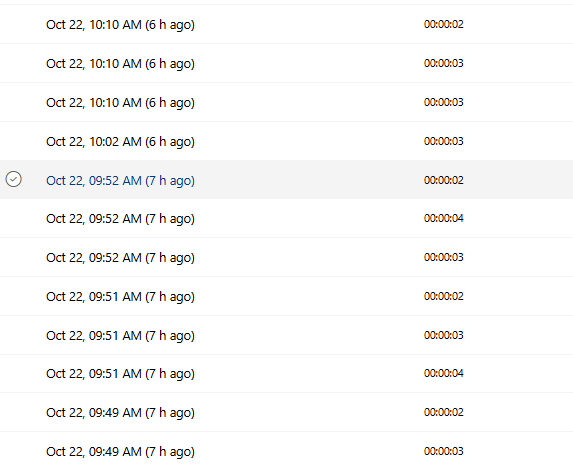
Recently, we observed that one of our flows was getting triggered multiple times in our UAT environment; however, the flow was working properly in our Development environment.
A screenshot of a computer

AI-generated content may be incorrect.

On comparing the flows trigger, we didn’t find any differences.
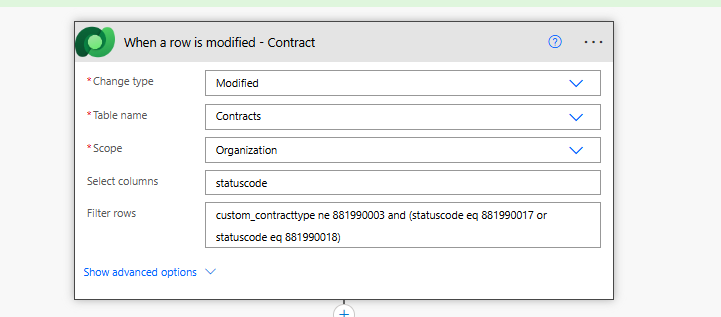
A screenshot of a computer

AI-generated content may be incorrect.

However, when checking for the callbackregistration record, we observed that for the Dev env, we had the callbackregistration record available.
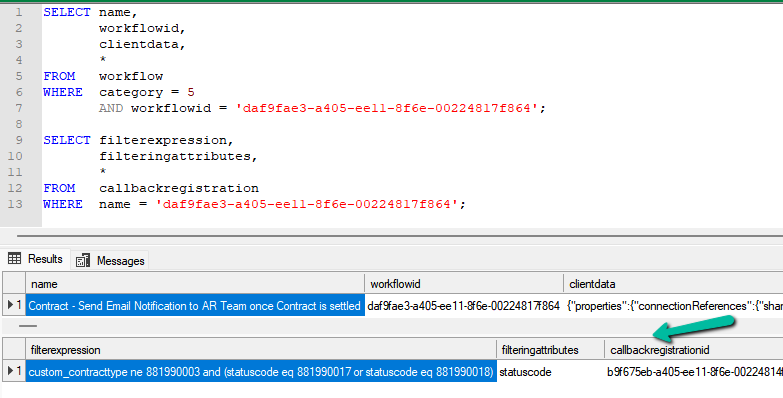
A screenshot of a computer

AI-generated content may be incorrect.

However, it was missing for our UAT environment.
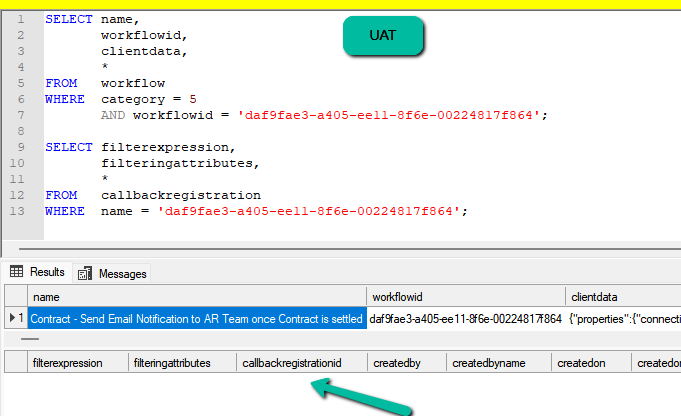
A screenshot of a computer

AI-generated content may be incorrect.

Turning the flow on and off didn’t create the corresponding callbackregistration record.

https://nishantrana.me/2025/09/02/fixed-flow-not-getting-triggered-incorrect-callback-registration-record-power-automate-dataverse/

Eventually, we deleted the trigger and recreated it in the UAT.
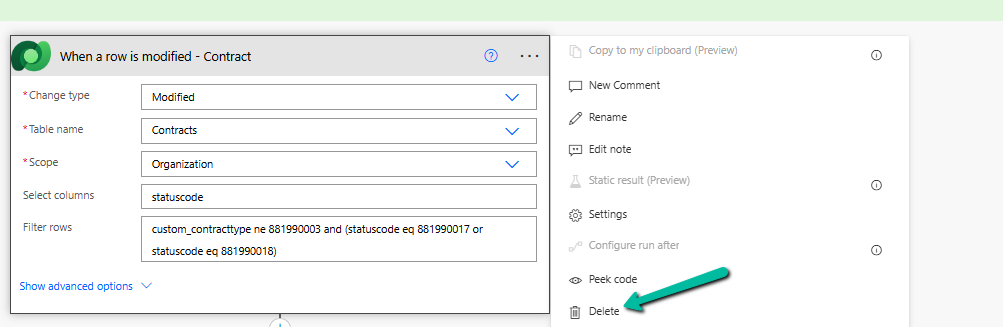
A screenshot of a computer

AI-generated content may be incorrect.

After recreating the trigger, we could see our flow getting triggered only once as expected.
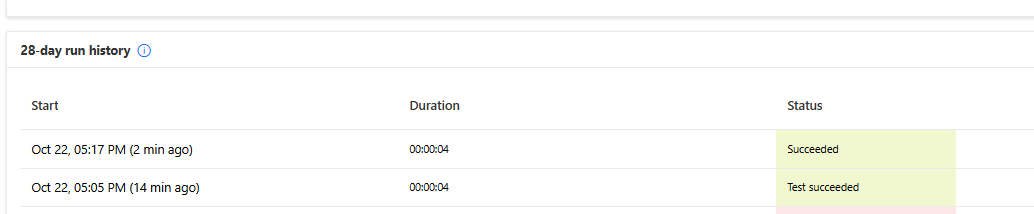
A screenshot of a computer

AI-generated content may be incorrect.

However, we also noticed that the name of the callbackregistration record was not just the GUID, but it also had MTA suffixed to it in our UAT.

daf9fae3-a405-ee11-8f6e-00224817f864:MTA
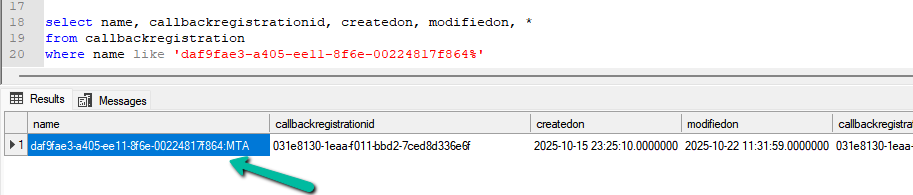
A screenshot of a computer

AI-generated content may be incorrect.

So may this record was already existing and had an incorrect filter expression, which got fixed when we deleted and created a new trigger.

We also deleted this callbackregistration record, and turned our flow on and off. This created a new callbackregistration record with the same MTA suffixed to it.

A screenshot of a computer

AI-generated content may be incorrect.

So the solution here could be to find the callbackregistration record either with a GUID or with MTA suffixed to it, delete the record found, and turn the flow on and off.

Hope it helps..

Advertisements

Fixed – Flow not getting triggered / incorrect callback registration record (Power Automate / Dataverse)


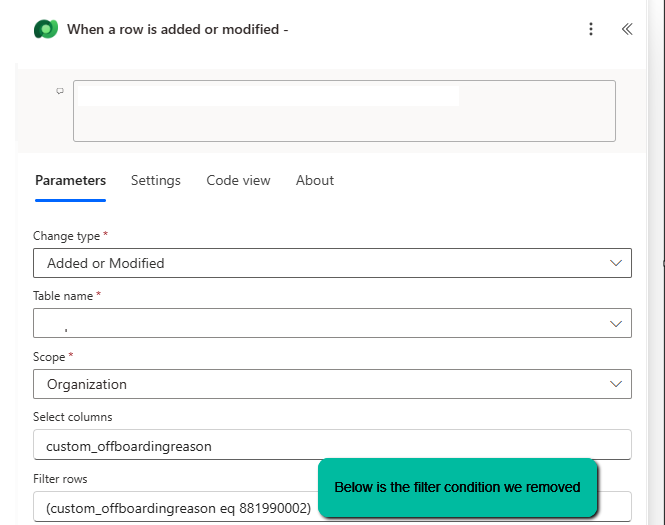
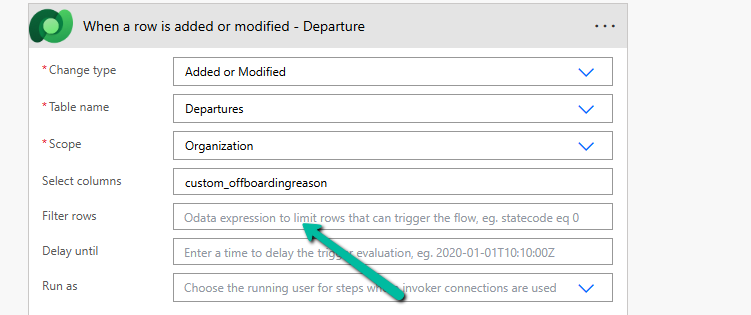
Recently, we faced an interesting issue, where we updated an existing flow in our Dev, basically we removed the Filter Rows condition and deployed it to UAT.

Before

Now

In our Dev, it was working fine, getting triggered on the update of the field specified in the Select Columns; however, after deployment to UAT, it was still getting triggered only on the old filter condition, which we had already removed.

Turning off and on the Cloud Flow didn’t help.

The client data did not have the Filter rows condition.

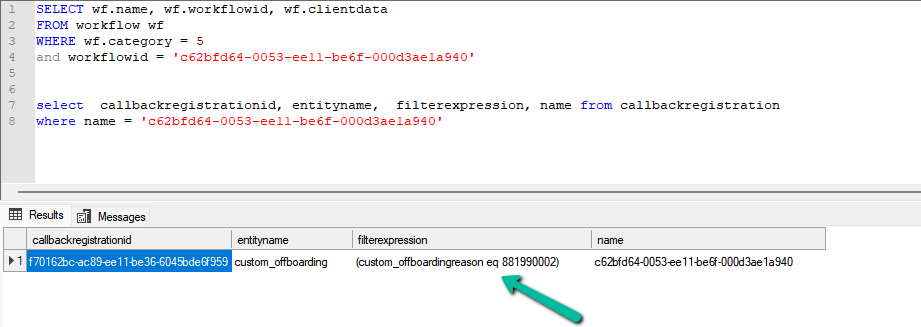
Interestingly, we can still see the filter expression existing for the callback registration record of that flow in our UAT.

A screenshot of a computer

AI-generated content may be incorrect.

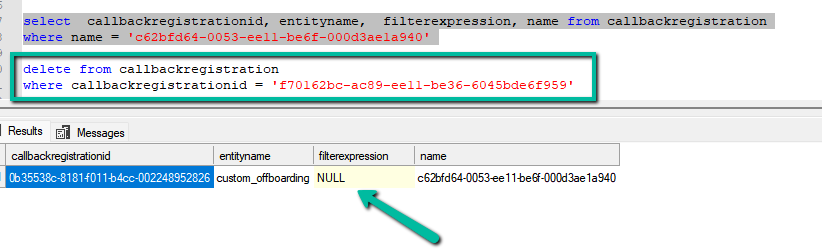
Eventually, we deleted the Callback registration record, turned the flow off and on, and it created the correct Callback Registration record with filter expression as null this time.

A computer screen shot of a computer

AI-generated content may be incorrect.

This fixed the issue, and our flow got triggered correctly.

More on Callback Registration

Fixed- Flow not getting triggered (Callback Registration)– Power Automate / Dataverse

Hope it helps.

Advertisements

When Do We Use the ActivityParty.AddressUsed Property for Emails in Power Automate (Dataverse)


When we automate emails in Dataverse using Power Automate, we deal with something called Activity Party. It manages the participants of an email—whether they are To, CC, BCC, or the Sender. Normally, we use the partyid field to point to a Dataverse record like a Contact, Lead, User, or Queue.

Every participant in an email is stored as a row in the Activity Party table.

Key fields include:

partyid → Reference to the actual record (Contact, Account, User, Queue, etc.)

participationtypemask → Role (1 = Sender, 2 = To, 3 = CC, 4 = BCC)

addressused → The raw email address used

Normally, if a Contact or User is referenced in partyid, Dataverse automatically pulls their primary email.

But there are situations where this is not enough. That’s where addressused becomes important.

Multiple Email Addresses on a Record – A Contact, Lead, or User might have more than one email (work, personal, secondary). By default, Dataverse always uses the primary email field. But if we need to send an email to a specific alternate address, we can set it directly in addressused.

Unresolved Recipients – There are times when we need to send an email to someone who doesn’t exist in Dataverse at all—for example, an external consultant, new partner, or temporary vendor.

Recenlty we had to send email to particular email address not stored as actual record in CRM, below is how we specified the email address in the Add a new Row (Email) action of Power Automate.

"to": [
  { "partyid@odata.bind": "/contacts(11111111-2222-3333-4444-555555555555)" },
  { "addressused": "external.partner@example.com" }
],
"cc": [
  { "addressused": "manager@example.com" }
]

More on activity party

Also check – https://nishantrana.me/2021/02/02/sending-an-email-using-addressused-attribute-of-activityparty-entity-in-dynamics-365/

Hope it helps..

Advertisements

Update Business Process Flow Stage using Excel Import with Power Automate – Dataverse / Dynamics 365


In some business scenarios, we might need to update the Business Process Flow (BPF) stage of a record during an Excel import — especially during data migration or bulk record manipulation. In this blog post, we’ll walk through how to set a desired BPF stage (based on the stage name) and automatically move the record to that stage using Power Automate.

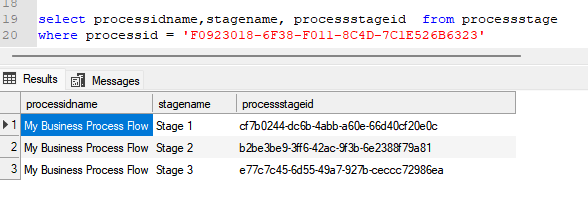
We’re working with a custom Dataverse table called Test(cr1a7_test) and a Business Process Flow named My Business Process Flow, which includes the following stages:

“select processidname,stagename, processstageid from processstage where processid = [processGUID]”

A screenshot of a computer

AI-generated content may be incorrect.

Our goal is to allow users to specify the stage name (e.g., “Stage 2”) through Excel import, and have a Power Automate flow update the record’s BPF instance to the corresponding stage automatically.

For this –

  • We’ll add a field called the Desired BPF Stage choice field on our table to store the desired stage name.
  • We’ll create a Power Automate flow that triggers on create or update.
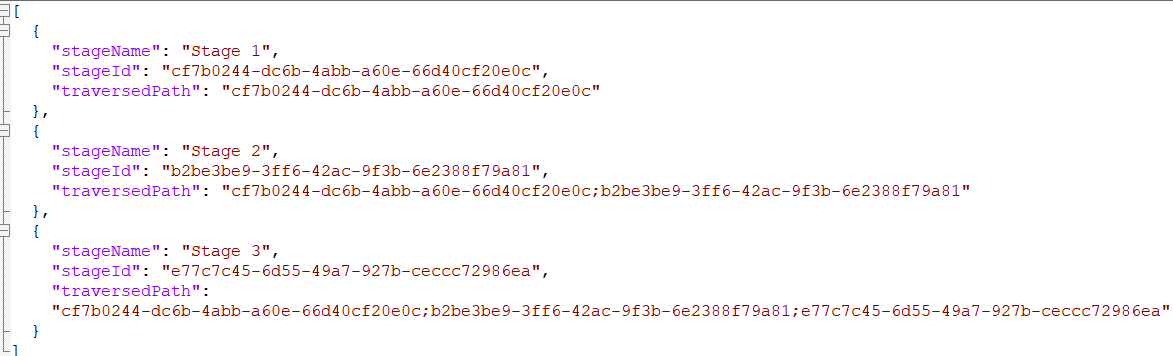
  • We’ll maintain a static JSON mapping of stage names to stage IDs and their traversed paths.
  • We’ll look up the corresponding stage ID and traversed path from the JSON.
  • We’ll fetch the BPF instance for the record.
  • We’ll update the BPF instance with the new active stage and traversed path.

Below is how we can define our JSON structure for mapping, which we will store either in a variable inside Power Automate or save as an environment variable.

A computer code on a white background

AI-generated content may be incorrect.

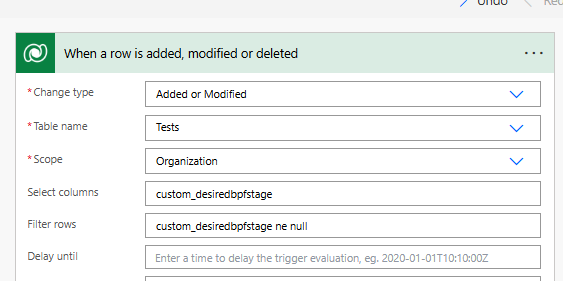
Trigger – When a row is added or modified.

A screenshot of a computer

AI-generated content may be incorrect.

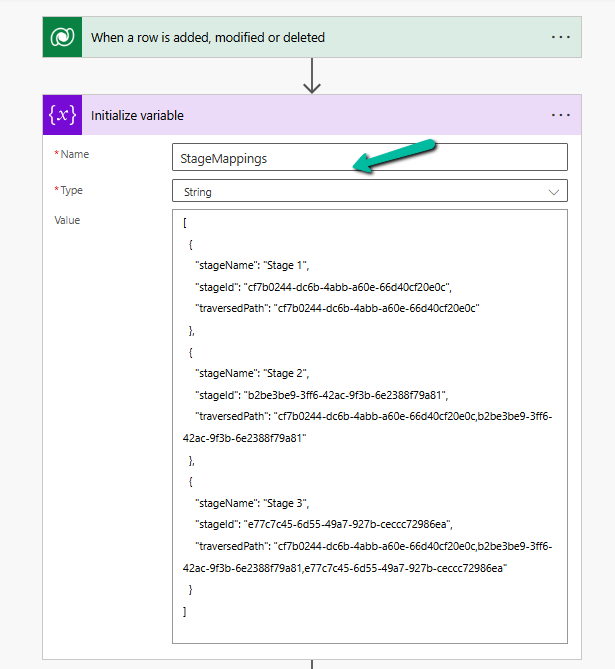
Initialize Variable with JSON mapping

A screenshot of a computer

AI-generated content may be incorrect.

Parse JSON – using the sample data

A screenshot of a computer

AI-generated content may be incorrect.

Use a “Filter array” action to find the object where stageName matches custom_desiredbpfstage.

A screenshot of a computer

AI-generated content may be incorrect.

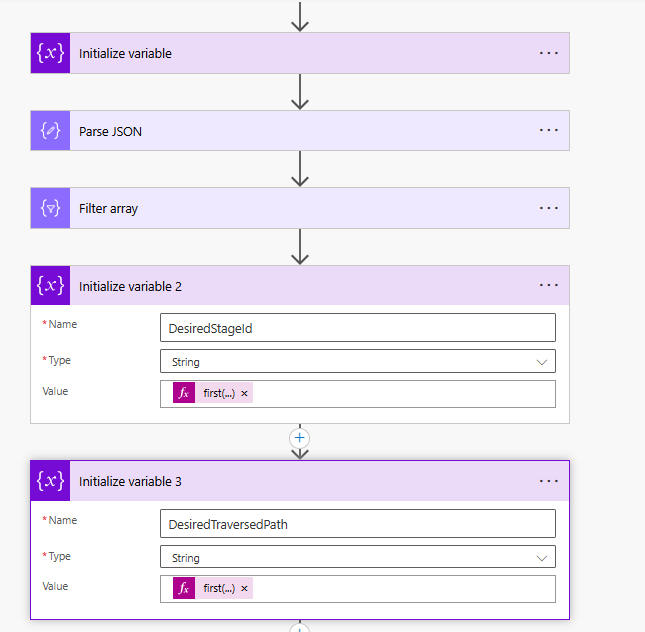
Initialize variables to store the Stage ID and traversed path.

  • first(body(‘Filter_array’))?[‘stageId’]
  • first(body(‘Filter_array’))?[‘traversedPath’]
A screenshot of a computer

AI-generated content may be incorrect.

Use List Rows to check if BPF Instance exists or not, if not we will create it or update it.

  • length(outputs(‘List_rows’)?[‘body/value’]) > 0
A screenshot of a computer

AI-generated content may be incorrect.

Update or Create a new BPF instance associated with the record.

A screenshot of a computer

AI-generated content may be incorrect.

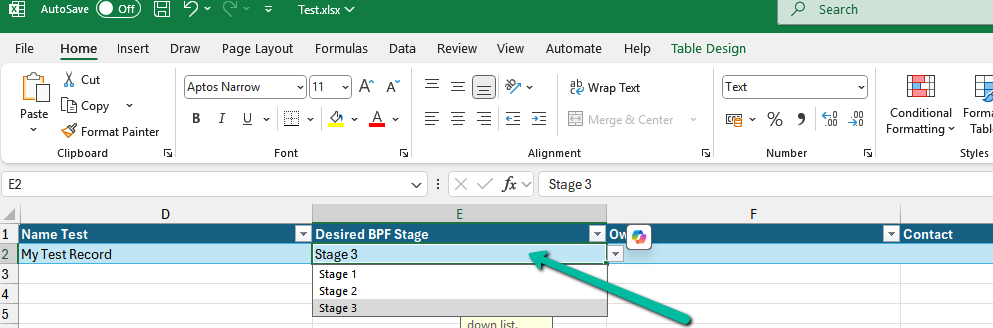
Below we can see the user specifying the Stage 3 value for the Desired BPF Stage column in the Excel to be imported.

A screenshot of a computer

AI-generated content may be incorrect.

We can see the Excel imported successfully.

A screenshot of a computer

AI-generated content may be incorrect.

Below we can see our flow running successfully.

A screenshot of a computer

AI-generated content may be incorrect.

And the record in Stage 3 of the BPF.

A screenshot of a computer

AI-generated content may be incorrect.

Hope it helps..

Advertisements

Cloud Flows are disabled or turned off after copying a Dataverse Environment ? (Power Automate / Power Platform)


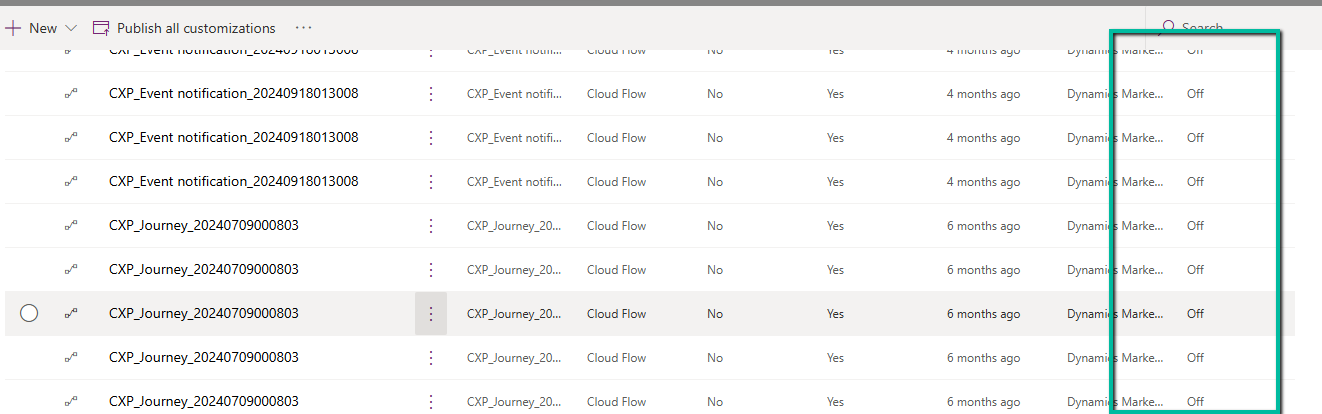
Recently we copied our UAT environment to one of the testing environments. After copying, we saw that all the cloud flows were in Off / Disabled state.

A screenshot of a computer

Description automatically generated

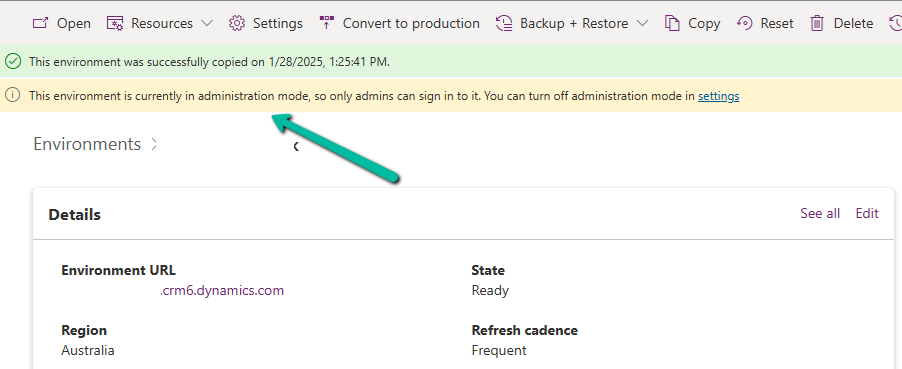
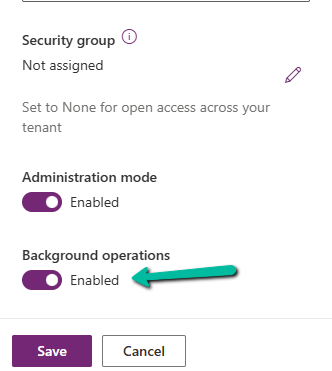
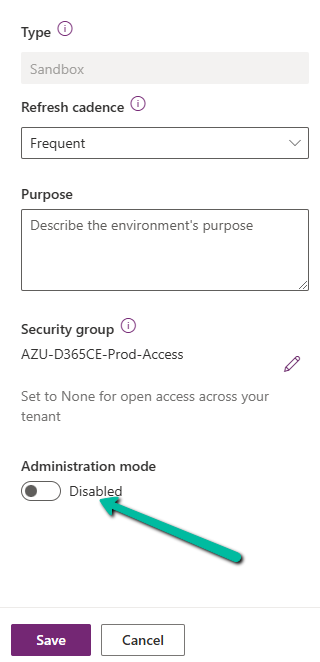
This was because during copy the environment is set in administration mode and background operations are also disabled.

Flows are automatically turned off to prevent –

  • Accidental execution of automation in a copied/test environment
  • Potential integration issues due to different connectors or authentication.
  • Unintended data modifications (e.g., flows interacting with external systems like SharePoint, SQL, or APIs).

If required, we can disable the administration mode or at least enable the background operations.

A screenshot of a computer

Description automatically generated

However, the flows will not automatically switch On even if we enable either the Administration Mode or Background operations.

Here we need to switch them On manually or use PowerShell scripts or API to do so.

Refer to blog posts for details on it –

PowerShell https://www.syskit.com/blog/managing-microsoft-powerapps-and-flow-like-a-pro-part-3-managing-flows/

Console App / APIhttps://nishantrana.me/2024/06/12/enable-disable-turn-on-turn-off-multiple-cloud-flows-using-code-power-automate/

Additional Considerations –

Connection References: If the flows use connection references (like SharePoint, Dataverse, Outlook, etc.), we need to verify them in Solution > Connection References and update them if necessary.

Environment Variables: If the flows depend on environment variables (e.g., API URLs, credentials), we need to update them the new environment.

Reassign Flow Owners: If the original owner of a flow is missing from the copied environment, we need to assign a new owner.

Lastly, if flows are not behaving correctly, check the callback registration records

https://nishantrana.me/2024/06/11/fixed-flow-not-getting-triggered-callback-registration-power-automate-dataverse/

Get more details around copying the environment.

Hope it helps..
Advertisements

Configure OAuth authentication for HTTP Request Triggers (Specific users in my tenant) – Power Automate


Below is our final Power Automate Cloud Flow which uses the HTTP request trigger followed by Response action.

The Allows Users = Specific users in my tenant option ensures that only authorized users in the tenant can trigger the flow while leveraging the security provided by Oauth authentication and Azure AD.

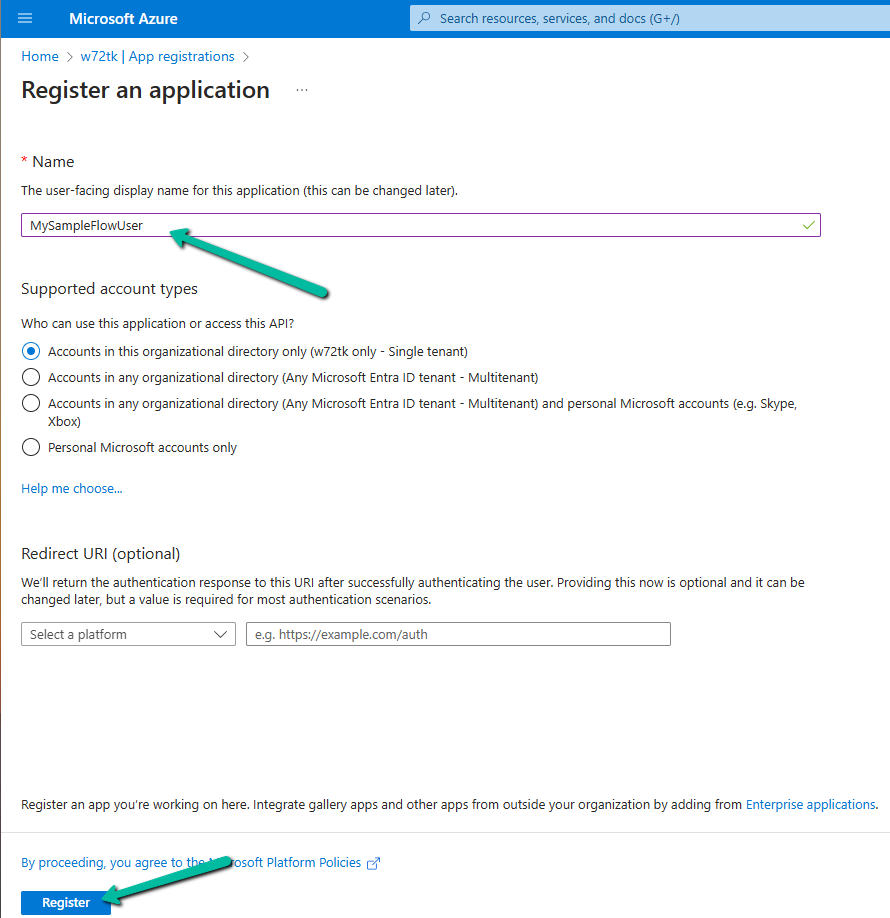
Let us first register an App in the Azure AD.

A screenshot of a computer

Description automatically generated

Go to API Permissions → Add a permission.

A screenshot of a computer

Description automatically generated

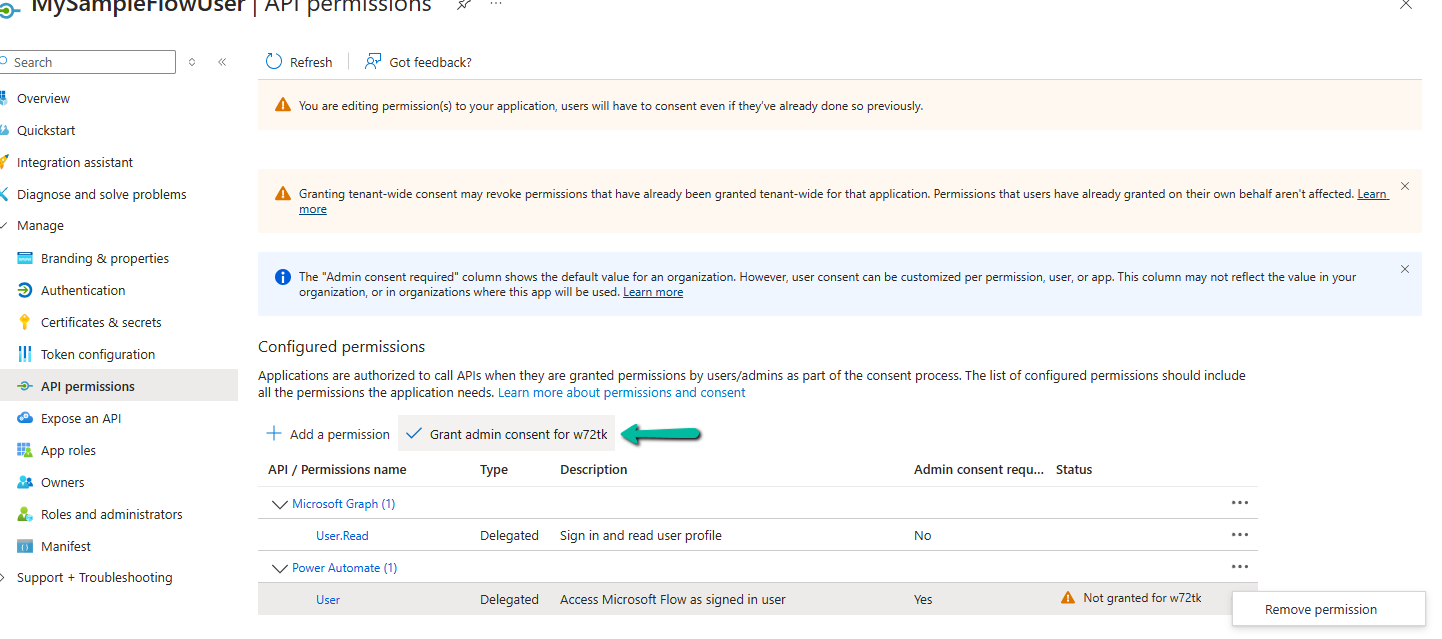
Select User permission.

A screenshot of a computer

Description automatically generated

Grant admin consent

A screenshot of a computer

Description automatically generated

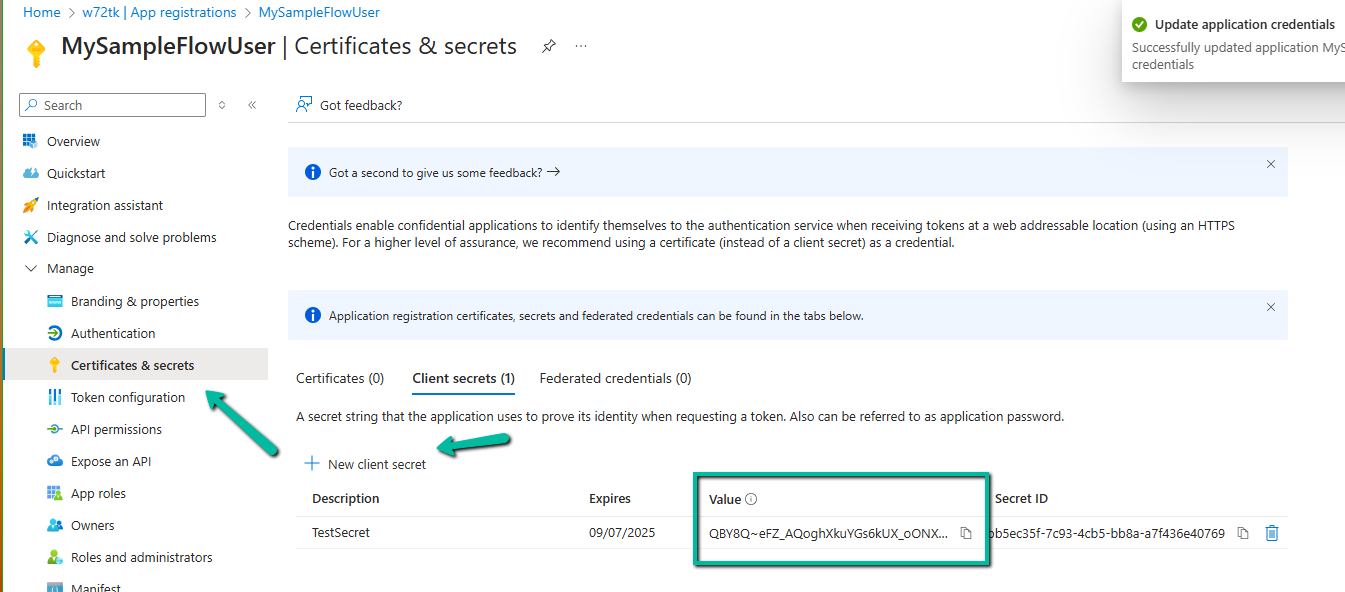
Generate and copy the client secret.

A screenshot of a computer

Description automatically generated

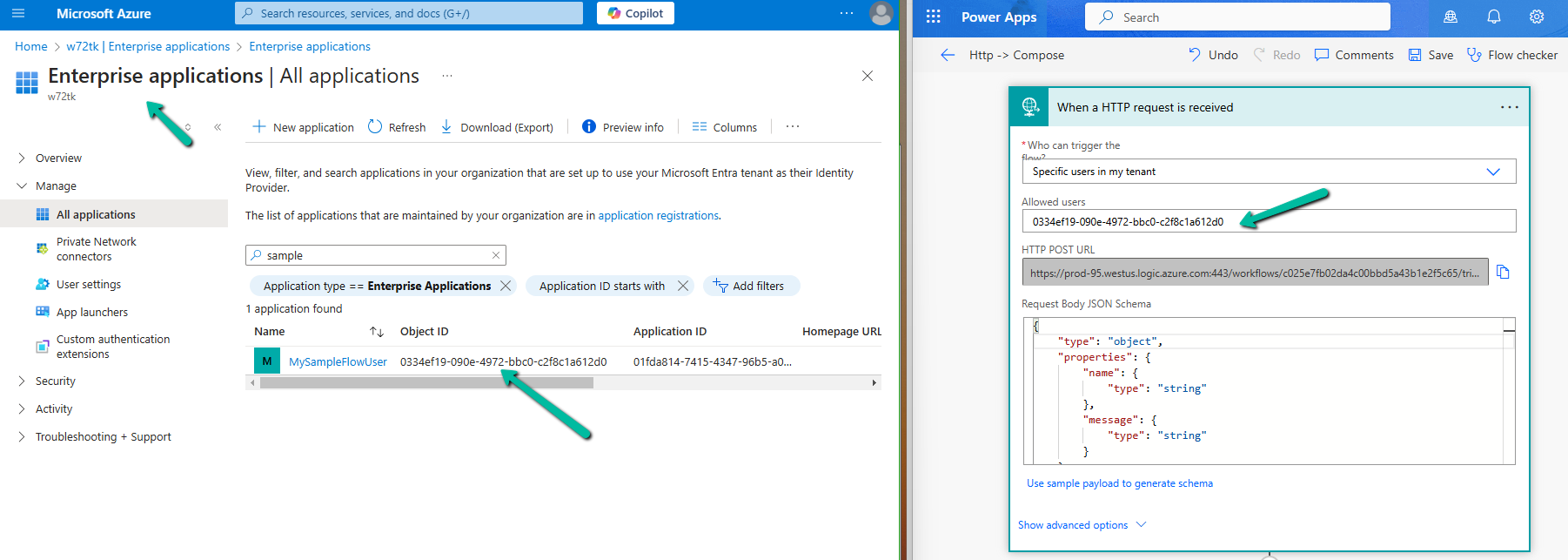
Navigate to Enterprise Applications, search for the app, copy the Object ID of the App, and specify the same for the Allowed users property in the HTTP request trigger.

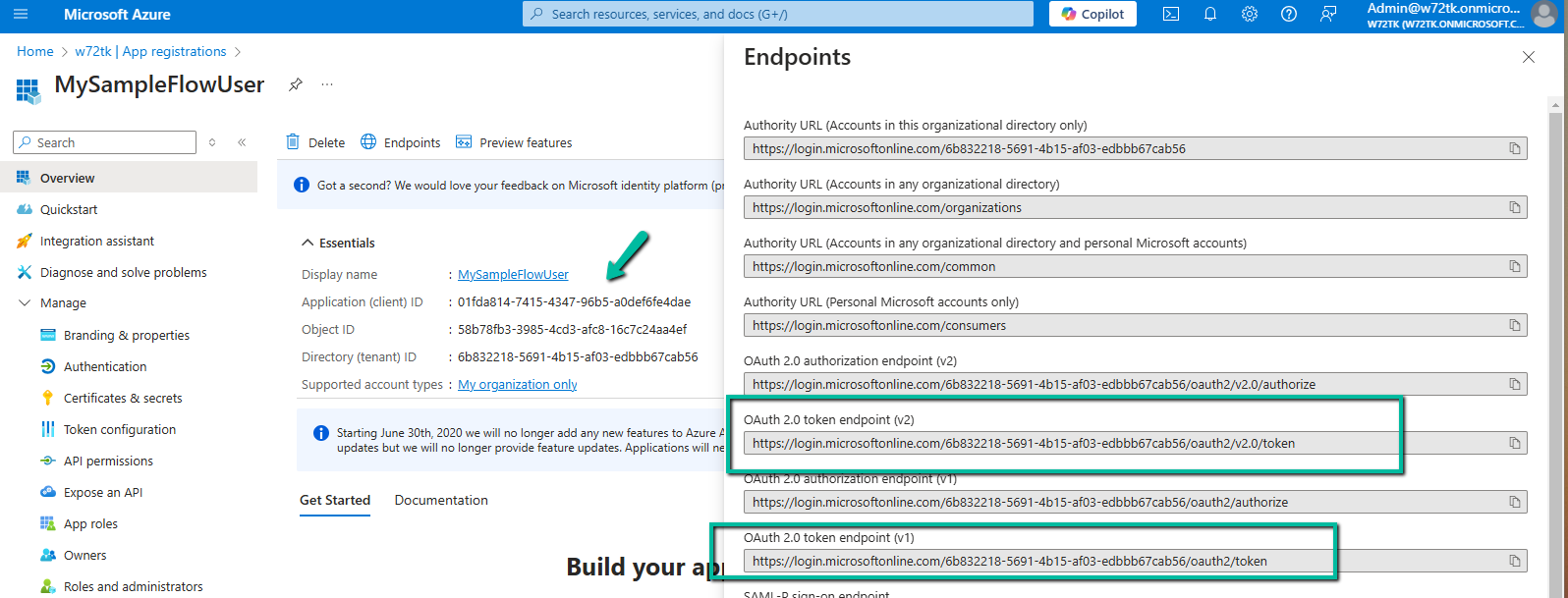
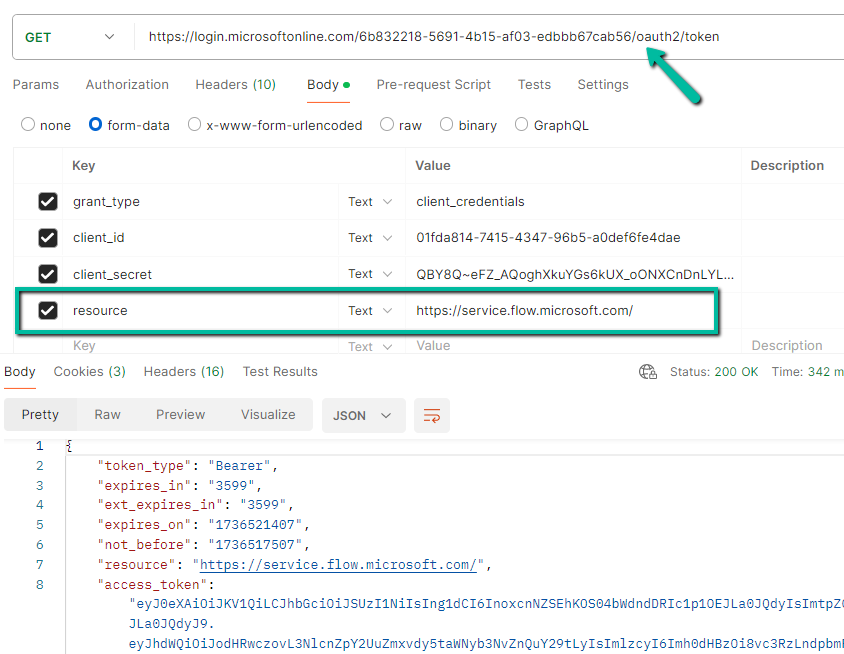
Now let us use the Postman to generate the token and call the flow. Note down the Application (client) ID and we can either use the v1 or v2 Oauth token endpoint.

A screenshot of a computer

Description automatically generated

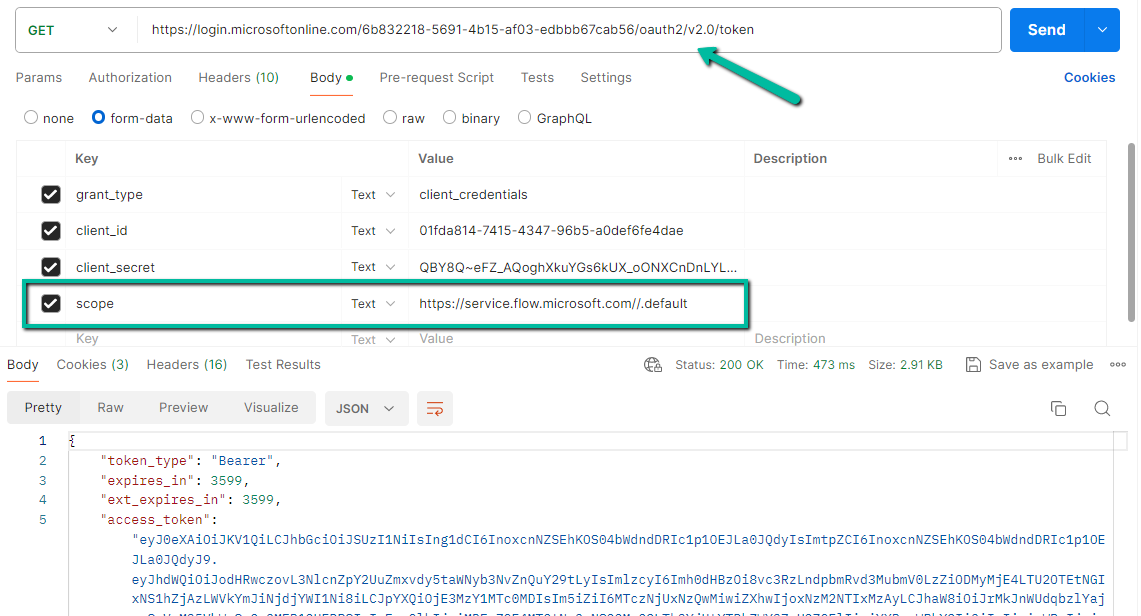
Specify the following values if using the v2 endpoint to generate the token.

A screenshot of a computer

Description automatically generated

https://login.microsoftonline.com/6b832218-5691-4b15-af03-edbbb67cab56/oauth2/v2.0/token

scope = https://service.flow.microsoft.com//.default

and for v1 token endpoint

https://login.microsoftonline.com/6b832218-5691-4b15-af03-edbbb67cab56/oauth2/token

resource = https://service.flow.microsoft.com/

A screenshot of a computer

Description automatically generated

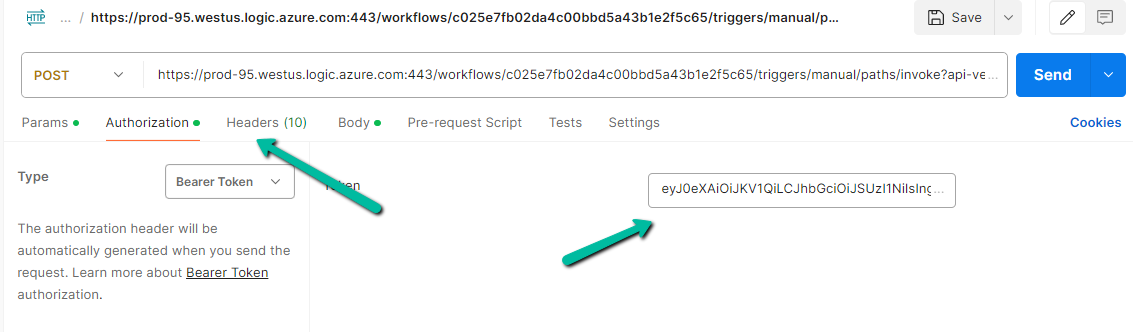
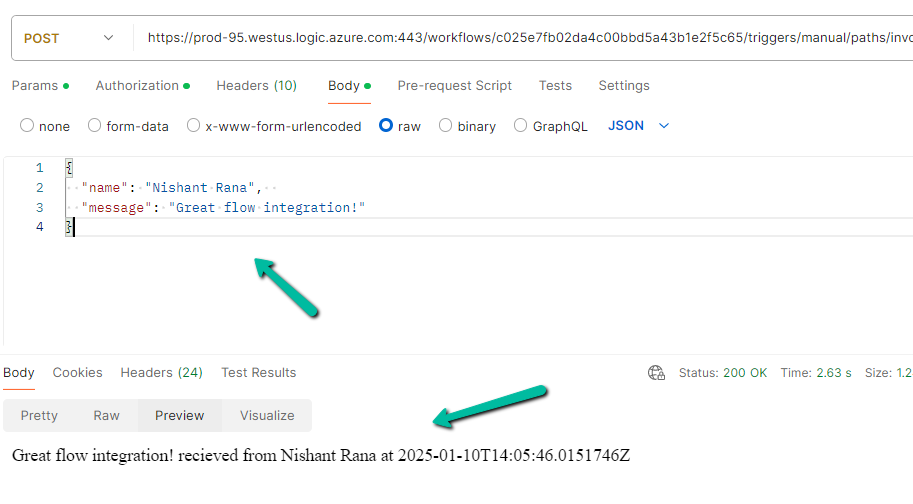
Now specify the URL generated for the HTTP Request Trigger, copy the Token generated, and for the body specify the following value expected.

A screen shot of a computer

Description automatically generated

We can see the response received successfully from the flow.

A screenshot of a computer

Description automatically generated

Get more details

Also, refer

OAuth Authentication for Power Automate HTTP Request Trigger | Dynamic Bites

https://www.beringer.net/beringerblog/microsoft-power-automate-http-trigger-and-restricting-users/

https://manish-solanki.com/how-to-secure-http-trigger-end-point-for-3rd-party-application/

Hope it helps..

Advertisements