We were recently exploring the Dynamics 365 Field Service mobile app, we saw that for the users with a mobile offline profile configured – Add the user to an offline profile, when they go offline they will see the below message –
“Only Notes are available in offline mode. If you would like to view your other items, please reconnect to online mode when possible”.
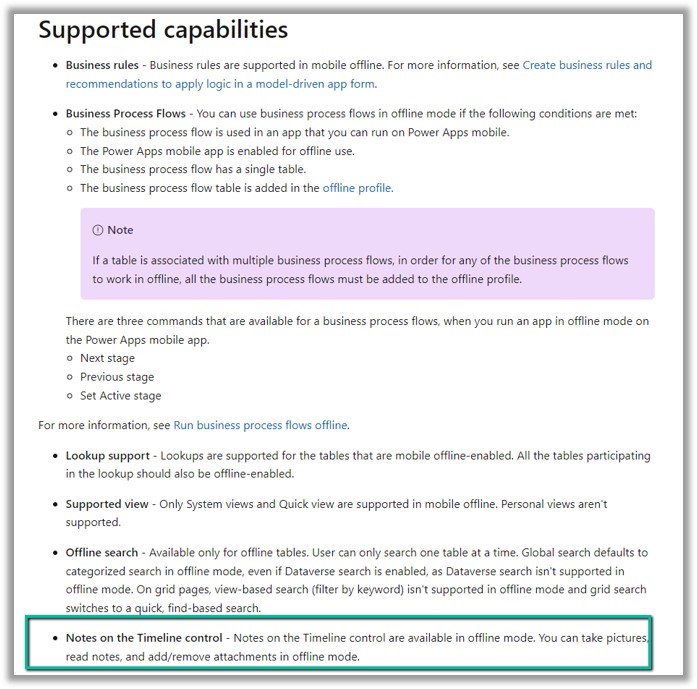
What it means is that if users go offline, only the Notes records (along with the attachment) will be available on the timelines. The users can also add/remove attachment in the offline mode. This capability was added as part of the 2019 Release Wave 2
Recently for some of our Dataverse environments, we found duplicate records getting created (same GUID) for Notes and Work Order Incident tables in the corresponding CSV files.
This was causing the Power BI reports built on top of it to fail.
On raising the ticket, the Microsoft Support team mentioned that this is a known bug for certain regions, and they immediately ran the de-duplication scripts in the background which quickly fixed the issue for us. Also, they specified they will be deploying the fix for the issue in the coming days.
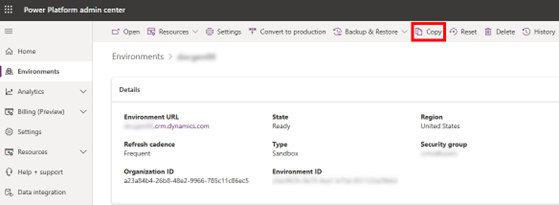
You have probably used the copy environment feature in the Microsoft Power Platform admin centre to copy data and customizations between environments.
However, there is a crucial aspect to consider data privacy and security. When transferring data, especially to sandbox environments which typically have less stringent access controls, there is an inherent risk of sensitive information becoming exposed to unauthorized personnel. Such scenarios pose a threat to compliance with stringent data privacy regulations, including GDPR, HIPAA, and CCPA.
However, there is no out-of-box to mask data. Here comes Datamask App which helps with data protection by replacing sensitive information with dummy data.
Diving into the Strength of Data Masking
In the Power Platform sandbox environments, developers, and testers often grapple with the challenge of handling real data without compromising privacy and security. The Data Mask App steps in as a powerful solution to this dilemma. Its primary mission? To mask, anonymize, and obfuscate Dataverse data, offering a shield against potential data breaches.
How does Data Mask app work?
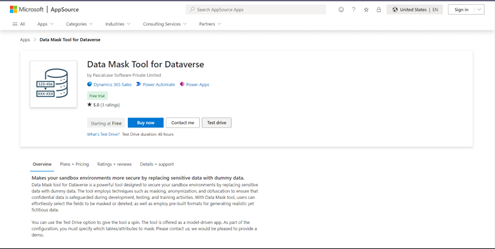
You can download the app from Microsoft AppSource, Download Data Mask app, and the app is available as managed solution.
Upon importing the solution, you need to configure the data mask app.
With configuration, users can selectively mask specific fields, choosing from options, such as replacing with dummy names, generating random strings, or employing asterisks for a discreet approach.
Configuration settings for masking Account number field in Account table.
Various configuration options for table records provide versatile ways to protect sensitive data configurations, it collectively empowers users to customize data protection strategies based on specific needs and compliance requirements.
This dynamic approach ensures that sensitive information, like full names and contact details, is transformed into a secure and privacy-preserving version while retaining its integrity.
When a data mask run is created the masking process starts and we can track the masking of records in the logs section.
Free plan and paid plan
If you would like to test, there is a ‘Test Drive’ option. Otherwise, you can install the app in your environment, but there is a 1000-record limit. If you would like to buy the tool, you can contact https://pascalcase.com for a license.
Using the “Sales Copilot” we can get the list of leads and opportunities assigned to us in the last 15 days.
For this, we can use the “What’s newly assigned to me” prompt
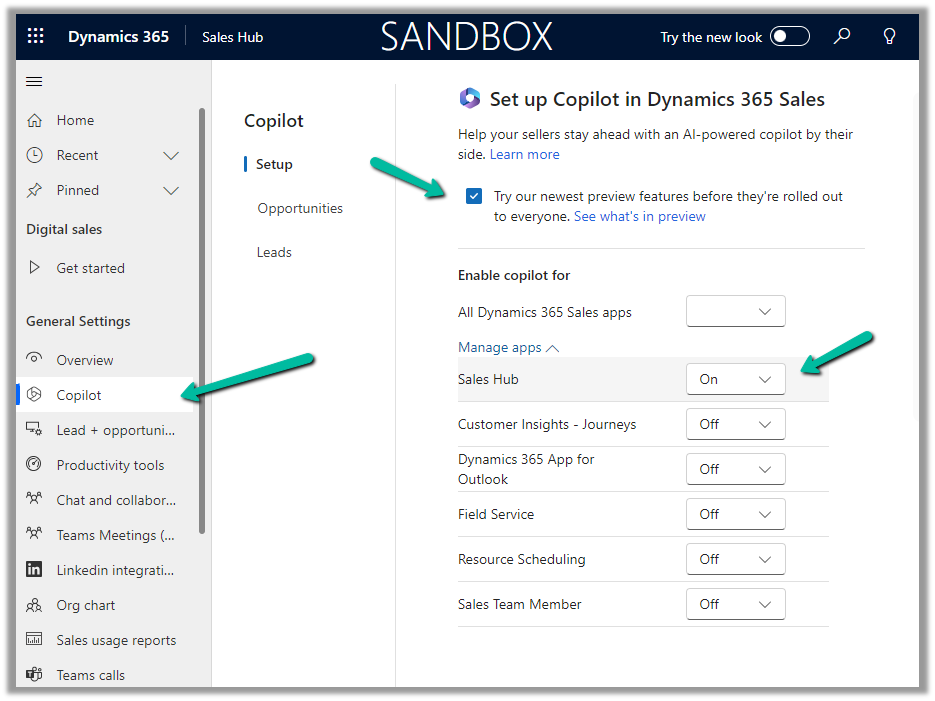
To enable Sales Copilot, Inside Sales Hub, navigate to App Settings >> Copilot (General Settings) and specify the Sales Apps in which we want the Sales Copilot to be enabled.
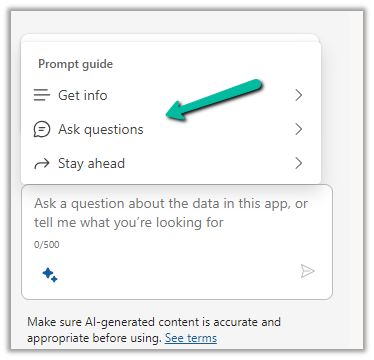
To see it in action, open the Sales Copilot Help Pane, select the Sparke Icon to open the Prompt Guide, then Ask questions >> What’s newly assigned to me
The result shows the list of leads and opportunities assigned to you in the last 15 days.
We can than select the record and click on Summarize to get the summary or can open the record to see the details.
Using the “Sales Copilot” we can get the list of opportunities assigned to us.
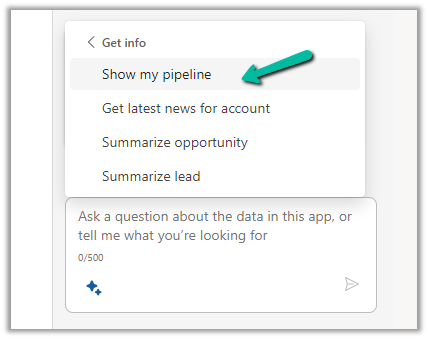
For this, we can use the “Show my pipeline” prompt
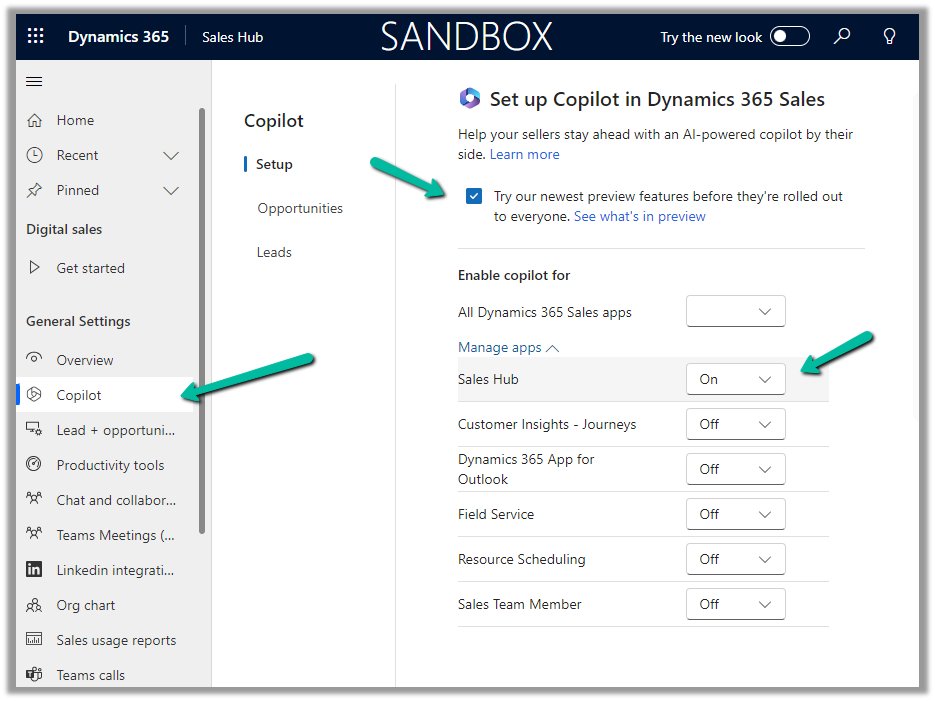
To enable Sales Copilot, Inside Sales Hub, navigate to App Settings >> Copilot (General Settings) and specify the Sales Apps in which we want the Sales Copilot to be enabled.
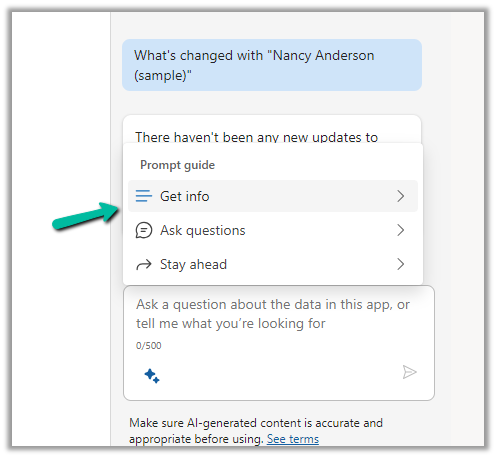
To see it in action, open the Sales Copilot Help Pane, select the Sparke Icon to open the Prompt Guide, then Get Info >> Show my pipeline
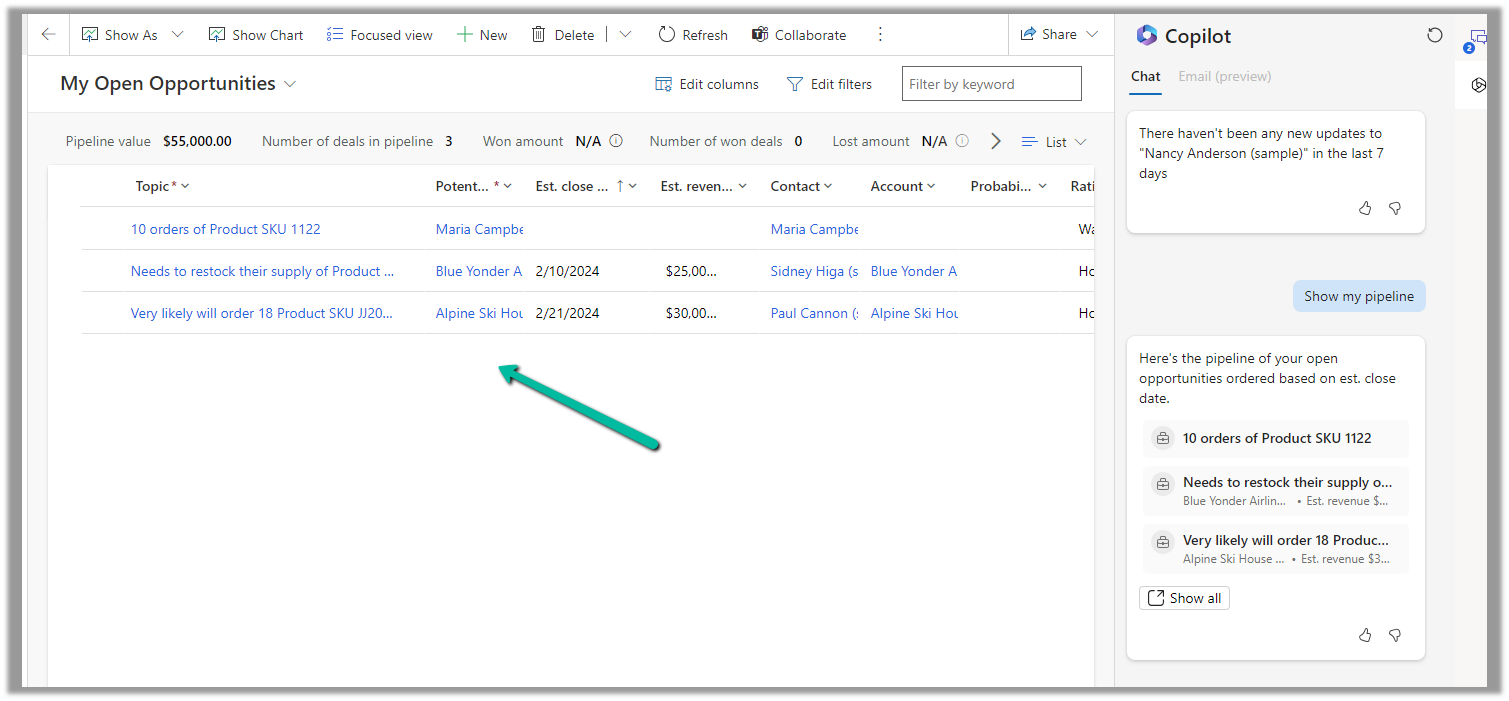
The result shows the opportunities sorted based on the estimated close date.
Clicking on “Show all” opens the corresponding opportunity view.














 Nishant Rana's Weblog