Understanding Overflow handling – Work item limit exceeds in Voice Channel – Omnichannel (Dynamics 365 Customer Service)


Say for one the Advanced Queue of type Voice we have the following Overflow handling defined (the queue has only 1 user assigned to it).

i.e.

Condition = Work item limit exceeds 1

Action = Voicemail

And it also has an Out of operation hours condition defined.

Now, if the customer calls during working hours and if the user’s presence is Available, the agent will receive the notification and the first conversation will have the Status as Active. If we make a second call its status will be open and it won’t go to Voicemail. Now if we make a 3rd call to that number it will go to Voicemail.

This is because we have set the Work item limit exceeds as 1, so it will keep one conversation in the open status, and any subsequent calls after that will go to the Voicemail.


Now here if the user is either in DND, Away, Offline, or not logged into CRM during work hours (if a customer calls outside work hours it will directly go to the Voicemail as we have the Out of operation hours condition defined), the first conversation will have the status as open and then any subsequent calls will go to the Voicemail.

In short,

More detail – Queue Overflow

Hope it helps..

Advertisements

How to – Configure Voicemail in Omnichannel Voice Channel – Dynamics 365 Customer Service


For voice mail to work, make sure Unified Routing is provisioned.
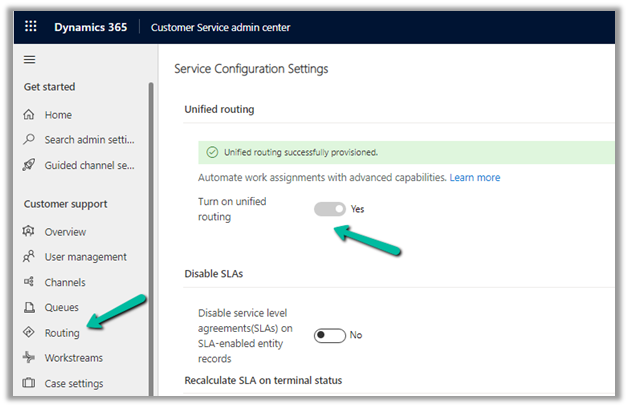
Next, we need to create a new Agent experience profile.

Navigate to Agent Experience >> Workspaces and select Manage for Agent experience profiles.
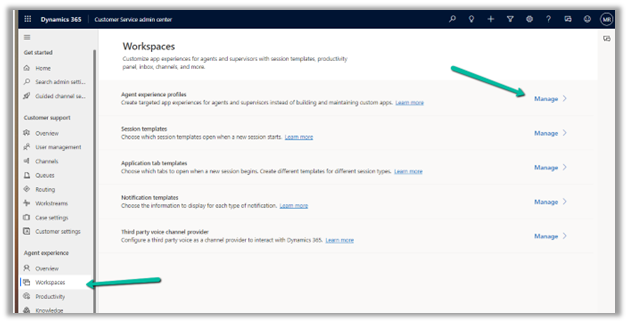
Create a new record.

Add the users to it. One user can be part of only one Agent experience profile record.

Click on edit for Inbox

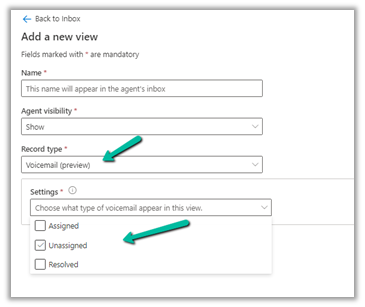
Enable Inbox, and add a view for Voice Mail.
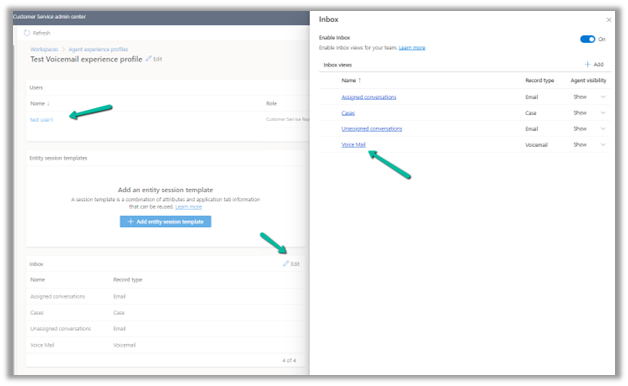
We can specify what views the agent can see in the inbox.
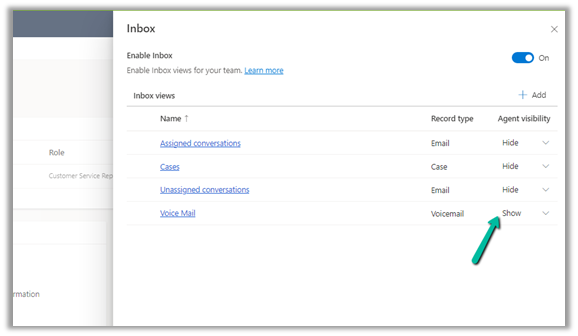
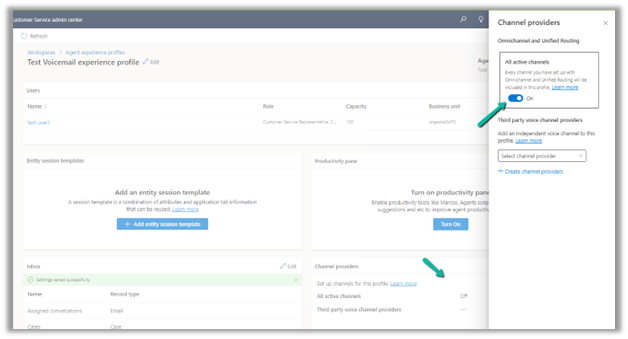
Also, switch on All active channels.
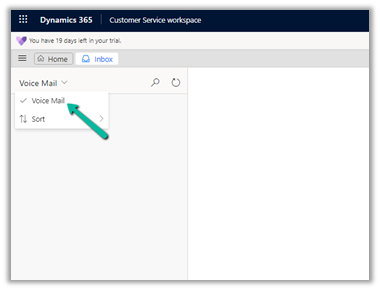
The agent inside Customer Service Workspace can now see the Voice Mail option in his Inbox.
Here we first tested the voice mail feature by calling the personal number assigned to the agent. The agent was not logged into the Customer Service Workspace app.

On calling we get the prompt that the agent is not available and to record the voice message.

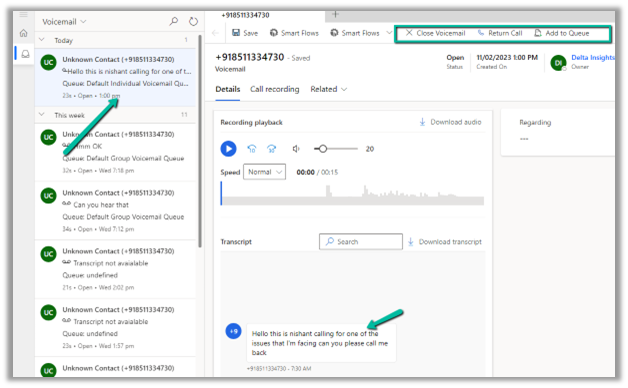
After recording the message, if we log in to the CSW app, we can see a voicemail record created for the user.

The user can hear the recording, call back the customer using Return Call, Add to Queue, or close the voice mail.
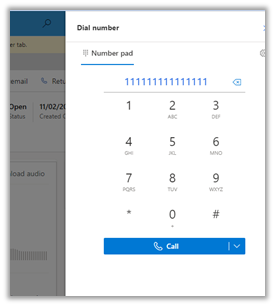
Return Call will launch the phone dialer, with the customer’s number populated.
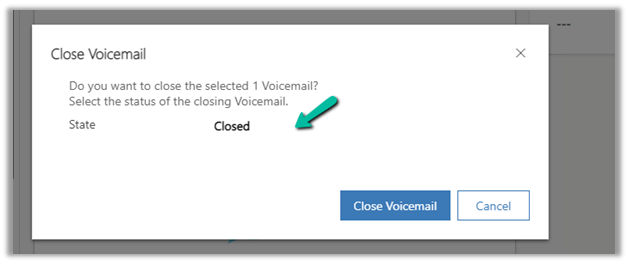
Close Voicemail will set the status of the voicemail record as Closed.
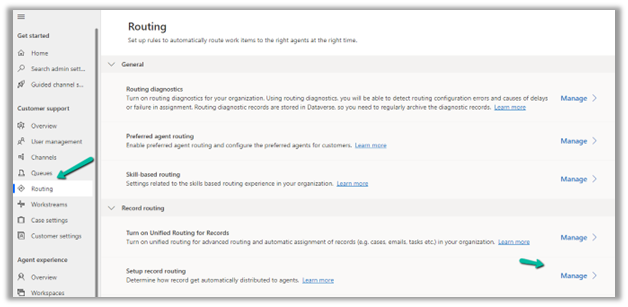
For this to work, we need to have a Record Routing configured for Voicemail.

Navigate to Customer Support >> Routing >> Manage for Setup record routing.
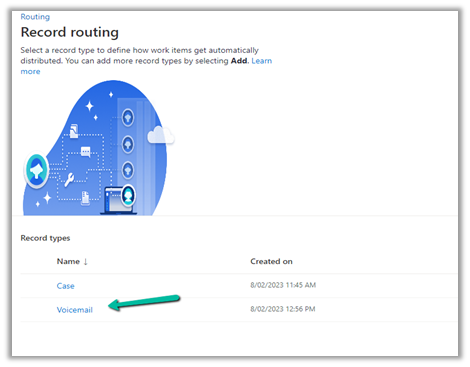
We have created routing rules for the Voicemail record type.

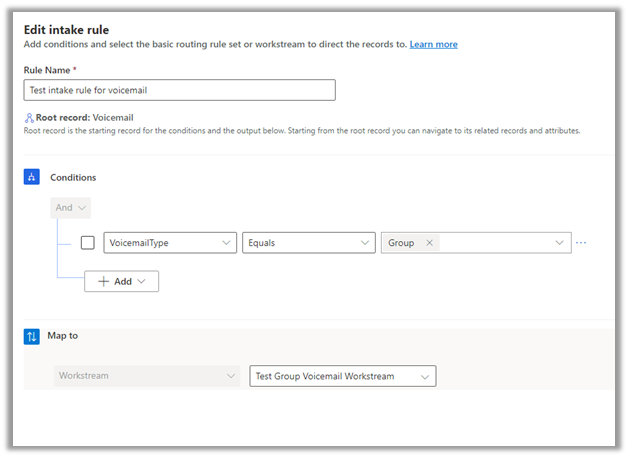
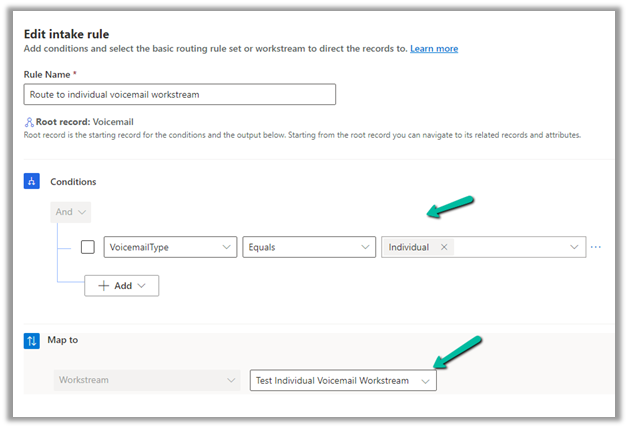
We have 2 intake rules configured, one for Voicemail type individual (which worked in our earlier scenario, when a customer called the personal number of the agent) and one for a group that would apply to Queue.
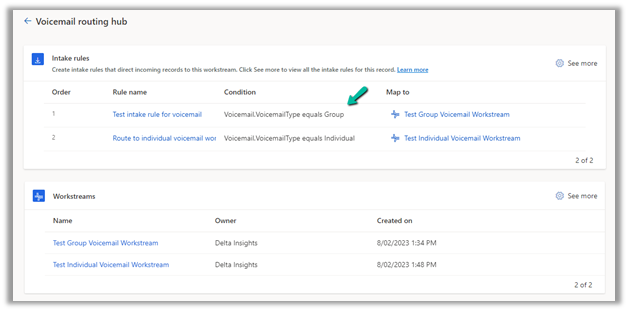
Intake rule for Group
Intake rule for individual.
The workstream for the voicemail type individual
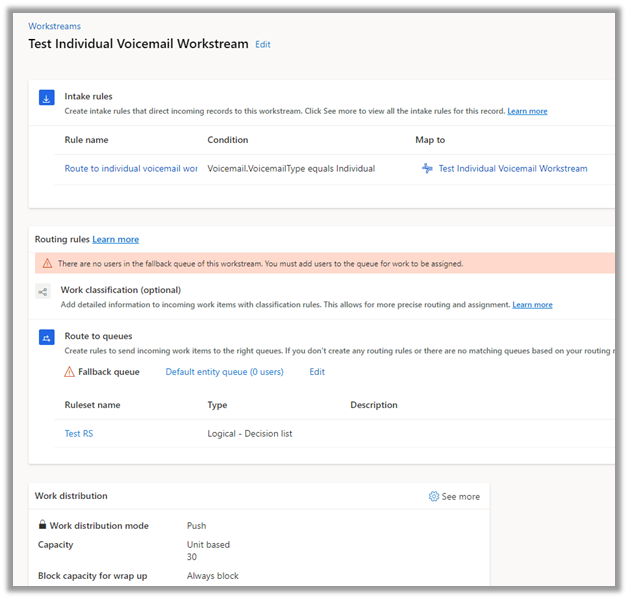
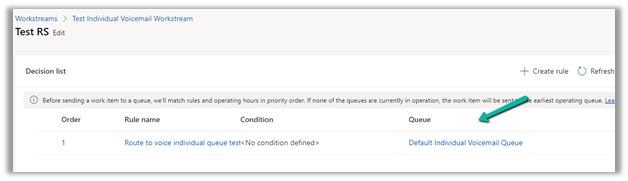
It routes to the Default Individual Voicemail Queue, which the agent is part of.
Similarly we have Workstream for Voicemail type Group
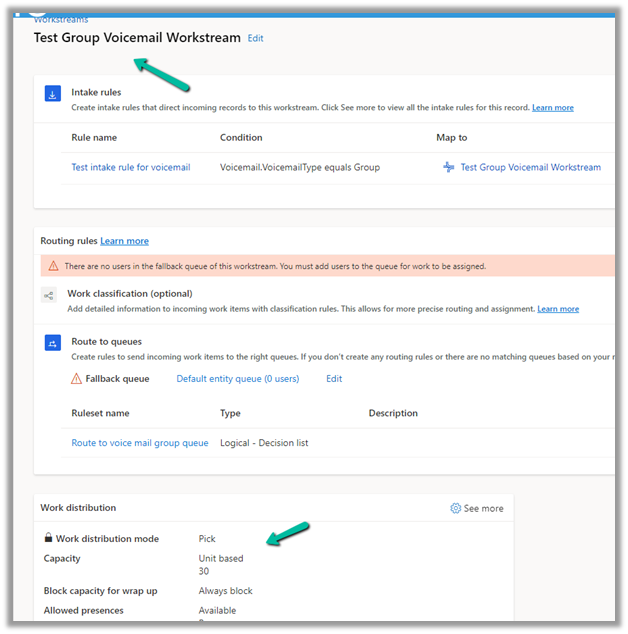
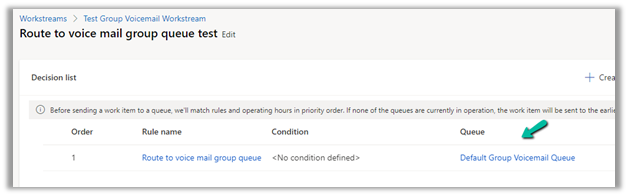
The ruleset in it routes to the Default Group Voicemail Queue.
Now to test it, we have created a queue, with only one user currently in it.

Most importantly we have configured an Overflow management rule to it along with operating hours.
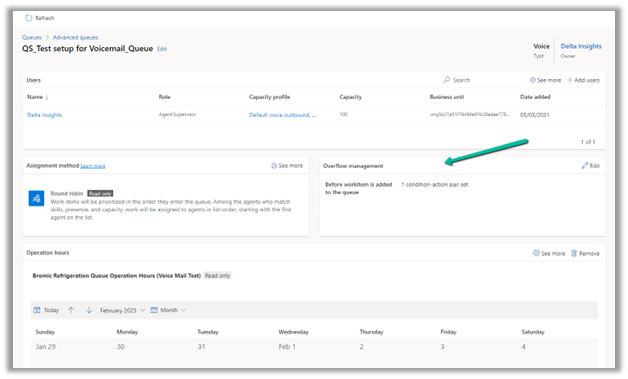
Basically if a customer calls out of operation hours, it should go to voicemail.
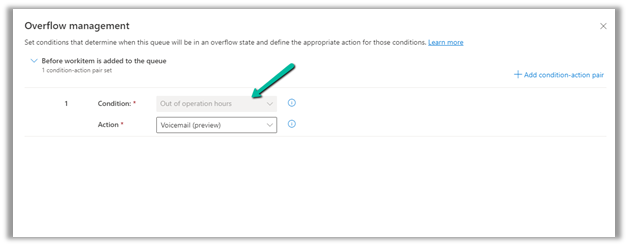
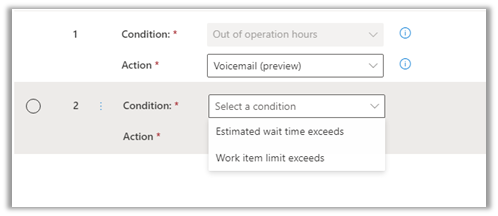
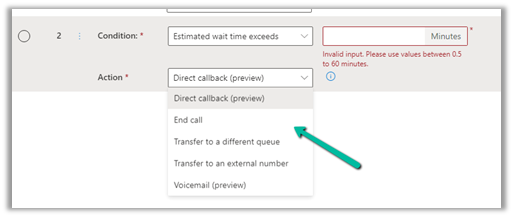
Here we can specify multiple condition-action pairs.

Conditions

Actions

Next, we created a workstream of the type voice channel, which routes to the above queue.
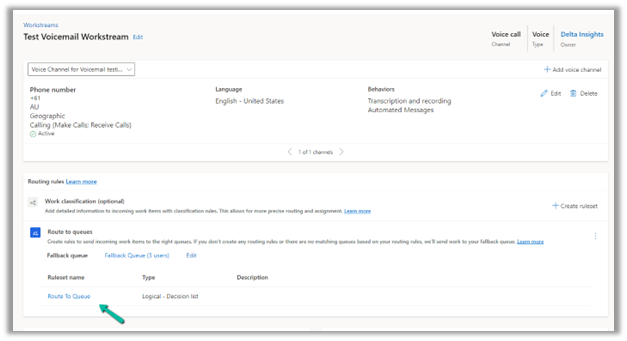
Now as soon as the customer calls the number, it goes to the queue with the overflow conditions, and if the agent is not logged in/out of operation hour condition is fulfilled, the customer is informed to record the message.

When the agent logs in to the CSW app, he can see a voice mail record created and assigned to the Default Group Voicemail Queue.
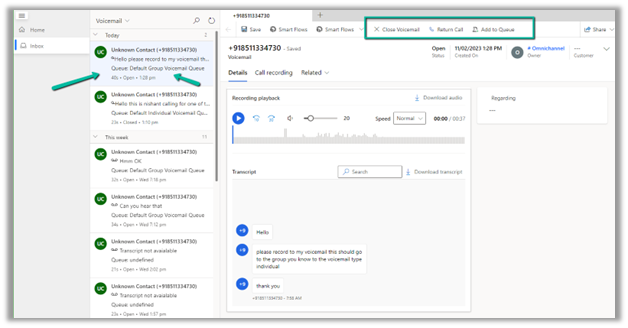
In short –

Enable

Unified Routing

Configure

Agent Experience Profile for the agent.

Enable Inbox.

Specify a view for Voicemail

2 Queues

Individual / Personal Phone Numbers

Group / Queue

2 Workstreams (type – Record)

(Voicemail)

Individual Workstream – Push Based.

Group / Queue Workstream – Pick Based.

2 Record Routing Rules (Voicemail)

Route – Voicemail type Individual to Individual Queue

Route – Voicemail type Group to Group Queue

Individual Call

Specify the Phone Number for the agent in the Omnichannel Tab – System User record

Group Call

Create a workstream and specify an overflow condition.

For configuring Call Recording please refer – https://nishantrana.me/2022/12/20/configure-azure-event-grid-system-topic-and-subscription-to-enable-call-recording-and-sms-in-dynamics-365-omnichannel-voice/

Get all the details – Configure Voicemail

Must read – https://neilparkhurst.com/2022/11/08/omnichannel-for-customer-service-voicemail/

Hope it helps..


Advertisements

How to – assign a personal phone number to agents in Voice Channel (Omnichannel)– Dynamics 365 Customer Service


The reason we would assign a personal phone number to the agents is that they can use that number to make an outbound call to the customers or in some scenarios, the customer wants to directly call the specific agent for direct follow-up on a particular case.

Let us first add a new phone number.

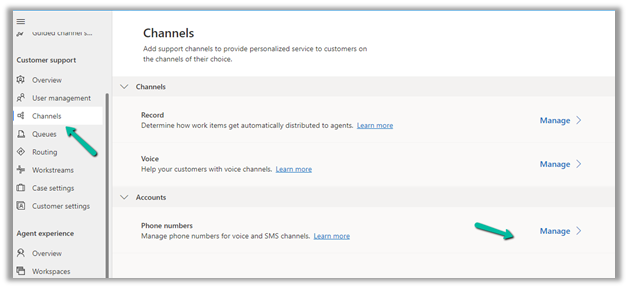
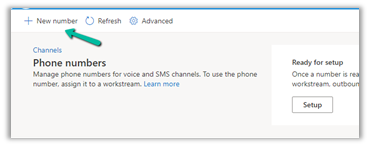
Navigate to Customer Service Admin Center >> Customer Support (Channels) >> Phone numbers (Manage)

Select + New number (in case we have purchased a number from Microsoft)

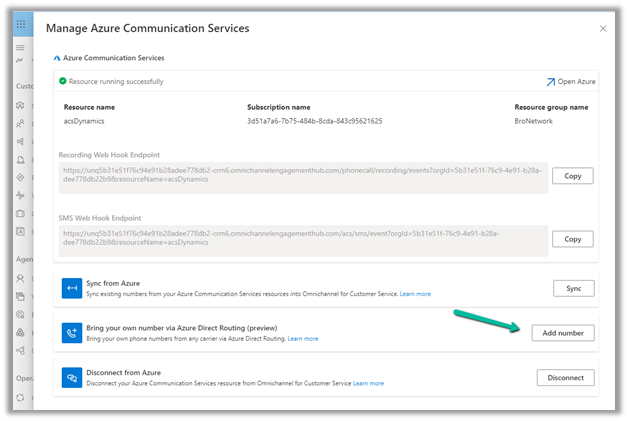
In case of Direct Routing, click on Advanced
>> Bring your own number via Azure Direct Routing

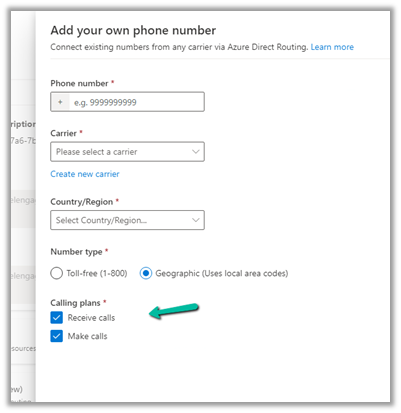
Specify the Phone Number, Carrier, Country / Region, and Number type, and select Receive calls and Make calls.

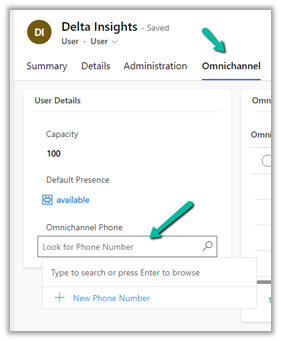
Open the system user’s record, and specify the phone number added in the Omnichannel Phone field in the Omnichannel tab.

Now login to Customer Service Workspace with the agent’s account.

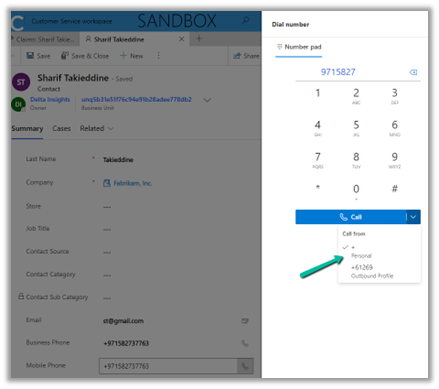
The agent will now have the option to make an outbound call using the personal number assigned.

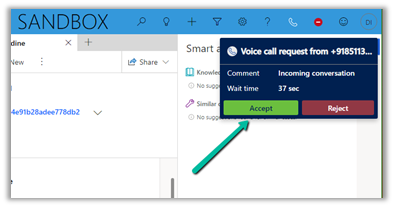
Also, we can see the agent receiving a call on that number directly.

Get more details – https://learn.microsoft.com/en-us/dynamics365/customer-service/voice-channel-outbound-calling?tabs=customerserviceadmincenter#assign-personal-phone-numbers-to-agents

Hope it helps..

Advertisements

Connect Voice Channel to using an existing Azure Communication Services (ACS) Resource – Dynamics 365 Customer Service


We had earlier configured Voice Channel in our Dev environment using ACS Direct Routing.

Please refer to this blog post on how to set up a voice channel using a new ACS. https://nishantrana.me/2022/10/17/how-to-set-up-omnichannel-voice-using-azure-communication-service-acs/

Recently while configuring the UAT environment, we thought of reusing the same ACS resource configured earlier.

Highlighting the key steps required for it –

The first step is to install the Voice Channel in the new environment

https://nishantrana.me/2023/02/08/install-voice-channel-in-omnichannel-dynamics-365-customer-service/

Followed by registering a new App in Azure Active Directory.

This will be required while connecting to the Azure Communication Services.

Enter the details of existing ACS, like name, ID, and Connection String.

And the App ID and App Tenant Id while connecting to ACS in the new environment.

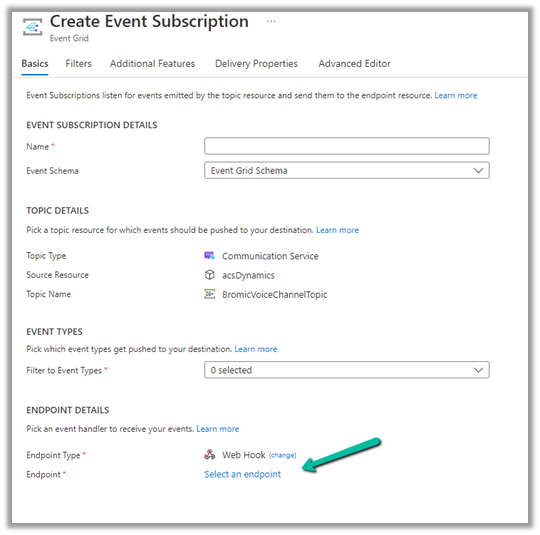
Now if we want to use the feature of Call recording, we can reuse the existing Event Grid System Topics created for the Dev environment, by simply creating a new Event Subscription for it.

Copy and specify the webhook endpoint from the UAT / New environment

Select Manage for Channels >> Phone numbers

Select Advanced

Copy the Webhook endpoint for the new event subscription from the UAT / New env.

For the exact steps refer – https://nishantrana.me/2022/12/20/configure-azure-event-grid-system-topic-and-subscription-to-enable-call-recording-and-sms-in-dynamics-365-omnichannel-voice/

The next step would be to configure a new phone number, voice channel, workstream, etc.

So basically we can have multiple environments using the same ACS Resource using different numbers and with call recording for this we need to

  • Create / Register a new Azure AD app for each environment.
  • New Event Subscription for the existing Event Grid System Topics.

Get all the details here – Connect to ACS

Hope it helps..
 

Advertisements

How to – Enable inbox for agents in Dynamics 365 Customer Service Workspace / Omnichannel


Inbox view in the agent workspace allows agents to quickly perform a preliminary assessment of the service requests coming from different channels for a timely response. Agents can view cases, conversations, and activities assigned in the inbox tab.

To enable inbox for the agents, inside the Customer Service admin center

Navigate to Agent Experience >> Workspaces >> Agent Experience profiles >> Manage


We can create new profiles or can add users to any of the existing profile that has inbox enabled

E.g. Customer Service Trial profile has the inbox enabled.

Below is the agent experience profile record, that doesn’t have inbox enabled.

Let us add one of the users to the below profile.

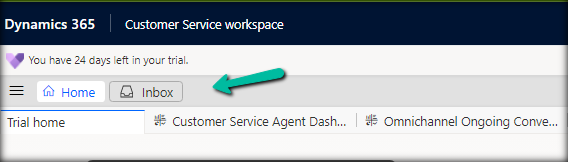
The Customer Service workspace before the user’s inbox is enabled. We can only see the Home tab.

After adding the user to the profile.

The agent can see the Inbox tab.

The agents can see the views configured in the profile inside the inbox tab.

Read more about Configuring the Inbox

To learn more about Voicemail- https://neilparkhurst.com/2022/11/08/omnichannel-for-customer-service-voicemail/

Hope it helps.

Advertisements

Manage Custom Presence – Dynamics 365 Customer Service (Omnichannel)


To manage presences, navigate to Customer Service Admin Center >> Agent Experience >> Productivity >> Custom Presence

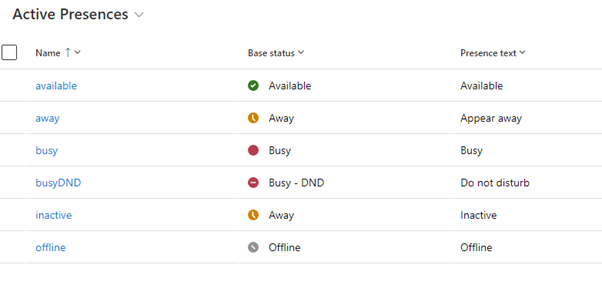
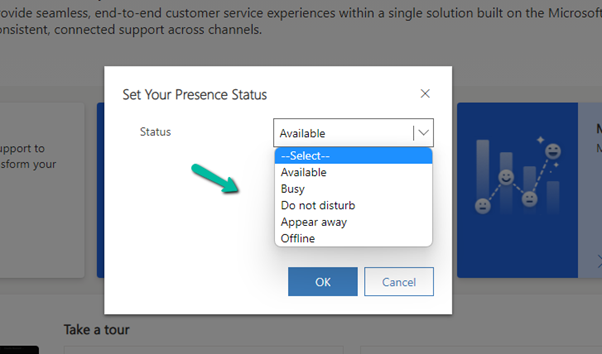
Out of the box we have the following presences.

Only the below presences will be available for the agents to select.

The inactive and offline statuses will be automatically set by the system.

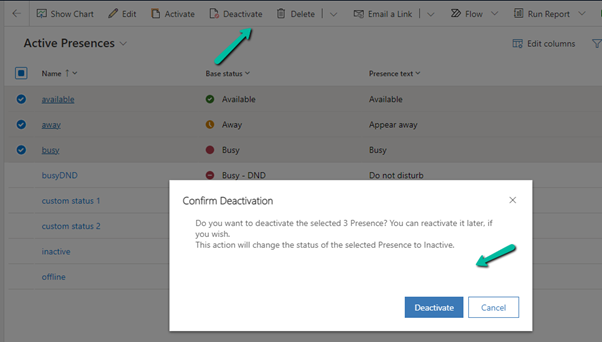
Although we can deactivate the presence, that doesn’t remove it for the agents.

The agents can still see all the presence statuses.

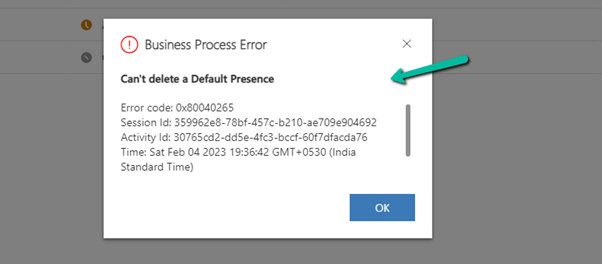
We cannot delete the default presence; we will get the below error if we try to delete them.

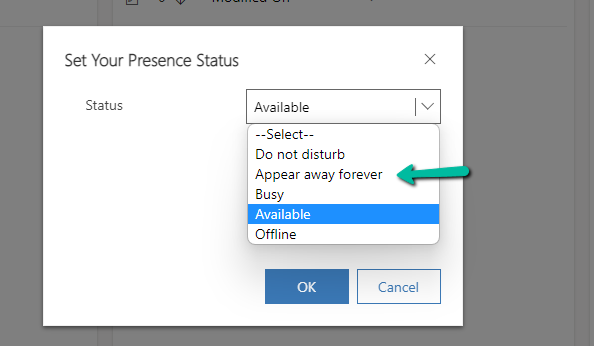
We can edit the Presence text for the default presence.

For the agent –

We can create custom presences that are based on the existing base status.

For the agents –


Unlike default presence, we can delete the custom presence status.

Hope it helps..

Advertisements